Brad Edgerton takes particular pride in one simple gesture amid his great-great-grandfather's many accomplishments: After commanding a regiment of Black soldiers during the Civil War, Alonzo Edgerton invited a family born into slavery to join him when he returned home to Minnesota. "Everyone knows the North was sympathetic to Black people, but Alonzo walked the walk and followed up the talk with philanthropy for a family he loved,” said Brad Edgerton. -- Article
Showing posts with label missouri. Show all posts
Showing posts with label missouri. Show all posts
Saturday, March 9, 2024


Tuesday, March 28, 2023
Missouri ceremony features full honors for Medal of Honor recipient
 |
| John Hack's grave is at left in Maple Grove Cemetery (Photos courtesy of Kevin Miller) |
About 30
people looked on Sunday as members of the Missouri National Guard, VFW Post
919, two Sons of the Union Veterans of the Civil War camps and other groups
paid their respects to Civil Medal of Honor recipient John Hack of Trenton, Mo.
“It’s always an emotional day for me when I
participate in these ceremonies,” Kevin Miller, commander of SUVCW Westport
Camp #64, told the Picket in an email. The event at Maple Grove Cemetery was
linked to the National Medal of Honor Day. The honors included a rifle salute and wreath-laying.
 |
| Mayor Linda Crooks and Miller (left) spoke at Sunday's event in Trenton. |
Hack was one of about 10 men to receive the Medal of
Honor for the May 3, 1863, attempt to take barges past Rebel fortifications on
the Mississippi River. The gallant effort failed, but it is remembered for what
the soldiers endured, including their stint as prisoners.
 |
| Missouri National Guard folds the flag during the ceremony. |
He was a member of the local post of the Grand Army of the Republic veterans group.
 |
| VFW members are flanked by SUVCW members at cemetery |
Tuesday, March 21, 2023
He volunteered for a mission at Vicksburg that left half his comrades dead. A Medal of Honor recipient is being remembered in Missouri this weekend
 |
| "End of the Journey": John Hack took part in doomed fleet (From 1902's "Deeds of Valor") |
The Sons of
Union Veterans of the Civil War, VFW Post 919 and other lineage groups and city
officials will gather at 2 p.m. Sunday for a commemoration ceremony in Trenton’s Maple Grove Cemetery to
honor Pvt. John Hack, who survived the ordeal by clinging to a bale of hale after a barge caught fire.
Hack was one
of about 10 men to receive the Medal of Honor for the May 3, 1863, attempt to
take supplies past Rebel fortifications on the Mississippi River. The gallant effort
failed, but it is remembered for what the soldiers endured, including their
stint as prisoners.
“They put their life on the line to do that,” said Kevin L.
Miller, commander of Westport Camp #64 of the SUVCW. “They weren’t thinking of
a medal. They were thinking of winning the war.”

He enlisted in July 1861 at age 18, in Adrian, Mich. Hack served with
the 47th Ohio Volunteer Infantry, which saw hard action at Vicksburg,
the linchpin of control of the Mississippi River. (Photo is from about 1915)
"We had
now been under fire three quarters of an hour, and had reached a point below
the city where ten minutes more meant safety. The steady puff-puff of the
little tug gave assurance that all was right and we were beginning to indulge
in mental congratulations on the success of the expedition when a roar like the
bursting of a volcano caused the barges to rock as if shaken by an earthquake,
and in an instant the air was filled with burning coals flying timbers and
debris. A plunging shot from a heavy gun stationed on an eminence far in the
rear had struck the tug and penetrated to the furnaces where it exploded,
blowing the boilers and machinery up through the deck, and completely wrecking
the vessel.
"When
all had been rescued and assembled in the moonlight under guard of Confederate
bayonets, the roll was called, and just sixteen, less than half our original
number, were found to have survived. Some of the scalded men were piteous
sights to behold, the flesh hanging in shreds from their faces and bodies as
they ran about in excruciating agony, praying that something be done to relieve
their sufferings. These with the wounded were speedily sent to a hospital,
where some of them died the next day.
 Hack told his family he kept under the floating bale until his capture, using a straw to breathe.
“One of
Grant’s greatest challenges during the Vicksburg campaign was finding safe
passage across the Mississippi River without being cut down by Confederate
gunfire,” says the American Battlefield Trust. “He tried to cross his troops at
De Soto Point, Lake Providence, Yazoo Pass, and Steele’s Bayou with no
luck. Then he came up with an ambitious plan to use the navy to provide
transports for the river crossing. Success hinged on getting boats safely past
the Confederate guns at Vicksburg and seizing control of the river south of the
city.”
Union
detachments that crossed below Vicksburg were away from the main supply line,
necessitating efforts to resupply them.
Capt. William
H. Ward of the 47th Ohio led the May 3, 1863, nighttime effort to
bring supplies.
Walter Beyer
and Oscar Keydel provided Ward’s account in their 1902 volume “Deeds of Valor.”
The force needed to navigate the “S” bend at Vicksburg and withstand about 100
Confederate guns. “It seemed impossible that anyone could live under such terrible
fire,” the authors write.
About 35 volunteers
came forward to help move two supply barges. Here is Ward’s account in the book. It’s
lengthy, but the information is very compelling.
"We cast
off from Milliken's Bend, La. about fifteen miles above Vicksburg at ten o'
clock PM. The trip down the river was uneventful until two o' clock in the
morning, when a rocket sent up from one of the Confederate batteries warned the
enemy of our approach, and we were soon under a heavy fire. It was a wild ride
we had from this time on.
"Battery
after battery opened on us, as we came within range, until it seemed that the
guns were being played upon like the keys of a piano, and to say that the rain
of shot and shell was terrific, but faintly describes the situation. The scene
was indescribably grand and awe inspiring, as we steamed slowly past the city
amid the roar of more than a hundred guns with their death dealing missiles
whistling and shrieking over and around us, and exploding on board while the
patter of bullets from the infantry resembled a fall of hail stones. The barges
were large and unwieldy; and as we could make only about six miles an hour at
best, the enemy's gunners were able to get our range accurately. We had been
struck many times, but not seriously damaged. The little tug seemed to bear a
charmed life, for we passed several times within a hundred yards of the
heaviest batteries.
 |
| Vicksburg and its defenses; click to enlarge (Library of Congress) |
"The
blazing coals fell in a shower over both barges setting fire to the bales of
hay in hundreds of places at once. The enemy sent up a cheer upon witnessing
our misfortune, and for a few minutes seemingly redoubled their fire. The tug
went down like a plummet while the barges were soon blazing wrecks, drifting
with the eddying current of the river. No recourse remained, but surrender and
the waving of a handkerchief from a soldier's bayonet caused the firing to
cease. The flames compelled the survivors to seek safety by taking to the
water, and having no boats we floated off on bales of hay and found them
surprisingly buoyant. The wounded were first cared for and then all took
passage on the hay bale line.
"The
enemy now hailed us from shore, ordering us to come in and surrender, but on
learning that we had no boats, sent their own to our assistance capturing all
but one of the survivors. That one, Julius C. Conklin by name, was the only man
in the party who could not swim. He managed with the aid of a piece of wreckage
to reach the Louisiana shore unobserved by the enemy and rejoined his company two
days later.
 |
| John Hack (left) in later life with Joseph Hack Smith (Grundy County Library) |
"It is
not often, even in a soldier's life, that one is compelled to face death in so
many forms as beset our little party on that memorable night, shot and shell,
fire, water, and a boiler explosion, with its attendant horrors. Our captors
treated us with marked consideration, affording every courtesy consistent with
the rules of war, and we were the recipients of many attentions from soldiers
and citizens who seemed to marvel at the temerity of our undertaking. We were
held prisoners in Vicksburg for two days, when General Grant having crossed the
river, and defeated the enemy near Grand Gulf, Mississippi began to threaten
the city from the rear. We were then paroled, and hurriedly forwarded to
Richmond, Va. where after an eventful journey, through the Confederacy we duly
arrived and were assigned quarters in that famous Confederate hostelry, Libby
Prison. Here we remained about six weeks, before we were exchanged, and we were
only able to rejoin the regiment in the trenches before Vicksburg on the
evening before the surrender, just in time to be in at the death.
"Language
fails to describe my feelings when with a few companions I entered the city the
next morning, July 4th, immediately after the surrender under circumstances in
such marked contrast with my forced advent of a few weeks before. Now, no
hostile demonstrations of any kind greeted us. The great guns were still, the
hostile flags were furled, and Old Glory floated proudly from the public
buildings, while our late foes were quietly resting in their camps awaiting the
pleasure of the victors."

The 1907 citation for Hack reads: “The
President of the United States of America, in the name of Congress, takes
pleasure in presenting the Medal of Honor to Private John Hack, United States
Army, for extraordinary heroism on 3 May 1863, while serving with Company B,
47th Ohio Infantry, in action at Vicksburg, Mississippi. Private Hack was one
of a party which volunteered and attempted to run the enemy's batteries with a
steam tug and two barges loaded with subsistence stores.”
Miller, with the SUVCW, says camps across the state try to recognize a Medal of Honor recipient each year. In 2021, a ceremony was held to recall Sgt. Freeman Davis of Butler. At Missionary Ridge in November 1863, "This soldier, while his regiment was falling back, seeing the two color bearers shot down, under a severe fire and at imminent peril recovered both the flags and saved them from capture."
According to his obituary in the Trenton Republican-Times, Hack later fought at Missionary Ridge. Hack continued service until Aug. 20, 1864, in Atlanta, when he was discharged for completing his time of service.
According to Tony Ralston, commander of VFW Post 919, Hack worked for the Rock Island and Pacific Railroad as a machinist. Hack came to Trenton from Vincennes, Ind., in about 1890. He served about 15 years as justice of the peace. He was a member of the local post of the Grand Army of the Republic veterans group and was known as an honorary major. In November 1921, Hack traveled to Washington, D.C., for the dedication of the Tomb of the Unknown Soldier.
Hack had three children and died on March
29, 1933, at age 90. A large crowd attended his funeral and songs included "Will the Circle Be Unbroken." His flag-draped casket was carried by caisson to the cemetery. The American Legion conducted services, according to his obituary, which was provided to the Picket by Doris Baker of the Grundy County Jewett Norris Library.
He has two
markers at Maple Grove Cemetery; the Medal of Honor stone was installed nearly
45 years ago, officials said. (Photo, courtesy of Kent Kooi, Findagrave.com)
Sunday’s ceremony in the city of 5,500 about 90 miles northeast of Kansas City will
include a color guard, biography, wreath-laying, a reading of the Medal of Honor citation, rifle salute and the playing of Taps. March 25 -- one day before the event -- is the annual National Medal of Honor Day across the United States.
 |
| Shadow box with items honoring Freeman Davis (Courtesy of Kevin Miller) |
Miller made a shadow box of related material for the museum in Bates County. The box includes an SUVCW medal and challenge coins and shell casings from the rifle salute.
Saturday, January 7, 2023
Colorado unit that fought Rebels and Indians during the Civil War put out a newspaper. The Library of Congress now has a rare complete set
 |
| A complete set of Soldier's Letter (Shawn Miller, Library of Congress) |
The bound copy of the full print run of Soldier’s Letter
was among only a few complete sets of 50 editions to survive the war, the library
said in a late December post about the acquisition. The
unofficial camp newspaper was produced 1864-1865 in Kansas City, Mo., and Fort
Riley, Kan.
Pvt. Oliver Wallace served as editor, working from
contributions by other enlisted men and wives. Soldier’s Letter included poems,
regiment history, rosters, letters to the editor and features about camp life,
according to the American Antiquarian Society. (Colorado, by the way, was a territory during the Civil War, but this unit fought in the Midwest).
“Though there is a
long-standing national obsession with the Civil War, regimental newspapers
never quite caught on as something to be preserved,” wrote Neely Tucker in the LOC blog post.
“More than 200 such papers in at least
32 states printed at least one edition, according to historian Earle Lutz, but
they had mostly vanished by the time he surveyed the nation’s libraries,
museums and major private collections in the early 1950s.”
 |
| (From left) Lt. Col. Theodore Dodd, Col. James H. Ford and Pvt. William Waggoner (WCNB) |
The editions of the newspaper -- which
each cost 10 cents -- are printed in pulp stock. Three pages in each edition
included news, rumors, jokes and histories of the regiment, which was formed in
1863. The fourth page was left blank for soldiers to write letters or notes to family
or friends. The troopers then mailed the pages home.
“Much of the war was over by the time
Wallace started his paper, but he and his unnamed correspondents did note
Lincoln’s assassination, accounts of skirmishes and the general tenor of the
last days of the Confederacy,” wrote Tucker, who manages the LOC blog.
“The rebels have taken to smuggling in bacon past the blockage,” a short item noted in one edition of the anti-slavery camp newspaper. “The evidences multiply that they are on their last legs.”
 |
| Final issue sums up unit's history and number of complete editions (Library of Congress) |
“Dear
Mother:
Nothing of
interest has transpired since I sent you the last two copies of the Soldiers
Letter. We are still staying in Mo and will probably remain here some time. My
health is good first rate. Plenty of fun Plenty to eat and nothing to do Capt
Moses was maried [sic] last Thursday He givs [sic] a party to night at his wives fathers you bet we will have
a good time.”
The Second Colorado Cavalry was deployed for some time in what was called the Trans-Mississippi Theater during the Civil War. Its actions included patrols, clashes and chasing Confederate Gen. Sterling Price in Missouri in 1864, engaging in multiple battles. Price's foray was a major defeat for the South.
Wilson's Creek National Battlefield in Missouri has a collection of Trans-Mississippi items in its museum, including 19 photos of Second Colorado Cavalry's soldiers (three above) and two documents, says curator Jeff Patrick.
Late in the war, the regiment was sent west to quell Indian
raiders on the Santa Fe Trail and other locations. Although the Second Colorado
Cavalry was not a participant in the infamous Sand Creek Massacre of Indians in
1864 that killed scores of women, children and the elderly, the Soldier’s
Letter editorialized the attack was not vicious enough.

He told the Picket in an email this week that accounts such as those by the regiment are "incredibly valuable for assessing the 'unit culture' of Civil War units. Letters, diaries, memoirs, etc. give an individual perspective, but newspapers were intended to appeal to a broader readership and therefore more accurately reflect collective views."
"The paper was
published during the most pivotal period of the unit’s service in the 'Burned
District' along the Kansas-Missouri border and therefore provides insight into
that 'counterinsurgency' campaign, as well as the flaring hostilities on the
Plains. It highlights how a regiment of staunch abolitionists could, at the
same time, be among the worst Indian-haters in the West," Rein told the Picket.
Chandra
Miller, in a 1999 article for the Kansas Historical Society, said the men of
the Second Colorado Cavalry, created the Soldier’s Letter to fight isolation,
boredom and vagueness of purpose.
“In each
issue the Soldier’s Letter covered topics from the history of the regiment to
civilian gossip, but the bulk of its pages was dedicated to reflections on the
righteousness of American governmental institutions, politics and the
eradication of slavery,” Miller wrote.
The
newspapers have not been transcribed and thus are not online. The only way to
see the full run is by visiting the LOC in Washington, D.C., or, according to Rein, the Denver Public Library, which he says also has a complete set.
Sunday, July 31, 2022
Park bearing the name of former slave who served in USCT during the Civil War opens in suburban St. Louis
 |
| Oglesby Park features trails, lakes and this giant playground (St. Charles County Parks) |
Benjamin Oglesby, who fled captivity at age 39, served with the 56th US
Colored Infantry Regiment. He later farmed for 30 years on what is now the park
property.
The 199-acre Oglesby Park, on West Meyer Road just west of Wentzville and near Interstate 70, features a large
playground, lakes, trails and shelters, St. Charles County officials said. A
dedication ceremony was held Saturday in the suburban St. Louis community.

County parks historian Ben Gall said his research showed that Oglesby was born in Bedford, Virginia, in about 1825. In the mid-1830s, he came to St. Charles County with his enslaver Marshall Bird.
The farm near Foristell grew corn, wheat and
tobacco. Oglesby was one of seven enslaved people working on the land.
In November 1864, Oglesby left the farm, went to a recruiting depot and enlisted in the U.S. Army and was sent to Benton Barracks in St. Louis for training.
He was assigned to the 56th USCT, which conducted military operations in Arkansas, including fighting at Indian Bay and Big Creek before he enlisted. (One of Oglesby's military records at left, in National Archives collection. Click to enlarge).
Oglesby was with the unit during an expedition from Helena, Ark., to Friar's Point, Ms., in February 1865, and subsequent post and garrison duty.
Oglesby was
honorably discharged in November 1865, outside Helena, Gall said.
More
than 180,000 African-Americans served in the U.S. military
during the Civil War.
The 56th USCT lost during service four officers and 21 enlisted men killed and mortally wounded and two officers and 647 enlisted men by disease, according to the National Park Service. Nearly 180 died from cholera when they were being mustered out in 1866.
After the war, according to the 1870 census, Oglesby, his wife, Patsy
(also called Martha) and their six children -- Medora, Samuel, Oskar, Bell,
Albert and Charlie -- worked on a farm in Hickory Grove Township in Warren
County, officials said.
In 1871, he purchased 146 acres of land in Foristell believed to have
been owned by a German immigrant. He financed the property through a $2,000
deed of trust and paid off the property six years later.
“When Mr.
Oglesby died in 1901, the estate records indicate a nearly
50% increase in the value of his property, demonstrating him as a successful
farmer,” Gall wrote in an email. “The property was still in the family through
the 1960s.”
 |
| Plan for Oglesby Park; click to enlarge (St. Charles County Parks) |
Barbara Love,
the soldier’s great-great-granddaughter, told St. Louis TV station KMOV earlier
this year that
her ancestor was determined to succeed after escaping slavery.
Love wrote on
Facebook that her ancestor's story shows "you can be anything you want if
you keep the faith."
Oglesby and his wife are buried in a cemetery about a mile from the park.
Monday, April 18, 2022
A story of resilience: County park in Missouri will bear name of former slave who fought in Civil War, became a successful farmer on site
 |
| Council officials with Benjamin Oglesby descendants at recent meeting (St. Charles County) |
The St.
Charles County Council in Missouri last week approved the honor for Benjamin
Oglesby, who fled captivity at age 39 and joined the 56th US Colored
Infantry Regiment.
The 199-acre Oglesby
Park, just west of Wentzville and near Interstate 70, will include playgrounds,
paths and shelters, county officials said. It is expected to open in July.

In a press release,
County Executive Steve Ehlmann said, “The
history behind landowner Benjamin Oglesby and his family is both remarkable and
inspirational.”
Gall said his
research showed that Oglesby was born in Bedford, Virginia, about 1825. In the
mid-1830s, he came to St. Charles County with his enslaver Marshall Bird. The
farm near Foristell grew corn, wheat and tobacco.
In November
1864, Oglesby enlisted in the U.S. Army and was sent to Benton Barracks in St. Louis
for training. He was assigned to the 56th USCT, which conducted
military operations in Arkansas, including fighting at the Battle of Big Creek.
The regiment also fulfilled post and garrison duty (One of Oglesby's military records at left).
Oglesby was
honorably discharged in November 1865, outside Helena, Arkansas, Gall said.
Records kept
by the National Archives showed receipt of a $33.33 bounty when Oglesby was
mustered into service at Benton Barracks. Some $66.67 was due.
Gall said
Congress instituted a February 1864 draft that included Black men who lived in Border
States such as Missouri. “Loyal slaveowners” would be paid bounties for slaves who were freed and brought in the Army.
While there
are no definitive records in Oglesby’s case, Gall told the Picket, it seems the bounty was
due to the former slave because “his
file does not contain any records of Bird filling out the loyalty oath and
bounty … Recently freed Black soldiers did receive the bounty payment if their
owner was not considered loyal.”
 |
| The park site is just a couple miles north of I-70 (St. Charles County) |
After the Civil War, according to the 1870 census, Oglesby, his wife,
Martha and their six children -- Medora, Samuel, Oskar, Bell, Albert and
Charlie -- worked on a farm in Hickory Grove Township in Warren County,
officials said. In 1871, he purchased 146 acres of land in Foristell. He
financed the property through a $2,000 deed of trust and paid off the property
six years later.
“When Mr.
Oglesby died in 1901, the estate records indicate a nearly 50% increase in the
value of his property, demonstrating him as a successful farmer,” Gall wrote in
an email. “The property was still in the family through the
1960s.”
There are no
known photographs of Oglesby.
Barbara Love, the soldier’s great-great-granddaughter, told St. Louis TV station KMOV that her ancestor was determined to succeed after escaping slavery.
“He wanted to do something, not just for him, but for
family,” she said. “To say I’m a descendant of Benjamin Oglesby is a blessing.”
Love wrote on Facebook that her ancestor's story shows "you can be anything you want if you keep the faith."
 |
| Enlistment information for Benjamin Oglesby (click to enlarge, National Archives) |
“When looking
at the 19th century maps of the property, I saw the name
Benjamin Oglesby was marked as the owner of the property and decided to do a
little digging just to see who he was,” Gall wrote.
“The research
revealed a truly remarkable story of resilience, so I provided the name and
research to my supervisors for consideration. The director of the department,
who is a fellow historian, also found the story remarkable and decided to
officially propose it. When we learned there were descendants still active in
the community, it seemed to show this was meant to be.”
 |
| (Courtesy of St. Charles County) |
Wednesday, August 18, 2021
2-day symposium focuses on hellish conditions in Missouri during war
Four nationally recognized speakers on topics ranging from guerrilla warfare and slavery to events in Missouri during the Civil War are featured in a symposium on Friday, Aug. 27, and Saturday, Aug. 28, in Springfield. The in-person and online event is hosted by Wilson’s Creek National Battlefield Foundation. -- Details
Sunday, May 30, 2021
Wilson's Creek battlefield: Bed that held Gen. Lyon's body and multimedia kiosks among the highlights of renovated museum
 |
| Exhibit details action by the Pulaski Light Artillery Battle (NPS photo) |

Officials last week unveiled the $3.5 million renovation project, which
expands exhibit space by about 1,800 feet, park Superintendent Sarah Cunningham
told the Picket in an email. The work was supported by Wilson’s Creek National Battlefield Foundation and the National Park Foundation.
“The new exhibits will highlight more of the park’s collection Civil War artifacts as well as new audio-visual exhibits. This makes it possible for people to view historic weapons demonstrations and digitally view fragile artifacts and other items in storage,” she said of kiosks and other features.
The Battle of Wilson's Creek on Aug. 10, 1861 -- the second major battle of the war -- resulted in a Confederate victory after its forces made multiple assaults on Union lines. Federal troops retreated to Springfield.
Though
victorious on the field, the Southerners were not able to pursue the Union
forces. Lyon lost the battle and his life, but he achieved his goal: Missouri
remained largely under Union control.
A featured firearm is a rare Model 1860 Henry repeating rifle (above),
recently donated to the park by the Wilson’s Creek National Battlefield
Foundation.
“As soon as the battle ended, the family emerged from the cellar to find
their farm house was now a hospital, and immediately began to assist medical
personnel in treating the wounded and dying,” the park says on its web site.
According to the Aurora Advertiser newspaper, two new exhibits showcase
the loading and firing of artillery and their transportation. Other cases
included possessions of civilians caught up in the fighting.
Visitors will see approximately 90 percent of
all edged weapons and firearms from the park’s museum collection and will learn
the history of 19th-century firearms technology and how it affected
the outcome of the war, Cunningham said.
 |
| (Morphy Auctions) |
Cunningham said the park will be able to
display additional items from the collection of Trans-Mississippi Theater
artifacts purchased from Dr. Thomas Sweeney in 2005.
The original “Lyon bed" (below) belonging to the John
Ray family previously was displayed at the historic Ray House. Park officials
wanted to feature the artifact and secure its future in the climate-controlled
museum. A reproduction bed is now visible in the Ray House.
While the Ray House was not hit by fire, it was in the thick of the
fighting during the battle.
 |
| The Lyon bed in park museum. (National Park Service photo) |
“The children made many trips to secure water from the springhouse for
the suffering soldiers. Later, the body of General Nathaniel Lyon was brought
to the house and examined before it was removed to Springfield under a flag of
truce. Roxanna (John Ray’s wife) supplied a counterpane, or bedspread, to cover
the body. While most of the wounded were quickly removed to Springfield, one
soldier would convalesce with the Rays for several weeks before he could be
moved. In addition, most of the family's livestock and crops were gone, foraged
by hungry soldiers.”
 |
| The visitor center before (top) and after the renovation (NPS photo) |
An exhibit focuses on the Confederate Pulaski Light Artillery Battery. The Arkansas unit engaged in a furious exchange with a Federal battery at Wilson’s Creek, and it checked Lyon’s advance.
A 2018 article in Emerging Civil details the battery's trial by fire and the acclaim it received for helping turn the tide of the battle.
 |
| Artillery piece and limber in the foreground (NPS photo) |
Sunday, March 29, 2020
Pea Ridge National Military Park will expand with 140-acre historic farm that was site of troop movements, near field hospital

 |
| Williams Hollow Farm and bordering stream (Copyright The Conservation Fund) |
A 140-acre
parcel that was the scene of Confederate troop movements and a hospital during
the March 1862 Battle of Pea Ridge in northwest Arkansas has been bought by a
coalition of conservation and historical groups, with plans to donate it to the
National Park Service.
The Williams
Hollow Farm is surrounded on three sides by Pea Ridge National Military Park;
the acquisition in effect fills in a missing puzzle piece.
The
Conservation Fund and the Northwest Arkansas Land Trust earlier this month
announced the purchase. Spokeswoman Ann Simonelli with The Conservation Fund
told the Picket the seller is an extended family that has owned the property
since the time of the battle.
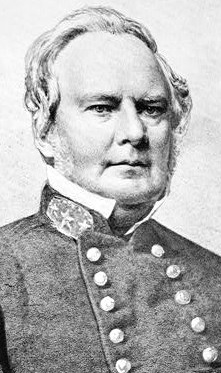 |
| Maj. Gen. Price |
“There is nothing on the land at the moment.
It is currently made up of forest and degraded field. The park service aims to
eventually do restoration of the field to manage it as vegetation from the 1862
time period,” Simonelli said.
While the groups did not disclose the purchase
amount, it is believed to be in the hundreds of thousands. The Pea Ridge National Military Park Foundation is helping with fund-raising to cover the purchase and
eventual donation of the property to the federal government.
Among
those efforts is NWA (Norwest Arkansas) Gives on April 2.
The
March 6-9, 1862, Battle of Pea Ridge (Elkhorn Tavern) has
been called by some historians “the Gettysburg of the West.” Forces under Union
Maj. Gen. Samuel Curtis defeated the men of Confederate Maj. Gen. Earl Van
Dorn, whose leadership has been faulted by historians. The Union won control of Missouri and weakened
the Confederate hold in Arkansas.
“It is no exaggeration to say that the Pea Ridge campaign
permanently altered the balance of power in the Trans-Mississippi. Few Civil
War operations had such an impact on the course of events,” according to the National Park Service.
 |
| Kurz & Allison's fanciful depiction of battle (Library of Congress) |
Jami Lockhart with the Arkansas Archeological Survey
performed research on the Williams Hollow Farm and surrounding areas that
played a part in the battle.
Confederate and Federal units clashed at Cross Timber Hollow
and the Tanyard area north of Elkhorn Tavern. Rebel troops likely traversed the
ground comprising the purchased property. Missouri State Guard troops under
Maj. General Sterling Price emerged from Williams Hollow on March 7 as part of
a drive on the Union right flank, according to histories.
The coalition cited other historical aspects of the area.
Lockhart wrote: “The historic Telegraph Road approaches to within 150 feet of
the conservation property, and runs roughly parallel with the property along
the entirety of its eastern boundary. Telegraph Road (also known as Old Wire Road) is integral to the history
of the region. This road formed a
portion of the route associated with the forced relocation of thousands of
Native Americans, and is commonly known as the Trail of Tears. It was the route of the Butterfield Overland
Mail and Stage line serving the area between St. Louis and San Francisco during
the period 1858 to 1861. Telegraph Road was also the primary transportation
artery in the area during the Civil War. Telegraph
Road is especially well-known for its central role in the Battle of Pea Ridge.”
 |
| Sunset at Pea Ridge National Military Park (NPS) |
During the night of March 7 into March 8, 1862, both armies
concentrated forces on Telegraph Road. A powerful Union bombardment and assault
on March 8 put Confederates into a retreat.
It’s not just
the Civil War aspect of Williams Hollow Farm that is important, the groups said in their
announcement.
“Once protected, the Williams Hollow Farm will secure the
view shed of the Pea Ridge National Military Park and conserve mature forest
habitat for migratory songbirds and rare bats, including the threatened
northern long-eared bat. Keeping the property undeveloped will also help
provide water quality protection of Sugar Creek within the Elk River
watershed.”
Pea Ridge National Military Park Superintendent Kevin Eads
told the Picket the acquisition would help protect and preserve cultural and
natural resources.
Jackie Crabtree, mayor of the town of Pea Ridge and head of
the Pea Ridge National Military Park Foundation, said during the time of
fundraising the Northwest Arkansas Land Trust will work with the park staff to keep
the property maintained. The tract currently has a large open field surrounded
by timber.
 |
| Rock formations at Williams Hollow Farm (Copyright The Conservation Fund) |
Crabtree said
the purchase was a rare opportunity to protect such property during a time of
rapid growth in the region.
Needless
to say, the Civil War is an important part of the town’s background and
tourism.
“There
are several families still in the area that were here during the battle,”
Crabtree told the Picket. “The thing that makes Pea Ridge unique however is the
naming of our streets. North/South streets are named for Union soldiers who
fought in the battle. East/West streets are named for Confederate soldiers.
This is set in city ordinance for developers.”
Subscribe to:
Posts (Atom)