Showing posts with label foundation. Show all posts

Thursday, February 2, 2023

Gettysburg to hold first sensory friendly event Saturday morning, with no loud sounds or flashing lights in Cyclorama, museum

The Cyclorama will be lighted, but sounds will be off Saturday (Gettysburg NMP)
Gettysburg National Military Park on Saturday (Feb. 4) will introduce its first sensory friendly event at its museum and Cyclorama, from 9 a.m. to 11 a.m. The program is co-hosted by the Gettysburg Foundation.

The idea is to eliminate loud sounds and strobing lights for those on the autism spectrum or having PTSD.

During those hours, visitors will have free access to the painting and galleries. The Cyclorama will be displayed fully lit, but with no narration, sound effects or flashing lights, so visitors can spend an extended time with the painting. Where possible, loud sounds from audiovisual displays, interactives and films will be reduced or turned off in the Gettysburg Museum of the American Civil War, park officials said. “Hands on History” carts will be available allowing visitors to touch and feel reproduction objects from the parks collection.

Chris Gwinn, chief of interpretation and education at the park, emailed the following responses to questions about the event from the Civil War Picket. The responses have been edited.

Q. How did the idea come about? Is this something park visitors have asked about/for?

A. We have had many visitors comment to us that the Cyclorama show and the museum galleries are loud. Most of the time this isn't an issue that detracts from the overall experience of visiting, and in the case of the Cyclorama presentation the intent is for the soundscape to mimic the thunder of battle. With that said, for anyone with sensory sensitivities, be it PTSD or individuals on the autism spectrum, the experience can be quite overwhelming. Our goal is to make sure all visitors have an opportunity to engage with our museum in a meaningful way and that our programming is as inclusive as it can be. This new event is an attempt to forward that goal. 

We have a great relationship with the Wounded Warrior Project, and in the past have offered them quiet time with the Cyclorama. It was such a positive experience for the attendees that we wanted to extend it to the general public. At the same time, our education team has been committed to offering more inclusive learning opportunities. In addition to this event, they have recently piloted new programming for the visually impaired, as well as those with hearing impairments. 

Q. Are there any specific groups or individuals you are expecting this Saturday? If so, can you provide a brief description?

A. We hope that anyone who enjoys a quieter or more relaxed museum experience will attend. We especially hope that young visitors, especially those on the autism spectrum, along with their friends and family members are able to attend. We also hope to provide a chance for those with PTSD to enjoy the Cyclorama experience and museum without the sound and strobing lights. 

Q. Are there other such venues around the country that have done this? If so, have you been in contact with them or discovered ideas?

A. We did not invent this concept. Other museums and historic sites such as Mount Vernon, the Smithsonian, and others have piloted similar events. I believe this is the first of its kind for a National Park Service Museum or Civil War site. We have been in close contact with these institutions and they have provided some wonderful tips. The big challenge for us is to make this event appropriate for a battlefield park / museum.

Part of the camp life exhibit at the park's museum (Gettysburg NMP)
Q. How will the day work? Will there be a program per se, or will the event be "self-guided"?

A. The program will be self-guided. Visitors can spend as much time as they want in the Cyclorama or museum. We will have staff and volunteers on hand to assist and provide opportunities to have a tactile experience (handling reproduction items, etc.). 

Q. Are you able to provide a small list of what will be in the "hands on history" carts?

A. Reproduction museum items. Uniform and equipment of the Civil War infantrymen, replicas of what visitors can see in the diorama surrounding the cyclorama, musical instruments and more.

Q. What is the specific purpose of the sensory bags patrons will receive? What is included and why? Will they be able to keep them?

A. Yes, visitors will keep the bags. The purpose is simple: 1) to provide basic park information (maps, museum guide, etc.), but also, 2) to provide a tactile experience. The bags are designed to help lessen the potential sensory overload for our younger visitors. It gives them something to fidget with that engages them at the same time. These are very common in museums, libraries, and classrooms. They will contain: A park map and guide, a social narrative guide, a small notebook, Legos, modeling clay, etc.

A "hands on history" cart at the museum (Gettysburg NMP)
Q. In your and the staff's experience, why are loud sounds, narration and flashing lights an impediment to some visitors?

A. It is the cumulative effect for those audiences I mentioned above. It is simply too overwhelming for individuals with these sensitivities, or it has the potential to trigger a previously traumatic experience. 

Q. During these two hours will only the target audience be allowed in the areas?

A. We won't turn anyone away. Anyone who wants to experience the museum and Cyclorama is free to do so. (A quiet space will be available in the Ford Education Center for those visitors who need a break during the event.)

From the park: Complimentary tickets for the sensory friendly hours at the museum and visitor center can be picked up day of at the ticketing desk in the main lobby. All sound, light, and audio-visual programming will return to normal beginning at 11 am. Visitors with sensory friendly tickets are encouraged to explore the museum galleries and remain in the visitor center if they wish. Please note: During sensory friendly hours the park orientation film, “A New Birth of Freedom,” will not be available.

Sunday, March 29, 2020

Pea Ridge National Military Park will expand with 140-acre historic farm that was site of troop movements, near field hospital

Williams Hollow Farm and bordering stream (Copyright The Conservation Fund)

A 140-acre parcel that was the scene of Confederate troop movements and a hospital during the March 1862 Battle of Pea Ridge in northwest Arkansas has been bought by a coalition of conservation and historical groups, with plans to donate it to the National Park Service.

The Williams Hollow Farm is surrounded on three sides by Pea Ridge National Military Park; the acquisition in effect fills in a missing puzzle piece.

The Conservation Fund and the Northwest Arkansas Land Trust earlier this month announced the purchase. Spokeswoman Ann Simonelli with The Conservation Fund told the Picket the seller is an extended family that has owned the property since the time of the battle.

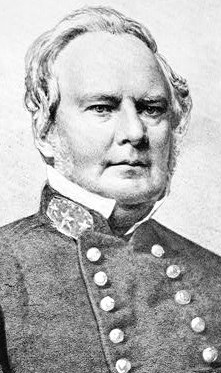
Maj. Gen. Price
“There is nothing on the land at the moment. It is currently made up of forest and degraded field. The park service aims to eventually do restoration of the field to manage it as vegetation from the 1862 time period,” Simonelli said.

While the groups did not disclose the purchase amount, it is believed to be in the hundreds of thousands. The Pea Ridge National Military Park Foundation is helping with fund-raising to cover the purchase and eventual donation of the property to the federal government.

Among those efforts is NWA (Norwest Arkansas) Gives on April 2.

The March 6-9, 1862, Battle of Pea Ridge (Elkhorn Tavern) has been called by some historians “the Gettysburg of the West.” Forces under Union Maj. Gen. Samuel Curtis defeated the men of Confederate Maj. Gen. Earl Van Dorn, whose leadership has been faulted by historians. The Union won control of Missouri and weakened the Confederate hold in Arkansas.

“It is no exaggeration to say that the Pea Ridge campaign permanently altered the balance of power in the Trans-Mississippi. Few Civil War operations had such an impact on the course of events,” according to the National Park Service.

Kurz & Allison's fanciful depiction of battle (Library of Congress)
Jami Lockhart with the Arkansas Archeological Survey performed research on the Williams Hollow Farm and surrounding areas that played a part in the battle.

Confederate and Federal units clashed at Cross Timber Hollow and the Tanyard area north of Elkhorn Tavern. Rebel troops likely traversed the ground comprising the purchased property. Missouri State Guard troops under Maj. General Sterling Price emerged from Williams Hollow on March 7 as part of a drive on the Union right flank, according to histories.

The coalition cited other historical aspects of the area.

Lockhart wrote: “The historic Telegraph Road approaches to within 150 feet of the conservation property, and runs roughly parallel with the property along the entirety of its eastern boundary. Telegraph Road (also known as Old Wire Road) is integral to the history of the region. This road formed a portion of the route associated with the forced relocation of thousands of Native Americans, and is commonly known as the Trail of Tears. It was the route of the Butterfield Overland Mail and Stage line serving the area between St. Louis and San Francisco during the period 1858 to 1861. Telegraph Road was also the primary transportation artery in the area during the Civil War. Telegraph Road is especially well-known for its central role in the Battle of Pea Ridge.”

Sunset at Pea Ridge National Military Park (NPS)
During the night of March 7 into March 8, 1862, both armies concentrated forces on Telegraph Road. A powerful Union bombardment and assault on March 8 put Confederates into a retreat.

It’s not just the Civil War aspect of Williams Hollow Farm that is important, the groups said in their announcement.

“Once protected, the Williams Hollow Farm will secure the view shed of the Pea Ridge National Military Park and conserve mature forest habitat for migratory songbirds and rare bats, including the threatened northern long-eared bat. Keeping the property undeveloped will also help provide water quality protection of Sugar Creek within the Elk River watershed.”

Pea Ridge National Military Park Superintendent Kevin Eads told the Picket the acquisition would help protect and preserve cultural and natural resources. 

Jackie Crabtree, mayor of the town of Pea Ridge and head of the Pea Ridge National Military Park Foundation, said during the time of fundraising the Northwest Arkansas Land Trust will work with the park staff to keep the property maintained. The tract currently has a large open field surrounded by timber.

Rock formations at Williams Hollow Farm (Copyright The Conservation Fund)
Crabtree said the purchase was a rare opportunity to protect such property during a time of rapid growth in the region.

Needless to say, the Civil War is an important part of the town’s background and tourism.

“There are several families still in the area that were here during the battle,” Crabtree told the Picket. “The thing that makes Pea Ridge unique however is the naming of our streets. North/South streets are named for Union soldiers who fought in the battle. East/West streets are named for Confederate soldiers. This is set in city ordinance for developers.”

Sunday, August 19, 2018

Lincoln hat, gloves may be auctioned

The Abraham Lincoln Presidential Library Foundation, which supports Lincoln’s museum in Springfield, Ill., has found itself $9.7 million in debt on a loan it took out 11 years ago to purchase a collection of rare artifacts. Now, hundreds of Lincoln’s personal possessions, including a beaver-fur stovepipe hat that Lincoln purportedly wore, as well as letters and other artifacts, are at risk of ending up on the auction block. • Article

Tuesday, July 7, 2015

Artifacts, planned museum raise profile of 'forgotten' Camp Douglas prison in Chicago

Recent dig near Pershing East Magnet School (Michael Gregory)

Some heard through word of mouth, others through social media posts. Armed with curiosity and perhaps a hat to better weather the sun, they came to the grassy lot near a school on Chicago’s South Side – willing to dig, fill buckets and sift through dirt.

About 50 volunteers assisted the Camp Douglas Restoration Foundation late last month in its fifth excavation aimed at pinpointing features of the little-known Civil War prison camp and gathering artifacts for a planned museum.

“People said, ‘Hey, I just would like to do this,’” said David Keller, a retired banker who is managing director of the 5-year-old foundation.

Archaeologists and volunteers, excavating about 3 feet down in three units, uncovered a Federal uniform button with an embossed eagle and grommets that may have been part of a rubber blanket at the camp. They also found a dark stain in the soil that may have been the remnants of a wooden post. The discoveries will undergo further research.

Button may have been on vest
Rubber attached to grommets (Camp Douglas Restoration Foundation)

Of course, they also find items in the sand and clay that may not be part of the Civil War period. Those items are kept so that other groups or institutions may further research them.

“We find very curious things,” Keller told the Picket this week. “We found in one of the units about a half a dozen clay smoking pipes and pieces of them. Very elaborate, some with floral designs, some very demonic. We have one with the devil and the fiddle.”

The pipes, some of which were made by the Noel brothers of Lyon, France, may indeed be from the period.

For Keller and archaeologist Michael Gregory, an assistant visiting professor at DePaul University, the digs generate public interest and help bring the story of Camp Douglas out of obscurity.

“Camp Douglas wasn’t wiped off the face of the Earth,” said Keller.

In a sense, it was. The prison’s 200 structures went down when the site was dismantled in December 1865. What used to be a rural tract just outside city limits became part of Chicago’s rapid growth. The community, known as Bronzeville, was an African-American mecca during the “Great Migration” of the early 20th century. The South Side was a cultural bulwark and drew numerous black entertainers, including Louis Armstrong.

Camp Douglas largely faded into history.

Besides a cemetery containing the mass grave of 4,000 Confederates who died at the prison, Chicago currently offers only two signs that mention Camp Douglas -- hence the foundation’s efforts to build the museum that will resemble one of its barracks.

Confederate POWs at Camp Douglas (Library of Congress)

Keller, author of “The Story of Camp Douglas: Chicago’s Forgotten Civil War Prison,” said the 2012 discovery of the camp headquarters foundation was an important find.

“We want to better tie specifically where the camp was,” he said. “We don’t know where the stockade fence was found.”

Previous excavations found the letter “B” from a Union cap and the bowl of a tobacco pipe that would have been attached to a reed stem. Experts at the American Civil War Museum are confident the pipe, found about 10 yards from June’s dig, was of the period, Keller said. “It was the pipe of choice of the Confederate soldier.”

The recent excavation, said Gregory, demonstrates that physical evidence of the prison “has not been completely destroyed by urban development.” While the foundation has been able to dig on public property, much of the 60 acres is covered or in private hands, with no accessibility.

Keller said he believes the artifacts are the first military items found in Chicago in 100 years. “Whatever we can find that is part of the history of the camp is important to us.”

'Andersonville of the North'

Camp Douglas originally served as a training facility for Illinois soldiers being rushed to regiments at the front. Much of the site was converted to a prison camp.

“Had the military been involved (the site) never would have been selected,” said Keller. “It was noted for its flooding, swampy conditions.”

(Library of Congress)

The U.S.Sanitary Commission, during an inspection, found that the “amount of standing water, of unpoliced grounds, of foul sinks, of general disorder, of soil reeking with miasmic accretions, of rotten bones and emptying of camp kettles … was enough to drive a sanitarian mad.”

It earned well the sobriquet “Andersonville of the North.”

Officials estimate 1 in 7 Confederate prisoners died, although the exact number is not known. Keller said he believes between 5,000 and 6,000 perished.

In his book, Keller tells Camp Douglas’ story through the eyes of five POWs who kept journals.

“There were haves and have nots in the prison. There were people who lived pretty well, and there were those who lived deplorably,” he told the Picket. “It was not a pleasant place, but it was not as bleak as the Lost Cause tries to paint it.”

Untrained officers and guards and a constant change in commandants made matters worse. And soldiers who were taken prisoner during the Civil War had no training in how to weather the crisis and survive.

One exception, Keller said, were members of Confederate Brig. Gen. John H. Morgan’s raiders, captured in 1863. By then the parole and exchange system had broken down, and the raiders knew their stay at Camp Douglas might be lengthy.

By not allowing a comrade to starve and by sticking together, they endured death rate about half of the general prison population, according to Keller.

“They didn’t cooperate with the prisoner officials. They tried to escape. They refused to sign anything. They kept faith in their fellow prisoners and respected their chain of command.”

Pipe bowl likely used at Camp Douglas
Pipe with devil/fiddle theme (Camp Douglas Restoration Foundation)

Choices and consequences

Several times a month, Keller gets information requests from descendants of Confederate soldiers held at Camp Douglas.

In central Georgia, the staff at Andersonville National Historic Site tells the story of the infamous Confederate prison there and answers questions from those curious about other facilities.

It is very common for folks who are interested in Andersonville to be familiar with the names of other large prisons, traditionally Elmira and Douglas,” said Stephanie Steinhorst of Andersonville. “Those prisons tell the parallel story of Confederate prisoners of war, and the choices that United States commanders made during the war.”

Steinhorst said visitors struggle to grasp the scope of Andersonville’s misery.

She continued: “At the National Prisoner of War Museum, we have highlighted the stories of prisoners of these other locations, like Douglas, through programs and some of the museum exhibits.  Each prison could have thousands of pages of text about their struggles, because each page could be one of the lives that passed through the gates.  However, our site was not built immense enough for every name and every image.  We begin the conversation and then hope that people go home, carrying the questions of prisoners of war to their local historical societies, the National Archives, the town church, the historic site, or better yet, their own family tree. ...”

(Michael Gregory)

Plans for museum, soldiers database

The foundation wants to builds it museum – which will include references to African-American troops who were trained at Douglas – “sooner rather than later,” Keller said, adding it is close to securing a location within the camp’s confines and is negotiating details.

Once that is worked out, the group hopes to raise $2.5 million to build, equip and operate the venue, which will resemble a single-story barracks that was rated for 100 occupants, but sometimes held 300, a sign of the prison’s overcrowding. The barracks were 90 feet by 24 feet.

Keller said he would like to see ground broken this fall.

In addition to its small collection of artifacts, the foundation wants to display items from the Chicago History Museum, including the camp chapel bell, and other institutions. The owner of a locket made by a prisoner also has expressed interest in loaning that item.

The interior would include bunks, mannequins playing cards, photographs and a video loop.

Also in the plans is a database of the prisoners. Nearly 30,000 Confederates went through the camp. Most of the dead are listed on plaques at Oak Woods Cemetery. The National Archives and Ancestry.com have nearly 12,000 additional names, though they are not currently searchable.

Keller has several hundred names given to him. “If I can get between 15,000 and 20,000 names, I would be pleased.” The foundation would like the database – when possible -- to include names, units, capture date, capture location and the soldier’s disposition.

(Michael Gregory)

In the meantime, the foundation continues its education outreach by speaking to various groups and at schools.

Steinhorst, with Andersonville National Historic Site, said every Civil War prison failed to protect human life.

“Men died in these places and the legacy of any of the Civil War prisons is how did they survive, what did the survivors want us to understand, and how can we learn from their sacrifices. The study of prisons needs to be based on the flaws and merits of each prison as a single moment in history,” she told the Picket.

“To compare them, and shape all your understanding on which is worse or who is to blame is a lost opportunity. We hope that when folks visit places like Andersonville, Richmond, Elmira or Point Lookout that they find space to explore the complexities of the story and connect to the landscape. After the crucible of captivity it was the survivors, women, and freedmen who called for memorials, monuments and ceremonies.  Today, we live in the legacy of their work, and the work continues.”

Friday, April 24, 2015

'Missing features' will be returned to Cemetery Ridge, Ziegler's Grove at Gettysburg

Ziegler's Grove area before two buildings, upper parking lot removed (NPS)

The campaign to transform a small portion of the Gettysburg battlefield into what it looked like in July 1863 will include reducing the size of a parking lot, re-establishing a ravine that was filled in when the old Cyclorama building was constructed and the relocation of monuments to their original location.

Park officials on Thursday announced $1.3 million will go toward the latest phase of the rehabilitation of Cemetery Ridge and, specifically, Ziegler’s Grove.

“For the first time in more than 50 years, this portion of Cemetery Ridge will have its historic appearance, offering fresh experiences for a new generation of Gettysburg visitors,” said Ed Clark, Gettysburg National Military Park superintendent.

The National Park Service’s $600,000 will work with a $700,000 match from the nonprofit Gettysburg Foundation to lessen the footprint of what park management assistant Katie Lawhon has called “modern intrusions” on the hallowed ground while restoring some historic features.

The foundation previously has said the growth of the town, commercial development and the construction of battlefield buildings that came to be seen as eyesores had a significant impact on the landscape.

“These dramatic changes have hidden the site of important battle action under asphalt parking lots, concrete, brick and non-historic vegetation,” reads a blog post on the foundation’s website. “Thus, it is nearly impossible to visualize today the conditions encountered by over 6,500 soldiers in July 1863. The events that occurred along the western slopes of Cemetery Hill and the northern edge of Cemetery Ridge had a significant impact on the Battle of Gettysburg and, ultimately, the cost of the Civil War.

Monuments will be moved 20 feet to original locations (NPS

Officials knew something had to be done, and Thursday’s announcement is another step in the process.

The NPS demolished the old visitor center in 2009 and the old Cyclorama building in 2013. The visitor center parking lot was removed in 2014. The Cyclorama and visitor center are now combined, southeast of Ziegler’s Grove.

Some of the buildings and infrastructure constructed from the 1930s to the early 1960s came at the expense of historic landscapes. Jim Campi, writing in Hallowed Ground magazine, said this of the now-gone Cyclorama location: “The modern brutalist design of the building, which some equated to an alien spacecraft, ensured its incongruity within the battlefield landscape.”

Lawhon told the Picket said that a parking lot for visitors to Soldiers’ National Cemetery will be reduced, with room for four buses, 54 cars and three spots for disabled drivers.

Monuments that were moved for the construction of the old Cyclorama building will return to their original locations. The project also will rebuild ornamental entrance gates at Hancocke Avenue and Taneytown Road and commemorative walkways. 

Gateway to Hancock Ave. at Taneytown Road will be rebuilt.

Gettysburg Foundation President Joanne M. Hanley said, “The Gettysburg Foundation has contributed to the rehabilitation of Cemetery Ridge since the inception of the idea to bring back missing features of the battlefield landscapes.”

President Abraham Lincoln delivered the Gettysburg Address at the cemetery. This portion of Cemetery Ridge was a crucial part of the Union army’s defense. Ziegler’s Grove is near the modern southern boundary of the town and just northeast of the “High Water Mark” of Pickett’s Charge.

Tuesday, December 23, 2014

Gettysburg park adding old train station, land at base of Big Round Top

Progression of station repainting to white (Gettysburg Foundation)

The 1858 train station that served as a hospital during the Battle of Gettysburg and welcomed President Abraham Lincoln for his famous address months later will soon be part of the national military park.

The Gettysburg Foundation can move forward with its plans to donate the Gettysburg Lincoln Railroad station and an undeveloped 45-acre parcel of battlefield land, the National Park Service said in a press release Monday.

The move is possible because of federal legislation that added the acquisitions to Gettysburg National Military Park’s boundaries.

The foundation and the park will work together to create a plan and a timeline for transfer of the properties, and an operating plan for the train station. The NPS will use the station as an information center.

“The train station will serve as a critical component in commemorating Abraham Lincoln’s visit in November of 1863 to give the Gettysburg Address,” the Park Service said. “Upon arrival at the station on November 18, Lincoln walked one block to the David Wills House, where he spent the night before riding to the newly established Soldiers’ National Cemetery to give his now famous 272 word speech, the Gettysburg Address.”

President Lincoln at Gettysburg (Library of Congress)

The borough of Gettysburg completed a rehabilitation of the station, located on Carlisle Street, in 2006 but was unable to operate it because of a lack of funds. The foundation bought the site this year for $500,000, according to the York Dispatch.

The 45-acre parcel at the base of Big Round Top is vacant land that abuts the southeastern boundary of the park. Cavalry skirmishes occurred near this site and it has critical wetlands and wildlife habitat related to Plum Run, officials said.

The train station was an emotional center in the borough in the battle’s aftermath, with the wounded and dead shipped off, as well as the arrival of family members desperate to learn the fate of soldiers.

Thursday, April 19, 2012

Grant helps build Arkansas fort replica

The Walton Family Foundation has awarded $627,000 in grants for construction of Arkansas Civil War sites in Helena-West Helena, including a Fort Curtis replica. • Article

Monday, February 27, 2012

Appomattox group sets 10 goals

A newly formed foundation is making it a mission to get Appomattox Court House National Historical Park ready to play its part in the sesquicentennial celebration of the Confederate surrender and the end of the Civil War in three years.

The Appomattox 1865 Foundation has been incorporated as a business since November, and is in the process of attaining nonprofit status. Organizers and park officials are optimistic the group will have an impact not only in the park’s near future, but down the road. • Article