Showing posts with label Andersonville. Show all posts

Wednesday, March 26, 2025

'The best of human nature': This Georgia woman cared for a Yankee POW at Andersonville while his friends tended to her brother at a Northern prison. How did this come to be? There is no single answer (and there's a Henry Wirz angle)

Living history at Andersonville (NPS) and Peter Kiene (Courtesy Mark Warren Collection)
Mary Rawson stepped into the witness stand at the Old Capitol Prison in Washington, D.C., near the completion of Capt. Henry Wirz’s trial on charges of murder and conspiracy.

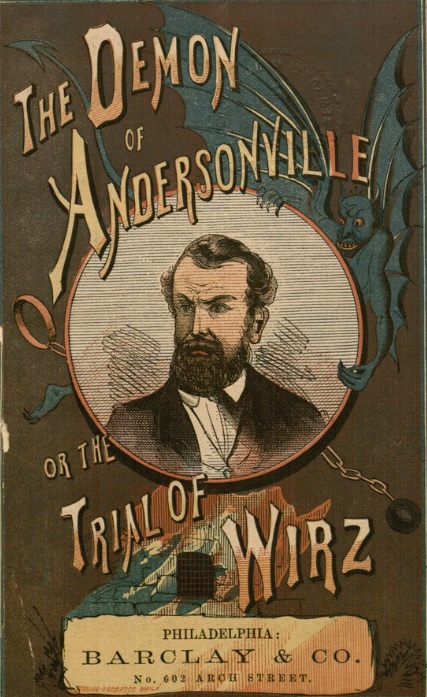
By this point, a parade of witnesses had pilloried the stockade commander at Andersonville prison. They said he personally killed men, was cruel and withheld food. A book published after the sensational case pulled no punches, labeling him “The Demon of Andersonville.”

But the Confederate officer had his advocates: They argued Wirz did the best he could with meager supplies, showed acts of mercy and had no control over certain aspects of the notorious operation in central Georgia.

Rawson’s testimony in early October 1865 was meant to buttress the defense claim their client was a human – not a monster.
The woman from Plains – hometown of Jimmy Carter -- told the military tribunal that beginning in early 1865 she would take the train 30 miles to the prison to bring food to  -- of all things -- a Union prisoner, Peter Kiene of the 16th Iowa Volunteer Regiment. With Mary’s help, Peter was able to get letters to his family

How did that come to be? Rawson encountered Wirz at the camp depot and asked whether she could care for a sick prisoner, according to her testimony. Another source provides a description of what could have led her there.

A New YorkTimes article cited Rawson’s testimony that “Capt. Wirz had never refused or denied her any privileges that she had asked of him; he was always agreeable and willing that she should bring anything to the prison; she never heard of Capt. Wirz treating any lady in an unkind way.”

Andersonville National Historic Site recently made a Facebook post about Rawson and Kiene timed to Women’s History Month in March and the 160th anniversary of the prison’s existence and Rawson’s visits.

There was a fascinating twist here: Mary’s brother, Pvt. Joseph Rawson of the 51st Georgia Infantry, was a Federal prisoner in Rock Island, Ill., after having been captured in Deep Bottom, Va. “Thoughts of Joseph suffering in an enemy prison led Mary to want to comfort a prisoner at nearby Andersonville,” says the social media post.

Park officials initially told the Picket they do not know why Mary Rawson chose to care for Kiene, who was just a teenager when he enlisted. He was reportedly captured in summer 1864 during fighting around Atlanta. 

After searching a bit more online and coming across a February 1882 edition of the Americus (Sumter County, Ga.) Reporter newspaper, I made an interesting discovery.

A brief entry indicates a Mr. and Mrs. Peter Kiene had traveled from Iowa, “that region of frost and snow,” solely to visit Mary Rawson, who lived in Magnolia Springs outside Americus.

"It seems that Mr. Kiene was a prisoner at Andersonville during the war, and that Mrs. Rawson had a brother who was imprisoned in Rock Island. This brother (Joseph), finding out from friends of Kiene's that Kiene was in Andersonville, wrote to his sister to provide for him particularly, as by so doing Kiene's friends would make his lot easier.

"Mrs. Rawson did so, and made Mr. Kiene as comfortable as possible, his friends reciprocating the favor by take care of her brother until the war was over and both released," it says. Kiene and his family lived in Dubuque, Iowa, about 50 miles from the prison camp.

There's yet another version from a 1964 article entitled "How a 15-Year-Old Dubuquer Survived Andersonville," in the Telegraph Herald newspaper.

It states the boy's father, Peter Kiene Jr., intervened to help Joseph Rawson after Mary Rawson learned Kiene was from Dubuque and then reached out. The father arranged for that assistance, says the article.

From Mary Rawson's testimony it is difficult to tell whether she had learned of Kiene's name beforehand.

Regardless of the circumstances, the episode is remarkable.

“For a prisoner of war, survival depends on emotional resilience as well as physical sustenance,” said the site’s Facebook post. “Mary Rawson’s kindness may have been the difference between hope and despair, helping both soldiers survive the hardships of imprisonment and return home to their families.”

Freed Union soldier returned to Georgia years later

Ranger Sherri Barnhard said Wirz allowed Mary Rawson – who came about every two weeks -- and Kiene to dine outside the prison walls. The commandant did not allow women inside the walls and was known at times to protect the vulnerable. Wirz testified he allowed captive drummer boys to be kept outside the stockade.

Joseph's compiled military service records indicate he was captured in December 1863, near Knoxville, Tenn., said Barnhard.

“The last record I have is the record showing ‘name appears as signature to an Oath of Allegiance to the United States, subscribed and sworn to at Rock Island barracks, ILL., June 20, 1865,” she said.

Photographer unknown, "[Peter Kiene seated at his desk]," Loras College Digital Collections, accessed March 18, 2025, https://digitalcollections.loras.edu/items/show/5235
By that time, both soldiers were beginning a new life after captivity.

“Kiene returned to his family in Dubuque and joined with his father in the iron business,” says an article about Iowa Civil War volunteers published in Military Images magazine. “Kiene went on to become successful in real estate and insurance, and active as a philanthropist and in the Grand Army of the Republic. He suffered a paralytic stroke in 1912 and succumbed to its effects at age 66. His wife, Caroline, and two children survived him.”

(See Iowa Civil War Images on Facebook here)

Sadly, the park has not yet learned anything much about the lives of Joseph and Mary Rawson after the war, but Barnhard said she is continuing research.

An 1870 U.S. Census entry lists a Mary Rawson, the mother, as keeping house. The younger Mary is described as being 40 years old, while Joseph, at age 35 or 36, was a farmer.

Graves of Joseph and Mary Johnson (Courtesy Brenda Darbyshire, Findagrave)
Joseph and Mary are buried near their parents at Lebanon Cemetery just outside Plains. Their headstones do not indicate when they were born and died. Barnhard said Mary is not believed to have married.

Interestingly, the cemetery is the resting place for James and Lillian Carter, Jimmy Carter’s parents.

Teri A. Surber, park guide at Andersonville, told the Picket why she believes the story of the Rawsons and Kienes resonates with people

“It shows the best of human nature shining against the darkness of one of the worst places in history, and that even though both families were on opposing sides, they could set that aside and help one another. Mary looked at Peter Kiene and saw her brother. She saw that they were not very different from one another after all. The story is full of hope. Hope that people will do what is right. Both families had to trust that a stranger, far away, was fulfilling their part of the bargain and taking care of the one they loved. There had to be trust, and in the end, the story has a happy ending. There's so much bad news today. Sometimes people need a happy ending.”

Commandant was a truly polarizing figure

Henry Wirz reclines (left) during his 1865 trial in Washington, D.C.
At some point between Wirz’s arrest and trial, his lawyers called upon Mary Rawson to speak on his behalf.

Rawson recalled seeing the captain occasionally during her visits to Kiene.

“I was there in the month of March 1865. I had on a brown dress. The captain always recognized me and asked me if I was going to see my prisoner. I would say ‘Yes,’ and I would carry another basket up and leave it. He never refused me.”

"I used to tie up a bushel basket and leave it, and my prisoner said that that would last him two weeks,” Rawson testified.

The park has told the story before and I asked Barnhard about this year’s timing with Women’s History Month. She said Mary Rawson’s story goes toward that, but there were larger results of the Civil War, including women largely filling the ranks of teachers and nurses. The park is holding a living history event this Saturday (March 29) and among the topics is the Woman’s Relief Corps, a charitable auxiliary to the Grand Army of the Republic.

But back to Wirz ...

In the end, the testimony of those defending him could not save him. The Swiss-born soldier was convicted of both charges and executed in the prison yard on Nov. 10, 1865. (At left, Old Capitol Prison, Library of Congress)

A National Park Service page calls him a complicated figure. “Wirz was unable to control the bureaucracy that plagued the Confederate military prison system, so he controlled the prisoners in the only way he could – through intimidation and punishment.”

Barnhard said Wirz demonstrated both kindness and cruelty. She wonders whether medication he took for a severe arm injury led to a “shift in moods.”

“The more I read about him, the more confused I become about him.”

Saturday, December 28, 2024

2024's Top 12 Picket posts: Fort Fisher earthworks, Meade's cool hat, replica gun at Walmart, USS Monitor mystery, Burning of Darien survivor -- and much more

Clockwise: Enfield rifles conserved in Georgia; Herb Peck collection auction, Adam Strain building in Darien, Ga., deadline at Andersonville prison, George Meade's slouch hat and Fort Fisher's new replica traverses
Posts about a rescued tabby warehouse that has an interesting Civil War connection, Fort Fisher's rebuilt earthworks and new visitor center, George Meade’s cool slouch hat and rusted Enfield rifles being kept in an aquarium tank were big reader draws in 2024.

The top 12 Civil War Picket posts – by Blogger page views – covered a wide array of topics (two pertain to North Carolina's Fort Fisher).

Chad Jefferds, assistant site manager at Fort Fisher State Historic Site, recently told the Picket: “The reconstructed earthworks are already a major hit, and we hope to be adding more interpretation to them in the coming months. Visitors have also been very pleased with the exhibits, along with the views from the second-floor windows and balcony. We have seen a dramatic increase in visitation – this November’s total was 56% higher than November of 2023.”

We’ve got a few items in the works (including an update on Enfield rifles under conservation and Georgia troop markers at Manassas) and we look forward to rolling them out in early 2025. Thanks so much for your continued interest. Please tell a friend or two about us. And Happy New Year!

Drum roll, please ....

12. PRECIOUS PORTRAITS AUCTIONED: The family of the late Herb Peck Jr. enlisted the help of law enforcement, other collectors and Military Images magazine in their hunt for 117 photographs taken during a 1978 burglary at their Nashville home. Forty-eight recovered images sold for $292,000 in a March sale. – Read more

11. CROSSING “DEADLINE” MEANT DEATH: The light railing at Andersonville in Georgia was made from posts 3 to 4 feet long and driven into the ground. Horizontal pieces of wood topped the design, which was roughly 18-19 feet inside the stockade wall. Confederate guards in sentry boxes kept a sharp eye for POWs who extended any part of their body past the deadline. – Read more

10. LITTLE ROUND TOP BACK IN BUSINESS: A two-year rehabilitation of the Gettysburg landmark tackled erosion, overwhelmed parking areas, poor accessibility and related safety hazards, and degraded vegetation. This January post ahead of the reopening summarized the major project. – Read more

9. HOW THEY CLEAN ENFIELDS KEPT IN WATER: A team with the Georgia Department of Natural Resources uses a garden hose, small pump, spray nozzle and a wet-dry vacuum to periodically clean and refill a 300-gallon aquarium tank that holds -- of all things -- 18 Pattern 1853 Enfield riflesThe artifacts are awaiting long-term conservation. – Read more

8. VANDALS TRASH KENNESAW MOUNTAIN: Vandals destroyed or damaged six signs, several sections of split-rail fencing and caused minor damage to Civil War earthworks at Kennesaw Mountain National Battlefield Park in late January. As of this month, no arrests have been made. – Read more

7. Q&A WITH GETTYSBURG SUPERINTENDENT: The Picket asked Kristina Heister (right) about her priorities and initiatives, current and future projects and her ancestors. Many fought in the Civil War and two were at Gettysburg. – Read more

6. GEORGE MEADE’S COOL HEADGEAR: If I ever get around to writing “Cool Hats of the Civil War,” my top choice (spoiler alert!) will go to Union Maj. Gen. George Meade’s slouch hat, followed closely by those of Ambrose E. Burnside and J.E.B. StuartThere are great images of him with that headgear: In front if his tent; seated among a throng of soldiers, or perched on a bench at the famous Grant "Council of War" at Massaponax Church in Virginia. – Read more

5. FORT FISHER, PART ONE: The staff at the Civil War site near Kure Beach, North Carolina, and contractors engaged in an extraordinary effort this year to recreate three traverses, bombproofs, a magazine and a sally port that were vital parts of the Confederate fort, which fell in furious hand-to-hand combat in January 1865.. – Read more

4. FORT FISHER, PART TWO: This piece previewed the earthworks project mentioned above and the building of a new visitor center, which is just north of the east-west line mounds of earth known as traverses that were part of the defenses. Much of the eastern part of the fort has been claimed by the Atlantic Ocean. – Read more

3. REPLICA GUN FOUND AT WALMART: A Civil War replica revolver (not the real thing, as some news reports claimed) was found in January by a Walmart employee in Gettysburg, Pa., while emptying an outside trash can. It was a real firearm, however. State troopers recently said they still don’t know who left it. – Read more

2. LINGERING MYSTERY OF USS MONITOR: I continue to marvel at the design and engineering skills of those who made the vessel that changed naval warfare in a single battle with the CSS Virginia in March 1862. My recent foray into learning a bit more about the vessel’s circular, ingenious turret – and its supporting braces -- put me back in touch with experts on Monitor about a distinctive maker’s mark found on a brace. Project director Will Hoffman says they still don't know who stamped an "ULSTER" mark on one brace.  – Read more

1. THEY SAVED A CIVIL WAR SURVIVOR: One of just a few tabby structures remaining on the Georgia coast, this weathered warehouse had survived a controversial fire during the Civil War, hurricanes, economic downturns, Father Time and decades of emptiness. Entrepreneurs Milan and Marion Savic, working with a team of specialists, completed the painstaking restoration of the Adam Strain Building in Darien and turned it into a brewery and event space. They are now working on a museum about the area's history and culture. – Read more

Honorable mentions: This researcher helped obtain Medals of Honor for two soldiers; Wisconsin twins are legendary in reproduction artillery; monument will honor Black hero Robert Smalls

Saturday, December 14, 2024

Amid construction of new Sultana Disaster Museum, executive director envisions exhibits that will capture chaos and heroism during the Mississippi River tragedy

A building addition provides an entrance to the main gallery (Sultana Disaster Museum)
Construction in Marion, Ark., of a larger museum commemorating the Sultana maritime disaster at the end of the Civil War is moving full speed ahead, though new exhibits won’t open until April 2026, a year later than first estimated.

Crews are building a more dynamic Sultana Disaster Museum than the current small location a few blocks away. It will be housed in the gymnasium of an old high school, with a couple additions. (A temporary gallery about music in the Arkansas Delta will open in October 2025).

Marion, close to where the side-wheeler Sultana exploded and caught fire in the Mississippi River, will honor soldiers who died in the disaster and residents who helped save others who were plunged into the river in late April 1865.

A Harper's Weekly depiction of the April 1865 disaster in the Mississippi River
About 1,200 passengers and crew perished. Hundreds of Federal soldiers, many recently freed from Confederate prisons, including Andersonville and Cahaba, were on their way home.

Earlier this year, the Sultana Historical Preservation Society brought on Jeff Kollath, former longtime executive director of the Stax Museum of American Soul Music in Memphis, Tenn., as executive director.

Museum officials say the exhibits will build off the full story of the Sultana, with information about the importance of the river, Confederate POW camps, the bribery and corruption that led to the overcrowding of the boat, the explosion and fire, and the creation of the Sultana Survivors Association. The vessel’s boilers are considered to be the main cause of the catastrophe.

The Civil War Picket, which has followed the city’s efforts for more than a decade, recently reached out to Kollath (left) for an update. His e-mailed responses are below.

Q. Please summarize where the project is now. I know the leaky roof needed replacing, the foundation was added for the gym addition and work is ongoing.

A. At present, contractors are bricking the exterior walls of the new addition. They have completed the west side and have moved to the main entrance. Sheetrock has been installed in probably 80-85% of the old building. The crew is doing a wonderful job floating each piece and creating what will be a beautiful surface for paint, murals, large format graphics, etc. What was once a vast, open, and cold space has now tightened up significantly -- even drywall can add intimacy sometimes! The new roof installed on the old building and has nicely cured. 

Q. Are you now expecting completion in late 2025, or have an estimate?

A. Our building will open in late October 2025 with the lobby, gift shop, auditorium and temporary exhibition gallery available for the public to see. Admission will be free, but we will highly encourage donating to help the cause. The main exhibition gallery will open in late April 2026 to coincide with the 161st anniversary of the disaster.

Design for the front of larger museum in Marion (Courtesy Sultana Disaster Museum)
Q. Will the temporary exhibition gallery that opens in October be comprised mostly of what is in the current Sultana museum? 

A. No, the temporary gallery will not be exclusive to the Sultana nor the Civil War. We view this space as a way to highlight compelling regional, national and global arts, histories and cultures. Our location, just outside of Memphis, and our position as the only large arts, culture and humanities organization and space between Helena and Jonesboro provides us with an opportunity to create exhibitions that have wide appeal to a variety of audiences. Our first temporary show will be a collaboration between the Sultana Disaster Museum and Arkansas State University to highlight the impact and significance of music from the Arkansas Delta, from Al Green and Johnnie Taylor to Johnny Cash and Sonny Burgess. That exhibit will open in October 2025. 

Q. You have said the exhibits were to be bid separately and as of earlier this year they had not been designed. Can you please update me on all this? What part does Haizlip Studio (of Memphis) continue to have?

A. We are currently in the exhibition design process with Haizlip and will be selecting an exhibition fabricator within the next 30-45 days. Haizlip is both the architect and exhibition/graphic designer.

Interior of planned exhibit gallery at old gymnasium (Sultana Disaster Museum)

Q. I understand you like to tell stories in a compelling way.  At the Sultana museum, that would include looking at individual soldiers. What does that look like to you?

A. There are more than 2,000 individual stories to be told, and we're not going to be able to tell all of them. Chester Berry's compendium of stories, first published in the 1880s, is always going to be the go-to for that. However, we will always use the stories of individuals to foreground all the important aspects of our narrative, from the story of the Sultana as the "fastest boat on the Mississippi River," all the way through the kindness and care of the Memphis medical community, to what happened to many of the survivors in the decades following the disaster. History from 10,000 feet down is not compelling; history from the bottom up is, and always will be, the most interesting way to tell a story. 

Q. There has been discussion of the big attraction being a mock-up of the forward part of the Sultana, which will include the boilers. Is that still the case?

A. We will likely be budget-limited, but there will be some large-scale representation of the Sultana, the paddlewheel, lower deck, and, yes, the boiler area. (At left, photo of 1891 reunion banner, courtesy of SHPS)

Q. What do you think will be the coolest use of technology in the museum? What will be the top interactive feature?

A. Our biggest challenge is going to be how to highlight the true chaos of the moments following the boiler explosion: the mad dash looking for anything to float on, working together and working independently to survive, and dealing with the temperature and fury of a river above flood stage in the early spring. We have some cool ideas of how to do this so we're excited to see how they come to fruition. As I've been saying lately, we only get one chance to "blow up" the Sultana, so it needs to be impactful and memorable for our guests.

Q. Since you came on board, what has been your prime focus: Construction, future interpretation, marketing – all of that?

A. It has been a little bit of everything, with the focus turning almost exclusively to interpretation, design and writing the exhibitions. I'll be relying on the experts on our board to answer questions and guide us along the process. The construction process is moving along apace, and we're at the point where we need to locate cameras, wireless access points, A/V hookups, etc. That means we're getting down to "IT," which is a good sign. We want our space to be welcoming, clean and intentional, meaning we have answers for why things are the way they are. Thankfully, our contractor and architect are excellent at answering my questions. There are about 2,781 things to consider when building a museum from scratch, and we won't hit all of them, but we're doing a good job so far.

Q. Any recent acquisitions for the artifacts collection, or anticipated? 

A. Nothing of note. We are not actively collecting at the moment, but certainly have hopes that more survivors' families will entrust us with their materials after we open to the public in 2026. 

Q. How is the city of Marion financially and otherwise contributing to the project? What are the townspeople saying?

A. The Marion Advertising & Promotion Commission has been incredibly generous for the last couple of years, providing funding for marketing and operational support for the current museum. That funding is locked in through 2026 and will cover a fair amount in terms of operations even in the new space.

----

After years of planning, the site is beginning to shape up. (Sultana Disaster Museum)
Finance update: The current anticipated cost for the endeavor is roughly $7.25 million (including fundraising expenses), said John Fogleman, president of the Sultana Historical Preservation Society. The exhibits are still being developed but they will cost $1.5 million to $2.5 million exclusive of design costs. “The cost also depends on our ability to raise an additional $1 million for exhibits,” Fogleman told the Picket.

Previous Sultana coverage:

Wednesday, April 10, 2024

At Andersonville and elsewhere, crossing the 'deadline' meant death. Whatever the number of incidents, the existence of these barriers kept men in line

A.J. Klapp's drawing of a deadline shooting at Andersonville (Brown University Library)
Before the word deadline became synonymous with getting something done by a specific time, it was associated with a deadly feature of Civil War prisons. A captive crossing the deadline risked death, and there are instances of guards on both sides shooting them.

The deadline was intended to prevent the prison’s growing population from getting too close to the stockade wall, making escape more difficult. It was also supposed to reduce fraternization and trading between the prisoners and guards, according to the National Park Service.

Andersonville National Historic Site on Sunday marked the 160th anniversary of the completion of the deadline at the site (April 7, 1864). Stockade commander Capt. Henry Wirz had made this a priority.

The light railing was made from posts 3 to 4 feet long and driven into the ground. Horizontal pieces of wood topped the design, which was roughly 18-19 feet inside the stockade wall.

Confederate guards in sentry boxes kept a sharp eye for POWs who extended any part of their body past the deadline. (Not all camps had such features).

The first Union POW to die at Andersonville for crossing the deadline was Caleb Coplan (Copeland), a young Ohioan shot just two days after it was completed.

The prisoner was wandering the northeast corner of the stockade, apparently in search of material to patch his shelter or clothing, wrote William Marvel in “Andersonville: The Last Depot.” (Photo at left courtesy of John Banks' Civil War Blog)

“Something under the dead line caught his eye -- a scrap of flannel, some said -- and he ducked under the line to retrieve it. The guard brought his cumbersome old smoothbore to his shoulder and let fly with a charge of buck-and-ball. The range was too short to miss, and the .75-caliber ball bored through Coplan’s breast near the heart. Onlookers carried him to the hospital tents a few yards away, where he died the next day -- the first man killed at the dead line.” (Photo below of his grave at Andersonville courtesy of Kevin Frye.)

There would be more to come, at Andersonville and other prisons. Archaeology at Camp Lawton near Millen, Ga., has uncovered two Confederate bullets possibly fired at captives.

Those who have researched these prisons express caution about try to tabulate the number of shootings at the deadline.

Prisoners often exaggerated the number; at Andersonville this claim amounted to hundreds. “Sometimes this was done on purpose and sometimes they were simply mistaken or remember incorrectly,” says Teri A. Surber, park guide at Andersonville.

Regardless of where they occurred, shootings at the deadline had a profound psychological impact on POWs.

Surber and Michael Gray, a history professor and author of “Crossing the Deadlines: Civil War Prisons Reconsidered,” said Union prisoners might receive more pension money by showing they suffered during confinement. There was an incentive to lie about being a prisoner or witnessing horrific incidents, they say.

Bob Crickenberger, president of the Friends of Point Lookout (a Union prison in Maryland), said people should be leery of  hearsay stories told years after the war, particularly those that begin with, “I was told”, “I heard,” or “it’s been said.”

“Unless a prisoner was there and was an eyewitness to the shooting, and there were many witnesses, should (a story) be taken as truth. Kind of like all those folks that said Sherman burned their farms when they were miles out of the way when he came through.”

Was this .57-caliber bullet fired at a POW at Camp Lawton? (Georgia Southern U.)
Gray notes that in the last two years of the war, prisoners were often manned by older, extremely young or disabled soldiers and training was an issue. “You are going to send the best men to the front.”

By any measure, life in a Civil War prison was marked by privation and despair. Matters worsened after prisoner exchanges ended by mid-war, resulting in a huge increase in camp populations on both sides.

Between the skill of the guards and the desperation of prisoners, there are documented cases of shootings at the deadline or elsewhere in a camp. Firm numbers are impossible to ascertain, but here’s a look at several, including Elmira, Camp Lawton and Point Lookout:

ANDERSONVILLE/CAMP SUMTER (Georgia – Confederate camp)

A.J. Riddle photo of prisons in August 1864 (Library of Congress)
At Andersonville alone, nearly 13,000 men died over 14 months – an average of more than 30 a day in that span. (Overall, 30,000 Union and 26,000 Confederate soldiers died in captivity during the Civil War). A relative few were shot by guards.

Drawings of men being shot at the deadline were widely reprinted in Northern newspapers, and today, the term is almost synonymous with Andersonville prison,” according to the NPS.

Surber said there are eight documented cases of a guard shooting a prisoner.. A firm number will likely never be known.

"The only time guards shot at prisoners was when they crossed the deadline or if someone near them crossed it. There is an instance where a man reached over the line to get something, and the guard accidentally shot the man sleeping next to him," the park guide says.

(If someone had a gunshot wound from a battle, they were usually listed as having died of "wounds.")

“One confirmed shooting that I would say was the (wounding) of a man the prisoners called ‘Chickamauga.’ Robert Kellogg and several others wrote about the incident in their diaries or memoirs and also testified about it during the (Henry) Wirz trial. Another is Pvt. William Stewart, 9th Minnesota Infantry, whose cause of death is recorded as ‘gunshot.’"

During the trial, prisoner George Gray testified that Wirz himself shot Stewart and took some money from him. Wirz (left) denied anything to do with Stewart. “There were rumors that guards were given a 30-day furlough for shooting a prisoner, but there is no actual evidence of that,” Surber says, adding there is no evidence Wirz shot prisoners.

Albert Harry Shatzel of the 1st Vermont Cavalry wrote that he saw a shooting at the deadline.

“One of the poor Boys shot dead by Guard while geting a cup of watter,” Shatzel wrote, according to Civil War blogger John Banks. “The Ball passed through his head. He stuck his head under the Dead Line to get some watter but he will never go there again. Dam the laws of such men as those are hear for they consider it an honor to murder a man …all in all they are not to blame for they a Furlough of 35 days for every man they kill.”

Surber provided a list of the rare successful escapes at Andersonville.

None of the 33 dug out from the inside; they were already outside or on a work detail when they made a break for freedom.

The answer to how many were shot while trying to escape is fairly easy,” Surber says. “None, as far as we know. All eight of these men were shot for crossing the deadline and were inside the prison. Of course, it is possible that someone could have been shot while trying to escape, as would be the practice of the day, but there is no way to know for certain.”

(Photo above, re-creation of POWs arriving at Camp Sumter / NPS)

CAMP LAWTON (Georgia – Confederate camp)

POW Robert Knox Sneden's map shows deadline and sentry boxes (Library of Congress)
Camp Lawton operated for about six weeks in the fall of 1864. Prisoners were sent from Andersonville amid worries Union raiders would try to liberate the camp. Of 10,000 troops held at Lawton, at least 750 Federal soldiers died.

Ryan McNutt, director of the Camp Lawton archaeological project at Georgia Southern University, said historical sources are not complete enough to come up with a full count of POWs shot by guards.

“As ever, there are confused and scattered references,” he tells the Picket. “(POW John) McElroy states that he couldn't recall anyone being shot at Lawton for crossing the deadline, and he raised it as a curiosity since every other camp he was at had at least a few instances of executions by guards. However, Cpl. Aldrich said, ‘Once in a while the guards would shoot a poor fellow just to keep his hand in it, still, there was not as much shooting as at Andersonville. One poor fellow was shot within 10 feet of my tent one night and he was not within 10 feet of the deadline.’"

John K. Derden, author and professor emeritus of East Georgia College, said while there are diary accounts mentioning shootings, he found only one incident that was seemingly corroborated. Regardless, there were fewer shootings than at Andersonville.

James Vance wrote in his diary for Nov. 6, 1864). “2 men shot 1 killed. The first ones.” Sgt. Amos Yeakle wrote in his diary the same day, “There was one shot dead by the guard and one wounded for getting over the dead-line.”  

Work more than a decade ago at Confederate barracks area (GSU)
Derden, author of “The World’s Largest Prison: The Story of Camp Lawton,” contends prisoners might hear a guard firing to clear a musket and assume the round was meant for a Federal soldier.

“As for the climate in the prison, I believe that things were a bit less fractious because of the lack of overcrowding, the water situation that allowed prisoners to bathe and even swim, and (at least initially) the somewhat better food supply. Also, Commandant Vowles was generally well liked by the prisoners as opposed to their bitter attitudes toward Wirz at Camp Sumter.”

Regarding the deadline, archaeology seems to indicate about a 30-foot clear space between shebang remains and the wall, says Derden.

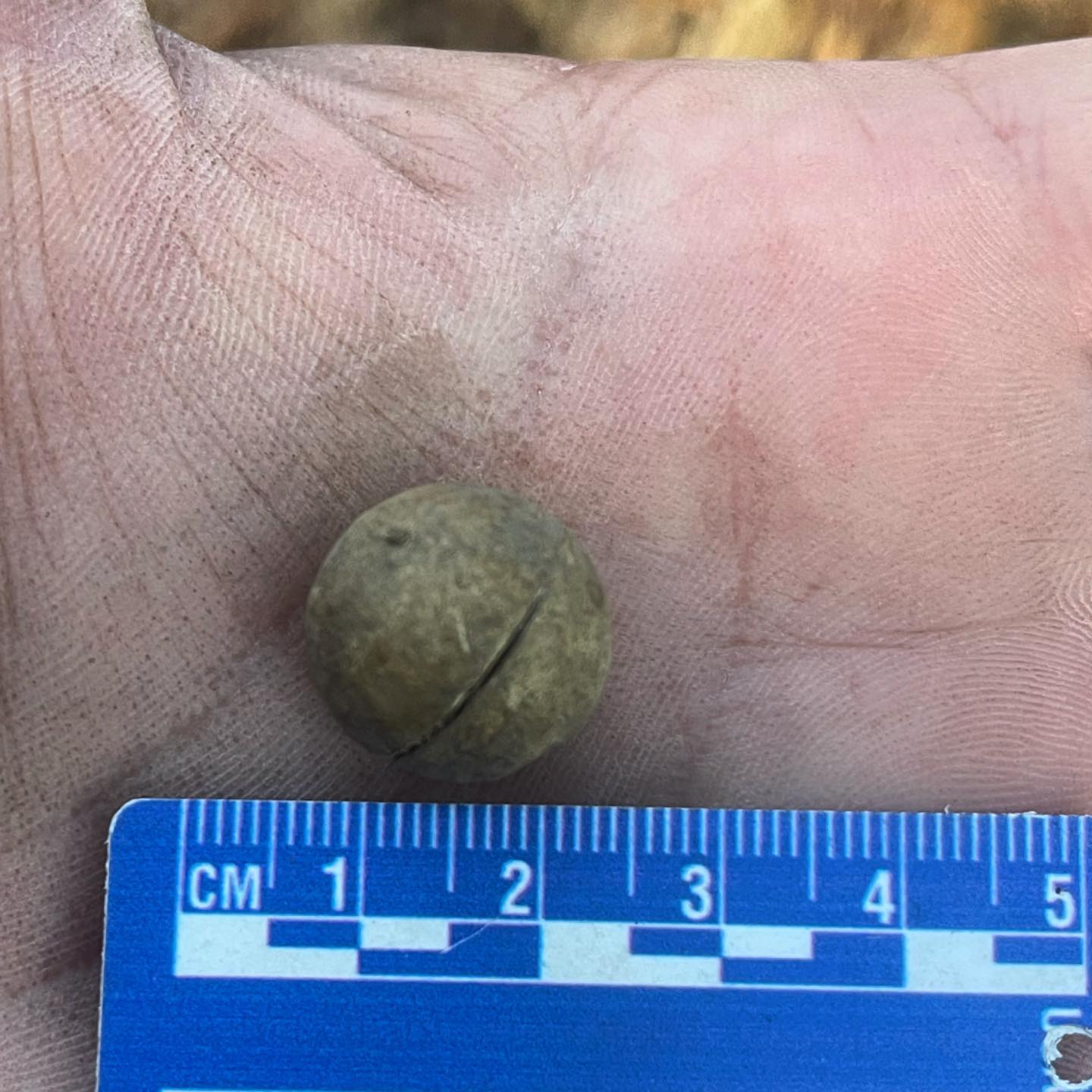
McNutt said students have recovered at least two Confederate bullets that may have been fired at the inside of the Lawton stockade. The team in early 2023 found a poorly cast ball, likely fired from a Springfield Model 1842 percussion cap musket (photo below, courtesy of Camp Lawton project).

Produced in large numbers, and floating around most of the arsenals in the South, these were still used despite the lack of accuracy and range in both the front lines and on the home front by militia. With a maximum range of 365 meters, and an average effective range from 90 to 275 meters, the location of the ball is well within range of the guard towers. And while most of the POWs at Camp Lawton recalled few instances of guards shooting POWs, our fired musket ball, along with other fired rounds from previous work inside the stockade, is a sobering reminder that Lawton still had many ways to die,” the professor writes.

Students led by Lance Greene, his predecessor, in 2010 found a spent .57-caliber bullet at the stockade. The round “has clear signs of rifling from being fired: deformation on the tip seems to show it only striking sand, though this doesn't preclude it having impacted a human,” McNutt says

Later analysis showed three groves and a right-hand twist indicating it was probably fired from a Pattern 1853 Enfield rifled musket. “Deformation on the nose matches experimental archaeology of impacts into soft surfaces, like sand or loamy soil,” according to McNutt. 

ELMIRA (New York – Union camp)

Confederate POWs at Elmira (Library of Congress)
Elmira did not have a deadline, even though it was a stockade prison. The camp was dubbed “Hellmira” by prisoners because of its 24 percent mortality rate. Gray said there are records of a Union guard shooting a Confederate prisoner.

According to the Star Gazette newspaper, Granville Garland shot A.P. Potts of the 38th Georgia Infantry during a July 31, 1864, disturbance. Potts survived.

Inmates at Elmira weathered hunger, illness and melancholia and, even worse, exposure to the cold weather, according to the National Park Service.

POINT LOOKOUT (Maryland – union camp)

(Library of Congress)
The overcrowded prison saw 4,000 Confederate prisoners succumb to various causes, especially disease. Some were killed by guards, according to experts and histories. About 52,000 Union soldiers went through the prison.

The camp’s deadline was a ditch inside the prison approximately 15 feet from the parapet wall. The ditch was a foot wide by a foot deep.

Official records show African-American guards, some formerly enslaved, sometimes shot prisoners for crossing the deadline or trying to escape, says Gray. The prison is known for its racial tension.

“One commanding officer claimed that the black guards were more zealous than the white when it came to enforcement of prison regulations and were apt to fire first while calling for the corporal of the guard,” says Crickenberger.

He estimates 19 prisoners were shot and killed or wounded by white and black guards between November 1863 and August 1864 alone. Prisoners reported that there were instances where guards fired at prisoners without inflicting casualties. (Photo, Friends of Point Lookout)

“They shot frequently but missed more often than they hit,” Crickenberger says. “Regardless of the accuracy of the guard, such incidents kept prisoners on their toes making them wary and continually fearful of being shot either night or day.”

A Confederate prisoner drew notable watercolors of life at the prison, including interactions with guards. It should be noted that black POWs held at Andersonville faced discrimination from friend and foe alike.

The friends group has helped restore the fort, the southwest corner of the stockade and assists with living histories and demonstrations of camp life.

ROCK ISLAND (Illinois-Iowa – Union camp)

The deadline at Rock Island consisted of a series of white stakes (left, photo Rock Island Arsenal Museum) that were illuminated by lanterns at night, according to the NPS.

The barracks were enclosed by a stockade fence 1,300 feet long, 900 feet wide and 12 feet high. Sentry boxes were placed every 100 feet.

During the 20 months the prison was open, 1,960 prisoners and 171 Union guards died.

The North had reduced rations in retaliation for the treatment of Union prisoners at Andersonville. Conditions at Federal prisons often were deplorable.