Showing posts with label Joseph. Show all posts

Wednesday, March 26, 2025

'The best of human nature': This Georgia woman cared for a Yankee POW at Andersonville while his friends tended to her brother at a Northern prison. How did this come to be? There is no single answer (and there's a Henry Wirz angle)

Living history at Andersonville (NPS) and Peter Kiene (Courtesy Mark Warren Collection)
Mary Rawson stepped into the witness stand at the Old Capitol Prison in Washington, D.C., near the completion of Capt. Henry Wirz’s trial on charges of murder and conspiracy.

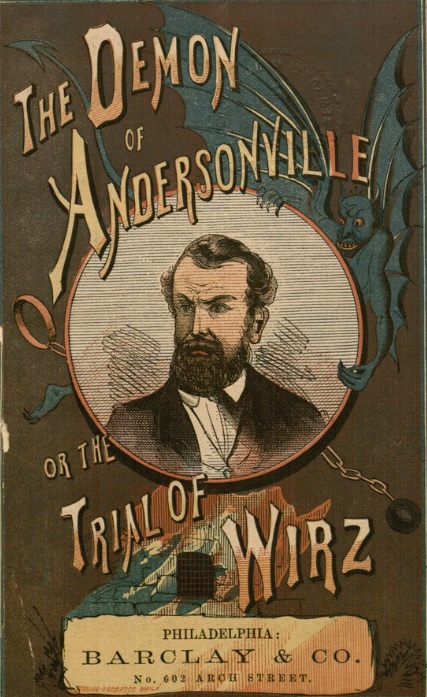
By this point, a parade of witnesses had pilloried the stockade commander at Andersonville prison. They said he personally killed men, was cruel and withheld food. A book published after the sensational case pulled no punches, labeling him “The Demon of Andersonville.”

But the Confederate officer had his advocates: They argued Wirz did the best he could with meager supplies, showed acts of mercy and had no control over certain aspects of the notorious operation in central Georgia.

Rawson’s testimony in early October 1865 was meant to buttress the defense claim their client was a human – not a monster.
The woman from Plains – hometown of Jimmy Carter -- told the military tribunal that beginning in early 1865 she would take the train 30 miles to the prison to bring food to  -- of all things -- a Union prisoner, Peter Kiene of the 16th Iowa Volunteer Regiment. With Mary’s help, Peter was able to get letters to his family

How did that come to be? Rawson encountered Wirz at the camp depot and asked whether she could care for a sick prisoner, according to her testimony. Another source provides a description of what could have led her there.

A New YorkTimes article cited Rawson’s testimony that “Capt. Wirz had never refused or denied her any privileges that she had asked of him; he was always agreeable and willing that she should bring anything to the prison; she never heard of Capt. Wirz treating any lady in an unkind way.”

Andersonville National Historic Site recently made a Facebook post about Rawson and Kiene timed to Women’s History Month in March and the 160th anniversary of the prison’s existence and Rawson’s visits.

There was a fascinating twist here: Mary’s brother, Pvt. Joseph Rawson of the 51st Georgia Infantry, was a Federal prisoner in Rock Island, Ill., after having been captured in Deep Bottom, Va. “Thoughts of Joseph suffering in an enemy prison led Mary to want to comfort a prisoner at nearby Andersonville,” says the social media post.

Park officials initially told the Picket they do not know why Mary Rawson chose to care for Kiene, who was just a teenager when he enlisted. He was reportedly captured in summer 1864 during fighting around Atlanta. 

After searching a bit more online and coming across a February 1882 edition of the Americus (Sumter County, Ga.) Reporter newspaper, I made an interesting discovery.

A brief entry indicates a Mr. and Mrs. Peter Kiene had traveled from Iowa, “that region of frost and snow,” solely to visit Mary Rawson, who lived in Magnolia Springs outside Americus.

"It seems that Mr. Kiene was a prisoner at Andersonville during the war, and that Mrs. Rawson had a brother who was imprisoned in Rock Island. This brother (Joseph), finding out from friends of Kiene's that Kiene was in Andersonville, wrote to his sister to provide for him particularly, as by so doing Kiene's friends would make his lot easier.

"Mrs. Rawson did so, and made Mr. Kiene as comfortable as possible, his friends reciprocating the favor by take care of her brother until the war was over and both released," it says. Kiene and his family lived in Dubuque, Iowa, about 50 miles from the prison camp.

There's yet another version from a 1964 article entitled "How a 15-Year-Old Dubuquer Survived Andersonville," in the Telegraph Herald newspaper.

It states the boy's father, Peter Kiene Jr., intervened to help Joseph Rawson after Mary Rawson learned Kiene was from Dubuque and then reached out. The father arranged for that assistance, says the article.

From Mary Rawson's testimony it is difficult to tell whether she had learned of Kiene's name beforehand.

Regardless of the circumstances, the episode is remarkable.

“For a prisoner of war, survival depends on emotional resilience as well as physical sustenance,” said the site’s Facebook post. “Mary Rawson’s kindness may have been the difference between hope and despair, helping both soldiers survive the hardships of imprisonment and return home to their families.”

Freed Union soldier returned to Georgia years later

Ranger Sherri Barnhard said Wirz allowed Mary Rawson – who came about every two weeks -- and Kiene to dine outside the prison walls. The commandant did not allow women inside the walls and was known at times to protect the vulnerable. Wirz testified he allowed captive drummer boys to be kept outside the stockade.

Joseph's compiled military service records indicate he was captured in December 1863, near Knoxville, Tenn., said Barnhard.

“The last record I have is the record showing ‘name appears as signature to an Oath of Allegiance to the United States, subscribed and sworn to at Rock Island barracks, ILL., June 20, 1865,” she said.

Photographer unknown, "[Peter Kiene seated at his desk]," Loras College Digital Collections, accessed March 18, 2025, https://digitalcollections.loras.edu/items/show/5235
By that time, both soldiers were beginning a new life after captivity.

“Kiene returned to his family in Dubuque and joined with his father in the iron business,” says an article about Iowa Civil War volunteers published in Military Images magazine. “Kiene went on to become successful in real estate and insurance, and active as a philanthropist and in the Grand Army of the Republic. He suffered a paralytic stroke in 1912 and succumbed to its effects at age 66. His wife, Caroline, and two children survived him.”

(See Iowa Civil War Images on Facebook here)

Sadly, the park has not yet learned anything much about the lives of Joseph and Mary Rawson after the war, but Barnhard said she is continuing research.

An 1870 U.S. Census entry lists a Mary Rawson, the mother, as keeping house. The younger Mary is described as being 40 years old, while Joseph, at age 35 or 36, was a farmer.

Graves of Joseph and Mary Johnson (Courtesy Brenda Darbyshire, Findagrave)
Joseph and Mary are buried near their parents at Lebanon Cemetery just outside Plains. Their headstones do not indicate when they were born and died. Barnhard said Mary is not believed to have married.

Interestingly, the cemetery is the resting place for James and Lillian Carter, Jimmy Carter’s parents.

Teri A. Surber, park guide at Andersonville, told the Picket why she believes the story of the Rawsons and Kienes resonates with people

“It shows the best of human nature shining against the darkness of one of the worst places in history, and that even though both families were on opposing sides, they could set that aside and help one another. Mary looked at Peter Kiene and saw her brother. She saw that they were not very different from one another after all. The story is full of hope. Hope that people will do what is right. Both families had to trust that a stranger, far away, was fulfilling their part of the bargain and taking care of the one they loved. There had to be trust, and in the end, the story has a happy ending. There's so much bad news today. Sometimes people need a happy ending.”

Commandant was a truly polarizing figure

Henry Wirz reclines (left) during his 1865 trial in Washington, D.C.
At some point between Wirz’s arrest and trial, his lawyers called upon Mary Rawson to speak on his behalf.

Rawson recalled seeing the captain occasionally during her visits to Kiene.

“I was there in the month of March 1865. I had on a brown dress. The captain always recognized me and asked me if I was going to see my prisoner. I would say ‘Yes,’ and I would carry another basket up and leave it. He never refused me.”

"I used to tie up a bushel basket and leave it, and my prisoner said that that would last him two weeks,” Rawson testified.

The park has told the story before and I asked Barnhard about this year’s timing with Women’s History Month. She said Mary Rawson’s story goes toward that, but there were larger results of the Civil War, including women largely filling the ranks of teachers and nurses. The park is holding a living history event this Saturday (March 29) and among the topics is the Woman’s Relief Corps, a charitable auxiliary to the Grand Army of the Republic.

But back to Wirz ...

In the end, the testimony of those defending him could not save him. The Swiss-born soldier was convicted of both charges and executed in the prison yard on Nov. 10, 1865. (At left, Old Capitol Prison, Library of Congress)

A National Park Service page calls him a complicated figure. “Wirz was unable to control the bureaucracy that plagued the Confederate military prison system, so he controlled the prisoners in the only way he could – through intimidation and punishment.”

Barnhard said Wirz demonstrated both kindness and cruelty. She wonders whether medication he took for a severe arm injury led to a “shift in moods.”

“The more I read about him, the more confused I become about him.”

Tuesday, April 30, 2019

Visitors at fort near Savannah can see flag returned by descendant of Yankee officer, personal items of Rebel officer who grew up nearby

Emmett Rifles flag (left, Georgia State Parks)
For reasons I cannot fully explain, a Civil War artilleryman I blogged about years ago occasionally saunters back into my mind. I find him fascinating.

Maj. William Zoron Clayton joined the Federal army while living in Minnesota, served in numerous campaigns – including Shiloh, Vicksburg, Atlanta and the March to Sea – lost his first wife during the war and moved to his native Maine afterward. He operated several businesses and died at age 94 in Bangor on the eve of the 1929 stock market crash.

The reason I first wrote about Clayton was the decision by his great-grandson, Robert Clayton, of Isleboro, Maine, to return a flag that his ancestor took home as a war trophy. 

Bob Clayton mailed the flag to coastal Georgia -- 147 years after Fort McAllister’s capture.

W.Z. Clayton at some point had expressed hope that the Emmett Rifles flag “be return(ed) to Savannah or Atlanta sometime.”

The flag was unveiled to much fanfare in April 2012 at Fort McAllister State Historic Park, where the Emmett Rifles, a Savannah militia unit, served during the war

I recently called Bob Clayton, 74, to reminisce and to learn more about his ancestor’s siblings who also served during the war.

While W.Z. joined the 1st Minnesota Light Artillery, three brothers served with the 1st Maine Cavalry. Rufus ended up in Minnesota, where he died in 1900. Collamore died in Minnesota, apparently in 1936. Edmund did not survive the conflict. Wounded at Brandy Station, he was captured two years later and shipped to Andersonville prison in Georgia, where he died of disease in 1864.

Lt. Col. McAllister items
Bob Clayton said his father recalled conversations with an elderly W.Z. Clayton.

“He told me how his grandfather was chasing a Confederate on horseback and the Confederate galloped off the road and came back on it. Because he did that my great-grandfather was able to capture him.”

The veteran spoke about landmines that were placed around Fort McAllister.

“He remembered seeing a train with a bunch of Confederate prisoners heading somewhere and he really felt sorry for them.”

According to a 1900 Grand Army of the Republic account of the Atlanta campaign, Clayton was the chief of artillery for the 4th Division of the 17th Corps. He and a signal officer were the first to enter Fort McAllister after its surrender on Dec. 17, 1864, and the Rebel commander surrendered the flag that Clayton kept.

Bob Clayton has a few relics from the war, including a guidon of the 1st Minnesota and a Bible that belonged to W.Z. The Bible was captured during battle and returned to him decades after the war. Bob has a map of his great-grandfather’s travels during the Civil War, letters and insignia.

Jason Carter, park manager at Fort McAllister, says the Emmett Rifles flag “is kind of a highlight of the tour.” Staff members tell visitors about how the banner disappeared for 150 years and was returned by Clayton, who stopped by the park one day while on vacation and mentioned having it.

Exhibits in museum (Georgia State Parks)
“It’s probably by far the most valuable thing in there,” Carter said of the site’s museum.

The flag is directly across from an exhibit that opened in December 2017.

A saber, spurs, uniform vest and other items belonged to a Confederate officer who served at the fort early in the conflict and is from the family that owned the surrounding property.

The items, including a photograph of Lt. Col. Joseph Longworth McAllister, were donated by descendant Carolyn C. Swiggart, an attorney in Greenwich, Conn.

McAllister, 43, died June 11, 1864, at the Battle of Trevilian Station, a Confederate victory in central Virginia. The lieutenant colonel with the 7th Georgia Cavalry fought to the last, throwing an emptied gun at Federal troops just before he was cut down by bullets.

Like Bob Clayton, Swiggart has not returned to McAllister since the dedications of their gifts. I am happy that the objects are ‘back home’ and on display,” she told the Picket this week.

Panorama showing the two exhibits (Georgia State Parks)

Monday, February 11, 2019

Postscript: They found this pike head while working on the railroad just north of Atlanta

(Sections of pike. Courtesy of National Park Service)
You may recall reading our posts about the pikes made for abolitionist John Brown, who wanted to arm enslaved persons, and those done in response by Southern governors, notably Joseph E. Brown of Georgia. The latter weapons were intended for home guard units and individuals. 

We asked museums across Georgia about any pikes in their collection. The timing of the partial government shutdown precluded details then from Kennesaw Mountain National Battlefield. Park ranger Amanda Corman has since provided this interesting story about a pike in the park’s collection.

A text panel in the museum says: “The ‘Joe Brown’ pike, named for Governor Joseph E. Brown. Unable to furnish Georgia troops with enough rifles and muskets, Brown calls upon local blacksmiths to supply the soldiers with pikes. Between March 1862 and April 1863, Georgia pays five dollars apiece for over 7,000 of these clumsy weapons. They are stored in the state armory at Milledgeville and never used in combat."

The metal head of the pike was acquired in 1949. An assistant chief engineer, R.W. McCabe, of the Nashville, Chattanooga and St. Louis Railway donated the pike to park Superintendent B.C. Yates.

“According to the letter to the former superintendent, the artifact was found by railroad workmen some years prior. While they were cleaning out an old office, they came across the pike and not needing it themselves thought that the park may like to have it,” Corman told the Picket.

As part of the donation, a card was attached, with this legend:

"This Civil War relic thought to have been either pike or an ornamental point of banner staff was dug up on August 17, 1925, by W.J. Thompson, Foreman on the south side of Pier No. 2 of Chattahoochee River Bridge of the Western and Atlantic Railroad while excavating for the enlarging and strengthening of the pier. It was lying on the hard-san strata, the same that the timber base of the old pier rests on, about 10 ft. from the pier outside the original coffer-dam, as well as outside the new one just built, covered by the chunk rock filled around the old pier for protection and by stream deposits to a depth of 16 feet."

Tuesday, December 18, 2018

Wrought in fear and just a little desperation, 'Joe Brown' and other pikes made in Southern states never got off the ground

Fragile remains of pike (Courtesy of Old Governor's Mansion)

• First of two parts

The 2003 restoration of the Old Governor’s Mansion in Milledgeville, Ga., yielded a curious – but perhaps not unexpected – find in the attic.

A staff member found the business end of a weapon -- an 18-inch blade that originally was joined to a 6-foot-long wooden staff  -- on the top of an attic rafter. The pikes were named for Gov. Joseph E. Brown, who lived in the mansion during the Civil War and in February 1862 asked blacksmiths and others to produce 10,000 of the primitive weapons.

Recently, the mansion staff posted on Facebook a photograph of the fragile blade, which mansion director Matt Davis said may have been in the attic since the 19th century (the pole is long gone). They asked followers to identify it. While a couple guessed the artifact might be the top of a gate, others were spot on.

“Pike! Rather imaginatively planned to be used against the Yanks by some sort of home guard defending their hearths,” one commenter wrote. “Sherman’s men filled a coffin with them and held a mock funeral.”

Gov. Joseph E. Brown
Though I was aware of the pikes, the post prompted me to dig a little into their history and see whether any are in museum collections across Georgia.

I had two underlying questions: Why would anyone think a pike would be effective against a gun or other weapons? And where did the idea come from? The whole concept seems ridiculous.

The answers are a bit complex, and there is some rationale to the idea, particularly if you put yourself in the mindset of those living at the time.

As a 2012 article in The New York Times’ Disunion series stated, the “pike was hardly ancient history. The Duke of Wellington had put 79,000 pikes in the hands of the Spanish against Napoleon, and they had proved superior weapons against cavalry charges during the War of 1812.”

By early 1862, many of Georgia’s young men were fighting in Virginia and the Western theater, and they had taken most of the state’s guns with them, leaving civilians largely helpless should the Federal army sweep in. “I need to arm every able-bodied person in the state of Georgia,” the governor said of the predicament.

The pike was cheap to produce and could be used at close quarters. As Brown said, they were reliable, suitable for militia, home guard units and able-bodied citizens. A few did make it to the front.

“The short-range pike and terrible knife, when brought within their proper range, and wielded by a stalwart’s patriot’s arm, never fail to fire and never waste a single load,” the governor intoned.

CCC worker with Joe Brown pike at Fort Pulaski (Courtesy of NPS)

Brown is remembered for looking after the welfare of Georgia and soldiers and civilians during the conflict, but his resistance to the authority of the central Confederate government in Richmond helped hinder the overall war effort, argues the New Georgia Encyclopedia.

Jim Ogden, historian at Chickamauga and Chattanooga National Military Park, told the Picket that the actions of Brown and “others advocating the use of pikes at the time of secession and the beginning of the fighting reflects the views of most at the time that any war would be short and with little bloodshed, that the other side did not hold their convictions very strongly at all and would give up as soon as they were shown how strongly the opposing side held theirs. They also reflect the fact that so quickly the size of the military forces mobilized outstripped the supply of arms.  They are or can be a window into that era.”

But it wasn’t just a shortage of arms that inspired Brown and other Southern governors to order the manufacture of the spears. There was something even larger: fear of rebellious enslaved persons.

Travel back in time to 1859, when the country was fractured over slavery and Southern states were on the verge of secession. Radical abolitionist John Brown, while raising money to launch an anti-slavery campaign in the South, hatched the idea of raiding the federal weapons arsenal in Harpers Ferry, Va. (now West Virginia).

Brown’s contingent took with them nearly 1,000 “John Brown pikes” that were intended for an army of slaves to take the fight to plantation owners. Brown’s mission failed and there’s some question of how many slaves actually took up the pikes during and after the brief clash at Harpers Ferry.


Regardless, the discovery of the pikes whipped up anti-North sentiment across the South.

Edmund Ruffin, a pro-slavery and secession extremist, obtained several pikes and sent them to governors with the message, "Sample of the favors designed for us by our Northern Brethren.”

Brown embraced the pike as a defensive weapon after the Confederate loss at Fort Donelson, Tenn. The governor believed that “Had 5,000 reserves thus armed and well trained to the use of these terrible weapons been brought to the charge at the proper time, who can say that the victory would not have been ours.”

About 7,000 of the pikes were made in Georgia, while arsenals in Tennessee, Virginia and Alabama turned out the spears.But they were treated as little more than a novelty, a relic of strategies abandoned for the more dashing and inspiring offensives of Robert E. Lee’s Army of Northern Virginia,” according to the Disunion article.

“It really served no practical military purpose,” said Davis of the Old Governor’s Mansion, which is on the campus of Georgia College. The mansion's pike has occasionally been put on display.

A cache of Joe Brown pikes was found in 1980 where Wilmington & Manchester Railroad cars were destroyed in South Carolina during a federal attack in April 1865, at war’s end. 

Reproduction naval boarding pike at Old Fort Jackson (OFJ)

Today, there’s a scattering of pikes at Civil War and other sites in Georgia. Some are not associated with John or Joseph Brown, such as naval pikes. 

Kennesaw Mountain National Battlefield Park near Atlanta has a pike on display.

The Atlanta History Center has a half dozen in its collection. “We have two of the retractable type, which are generally assumed (to be) Confederate,” said senior military historian Gordon Jones.But as you probably know, every pike is either a ‘John Brown’ or a ‘Joe Brown,’ or sometimes both. It’s like dark splotches on flags – always blood.”

CSS Chattahoochee pike (Courtesy of NCWNM)

Jeffery Seymour, director of history and collections at the National Civil War Naval Museum in Columbus, Ga., said the venue has two naval pikes, both on display.

One was recovered from the wreck of the Chattahoochee, a Confederate gunboat that was scuttled and burned nearby. The museum has two Joe Brown pikes in storage.

Pike of undetermined origin, with replacement shaft  (NCWNM)

The National Infantry Museum at Fort Benning, near Columbus, has two pikes that are believed to be Confederate. Senior curator Jefferson Reed said one is a Joe Brown retractable pike; the other is a cloverleaf.

The collection of Old Fort Jackson in Savannah has reproduction naval pikes, which were wielded to discourage enemy sailors from boarding a vessel, said staff member Dianna Jowers.

Fort Pulaski National Monument outside Savannah has a retractable Joe Brown pike in storage, says cultural resources specialist Laura Waller.

The Civil War site came into possession of the weapon in the mid-1930s, shortly after the fort was transferred from the War Department to the National Park Service, and major repair work and rehabilitation were undertaken by the Civilian Conservation Corps.

A park description of the “rare” item mentions old church bells and iron from homes across Georgia were donated in order to manufacture the pikes. “The blade, when not in use, may be lowered into the hollow staff, but by release of a safety catch the blade is freed and may be snapped out into position for action where it is firmly held in position by another metal catch.”

CCC workers show off the Joe Brown pike at Fort Pulaski (NPS)

By autumn 1864, after Maj. Gen. William T. Sherman had taken Atlanta, the Confederacy was heading into its last throes, and there was no spirited or effective resistance to the March to the Sea. Offensive attacks across the Confederacy had largely failed. The pikes were gathering dust.

Sherman’s legions in late November took Milledgeville, then capital of Georgia. By then, Gov. Brown and his staff had fled. Yankee troops held a mock legislative session, declared “deep sympathy” for Brown “as now departed” and planned a symbolic funeral.

Soldiers used a box that held 100 pikes as a casket.


“They found Joe Brown’s pikes, and arming themselves with these, they formed a procession, arms reversed, marching to the tap of the funeral drum through the main streets. Stopping at the Baptist church, of which Joe Brown was a member, they there stacked their arms… and listened to a very pathetic funeral discourse.”

Joe Brown would live another 30 years and people filed past his body in the newer Capitol in Atlanta. Numerous pikes survive him.

COMING SOON: The “John Brown pike.” The roots of the weapon, intended for a slave revolt, go back to Kansas.

Monday, October 16, 2017

'Priceless' items belonging to Georgia cavalry officer to be displayed at Fort McAllister, on land he once owned and defended

Lt. Col. McAllister's personal items (Georgia Dept. of Natural Resources)
A saber, spurs, uniform vest and other items that belonged to a Confederate officer who died in the largest all-cavalry battle of the Civil War will go on display at a coastal Georgia fort named for his father and where the officer served early in the conflict.

The items, which include a photograph of Joseph Longworth McAllister, were donated by Carolyn C. Swiggart, an attorney in Greenwich, Conn., to Fort McAllister State Park outside Savannah. The cavalryman is her fourth great uncle.

McAllister grew up on the Bryan County rice plantation, a portion of which became the site of the South’s Fort McAllister. He lived in Strathy Hall, just to the west of the Ogechee River defenses.

A display case is being fashioned to contain the items, with an opening expected before the park’s annual winter muster and battle on Dec. 9.

“(Visitors) can see the face of the person who lived there,” said Swiggart. “They can see items he personally touched and used. They can see he is a wealthy man who made certain choices.”

(Georgia DNR)
McAllister, 43, died June 11, 1864, at the Battle of Trevilian Station, a Confederate victory in central Virginia. The lieutenant colonel with the 7th Georgia Cavalry fought to the last, throwing an emptied gun at Federal troops just before he was cut down by bullets.

State officials are thrilled to receive the collection, which includes a grooming kit and rank insignia.

“When you look at the value of the history of those items, those are priceless items,” said Judd Smith, a historian with Georgia State Parks. “It is rare to get something with so many items. You might get one item, a hat or some sort of a letter…(the fact you have a collection that) comes back to where it belongs, from starting out there in 1864 and finally arriving back in 2016, is amazing.”

The display will note that the items were donated in memory of Swiggart’s son, who had an interest in the family history. Navy Lt. James H. Swiggart died in the crash of a private airplane in December 2015.

Fort McAllister's interior (Picket photo)
The header for the exhibit will be “Strike for God and our native land!” – reportedly yelled by McAllister shortly before his death. His gravestone and books and writings indicate he served valiantly in Georgia and Virginia, where he died within days of arrival.

“It is my hope that the items will provide a view of Col. Joseph L. McAllister to the visitors of Fort McAllister – he’s now someone that a visitor can envision as a person, not just a name on a sign,” said Swiggart. “Yes, he was a slaveholder and he fought for the Confederacy, and those decisions cost him his life. It's history. History cannot be changed. We can -- and should -- learn from the past and become better Americans from those lessons."

The items descended through Swiggart’s great-grandfather, Dr. Thomas Savage Clay of Savannah. He was the grandson of Matilda Willis McAlliser Clay, McAllister's sister. 

(All donation photos courtesy of Georgia DNR)

US MODEL 1860 CAVALRY SABER
This sword and scabbard – which have no engravings -- may have been carried by McAllister at the time of his death. It was returned to his family after the battle. During the first part of the Battle of Trevilian Station it appears the 7th Georgia Cavalry was mounted, according to Swiggart. She believes the officer gave his horse to a soldier before his final action. “A saber is typically a cavalry weapon most effectively employed while on horseback, and it would not have been any use to him when dismounted,” she said. It hung for decades at the Savannah home of Swiggart’s great aunt. The blade was “wrapped in aluminum foil, ostensibly to keep it from tarnishing.”


LEATHER SWORD KNOT
This item would have been attached to the weapon’s brass guard. It is too stiff to reattach without causing it damage, state officials told the Picket.


WAISTCOAT (VEST)
Since it is known that the officer was buried in his uniform, the vest is likely a spare. The item is made of blue wool; its brass buttons were manufactured in Waterbury, Conn. It bears McAllister’s insignia and, according to Swiggart, is a Confederate regulation pattern officer’s waistcoat.

PORTRAIT
McAllister wears civilian clothing in this photograph believed to be taken in 1859.

RANK INSIGNIA
Three stars indicate the rank of a colonel. State officials say this is a bit of a mystery, because records show McAllister’s official rank was lieutenant colonel (two stars). It’s possible the patch was awarded as a posthumous promotion or was a brevet (temporary rank) patch issued when he was made regimental commander.

Swiggart said her ancestor, while an amateur soldier, inspired his troops and got the job done. A fellow officer was resentful because McAllister was promoted above him back in Georgia.


I don't think there is any question about McAllister's enthusiasm for the Confederacy.  Whether it was founded in the hope of military glory for himself, or for economic survival -- I don't know," Swiggart said.


CONFEDERATE OFFICER’S SPURS
These were among personal effects and the saber returned to the family in Georgia. Swiggart believes they were an extra pair left at camp, since McAllister’s boots, hat, uniform buttons and insignia were removed by the enemy. “The spurs were given to me when I was a child, and my mother kept the other items in a trunk. The smell of camphor was a familiar one because my grandmother and mother used it to keep moths out of the clothing trunks.” 


GROOMING KIT
The late 1840s English- and Irish-made kit includes silver-topped jars featuring the engraved initials “J.L. McA.” Officials don’t believe the entire kid was carried on battle campaigns. Two items are absent: a small grooming razor and what appears to have been a nail file, items that would easily fit into a haversack.

Slaveholder ran rice plantation

McAllister came from a family that traced its American roots to Pennsylvania, with one member a hero of the American Revolution.

Research indicates a Capt. James MacKay purchased the property around what became Fort McAllister in 1748. He built nearby Strathy Hall and began rive cultivation.

George Washington McAllister, who came to Georgia to seek his fortune, bought Strathy Hall and Genesis Point in 1817. The family had one of the largest plantations in that part of Bryan County. “The McAllister family was pretty well-known,” said Swiggart, author of “Shades of Gray: The Clay and McAllister Families of Bryan County, Georgia, during the Plantation Years.”

McAllister property (left) marked in relation to fort (Georgia State Parks)
Washington McAllister’s son, Joseph, attended Amherst College, but did not graduate. He toured Europe for a long time and returned to join the family rice business. “He didn’t go the route his cousins, did, which was law. He stayed at the plantation,” said Swiggart.

The descendant points out that McAllister, who owned 271 slaves in 1860, had received them by inheritance, rather than purchase. “This is a major, major point.” Evidence shows he probably was not a harsh master and he ensured his slave’s care, she added.

Thomas S. Clay, in 1833, wrote an essay about the proper “moral improvement of negroes on plantations.” It called for proper housing, care and religious instruction of slaves.

The family was split on secession. Looking back, Swiggart wishes “they had sold the whole damn thing.” But the family believed it could not sell the plantations and the slaves, because it would destroy families and shred plantation community, she said. Thomas Butler King did that in 1859 and the sale became known as "The Weeping Time." The family believed slavery would become obsolete, that it was a burden, she said. Her great aunt said the South would have done better if Abraham Lincoln survived.

Strathy Hall and fort marked in red (Georgia State Parks)
But Joseph McAllister was prepared to fight.

After the Civil War broke out, he sold land to the Confederacy for the construction of the fort named for his father, who died in 1850.

Amateur soldier inspired troops

Soon after Confederates shelled Fort Sumter in Charleston Harbor, McAllister was commissioned a captain of an artillery unit at the fledgling Fort McAllister.

In April 1862, McAllister formed the Hardwick Mounted Rifles, comprised of volunteers from Bryan County. The regiment, one of several homegrown units in the Savannah area, helped guard against Federal invasion of the coast.

The Hardwick Rifles fired on sailors who were part of a significant Union attack -- made up of ironclads and mortar boats -- on Fort McAllister on March 3, 1863. The Federal fleet did little damage to the fort, and withdrew the next day. It was apparent the defenses would likely have to fall to infantry, which happened in late 1864 during Sherman’s March to the Sea.

McAllister after it fell to Union forces (Library of Congress)
After years of duty around home, the men finally got their chance to fight at the front in Virginia. McAllister and two companies from the Hardwick Mounted Rifles joined other units to form the 7th Georgia Cavalry in February 1864.

McAllister became regimental commander after the death of his predecessor, and the unit was ordered to support the Army of Northern Virginia. It left in late April and made a rugged journey from South Carolina and Virginia, lasting until early June.

McAllister wrote to his sister, Emma, about the trip and heat that killed a few horses and mules.

He writes of wanting to take part in “glorious fights.” He got along well with a conceited subordinate and recollected Virginians greeting the troops with flowers and pails of milk.

The bachelor shared a story about young women presenting the young cavaliers with bouquets, according to Swiggart’s book.

“Some funny notes attached to the bokets,” the officer wrote his sister. “They all seem to think that the matrimonial chances are daily lessening – and every note wants you to write – these as a matter of course are plain country girls just from school. Some pretty some ugly.”

But there also were moments of resolve.

“Keep up your spirits – to take care of me if I get a bullet in me – which I trust will not be the case – still we must all do our duty in this struggle and while I shall not foolishly expose myself, I will not disgrace our names.”

'Strike for God and our native land'

The 7th’s first major battle in Virginia came at Trevilian Station on June 11. Nearly 40 percent of the regiment would become casualties.

Union troops wanted to draw off Confederate cavalry so that forces could move on the James River. Maj. Gen. Philip Sheridan’s troopers raided Louisa County, threatening to cut a Confederate railroad.

Sheridan’s troops attacked Confederate divisions led by Wade Hampton and Fitzhugh Lee at Trevilian Station. For a while, the Rebels had to dismount and make a defensive stand.

“From this advantageous position, they beat back several determined dismounted assaults,” the National Park Service says of the battle. “Sheridan withdrew after destroying about six miles of the Virginia Central Railroad. (The) Confederate victory at Trevilian prevented Sheridan from reaching Charlottesville and cooperating with Hunter’s army in the Valley. This was one of the bloodiest cavalry battles of the war.”

McAllister’s led a counterattack on the first day’s fighting, cyring out to his men, “Strike for God and our native land!” Historian Eric Wittenberg, in Glory Enough for All: Sheridan’s Second Raid and the Battle of Trevilian Station, wrote that McAllister was surrounded and mounted when he was first hit by enemy.

McAllister threw an emptied revolver at the enemy and was shot four or five times. Many members of the 7th Georgia Cavalry were captured.

The gallant officer and Capt. John Hines, also of the 7th, are among about 85 Confederates buried in what is now called Oakland Cemetery in Louisa (below). His marker reads “Soldier. Scholar. Gentleman.” His enslaved body servant, Jack, returned his personal effects to Strathy Hall after the funeral.

Marker with McAllister reference (Photos courtesy of Ed Crebbs)
McAllister grave is to left of stone with flag

Group tries to publicize battle

The cemetery is one of several stops on the Virginia Civil War Trails driving tour in the central Virginia Community. Another group, the Trevilian Station Battlefield Foundation, is restoring a house used by Brevet Lt. Col. Gen. George A. Custer during the clash. Custer captured Hampton’s divisional supply train but suffered significant losses, including having his trains and personal baggage overrun.

Ed Crebbs, secretary of the foundation, told the Picket his group also offers a driving tour that comes out of Louisa and makes several stops. He said the foundation is trying to raise awareness of the two-day battle and draw more visitors to the rural crossroads.

“It’s underappreciated and almost unknown because it didn’t have the biggest names of the Civil War,” he said. “It did not have infantry. It did not have tremendous destruction with it.”

Visitors to Oakland Cemetery can take in an interpretive panel that includes the story of McAllister and the 7th Georgia Cavalry.

Donation 'brings it all home'

As Sherman’s troops moved on Savannah from Atlanta – months after McAllister’s death -- some houses and property were destroyed by Federal troops. Strathy Hall escaped such a fate. Swiggart said that’s because Union officers knew that ancestors of McAllister had residences and connections in Newport, R.I.

But the South’s loss in the war destroyed the family financially.  After the war, Strathy Hall and Genesis Point, located near the city of Richmond Hill, were sold to a nephew of McAllister's who owned them until 1924.

Fort McAllister fell into ruin until the 1930s, when it was restored as a site for the public through funding from auto magnate Henry Ford, who owned the land. It now belongs to the state. Strathy Hall a private residence, is surrounded by a subdivision.

Strathy Hall today (Kenneth Dixon, Wikipedia)

Smith said the Friends of Fort McAllister State Park paid for the design of the exhibit. The $30,000 wooden case will be secure and provide proper lighting “where it is not going to damage the artifacts over time.” The display will include interpretive signs and sit next to an exhibit about Strathy Hall and the McAllisters.

As Swiggart said, McAllister’s personal belongings will add to the story.

“From his owning the plantation that the fort sits on and the fact that not only did he serve in the war, but served for a time right there at Fort McAllister – (it) brings it all home, said Josh Headlee of the Georgia Department of Natural Resources’ Historic Preservation Division.

“I think Civil War artifacts are impressive in their own right, but when you have artifacts that belonged to someone that you know was there and you can relate their personal lives to it, that really makes a great and lasting impact,” the curator said.