Showing posts with label Camp Sumter. Show all posts

Wednesday, March 26, 2025

'The best of human nature': This Georgia woman cared for a Yankee POW at Andersonville while his friends tended to her brother at a Northern prison. How did this come to be? There is no single answer (and there's a Henry Wirz angle)

Living history at Andersonville (NPS) and Peter Kiene (Courtesy Mark Warren Collection)
Mary Rawson stepped into the witness stand at the Old Capitol Prison in Washington, D.C., near the completion of Capt. Henry Wirz’s trial on charges of murder and conspiracy.

By this point, a parade of witnesses had pilloried the stockade commander at Andersonville prison. They said he personally killed men, was cruel and withheld food. A book published after the sensational case pulled no punches, labeling him “The Demon of Andersonville.”

But the Confederate officer had his advocates: They argued Wirz did the best he could with meager supplies, showed acts of mercy and had no control over certain aspects of the notorious operation in central Georgia.

Rawson’s testimony in early October 1865 was meant to buttress the defense claim their client was a human – not a monster.

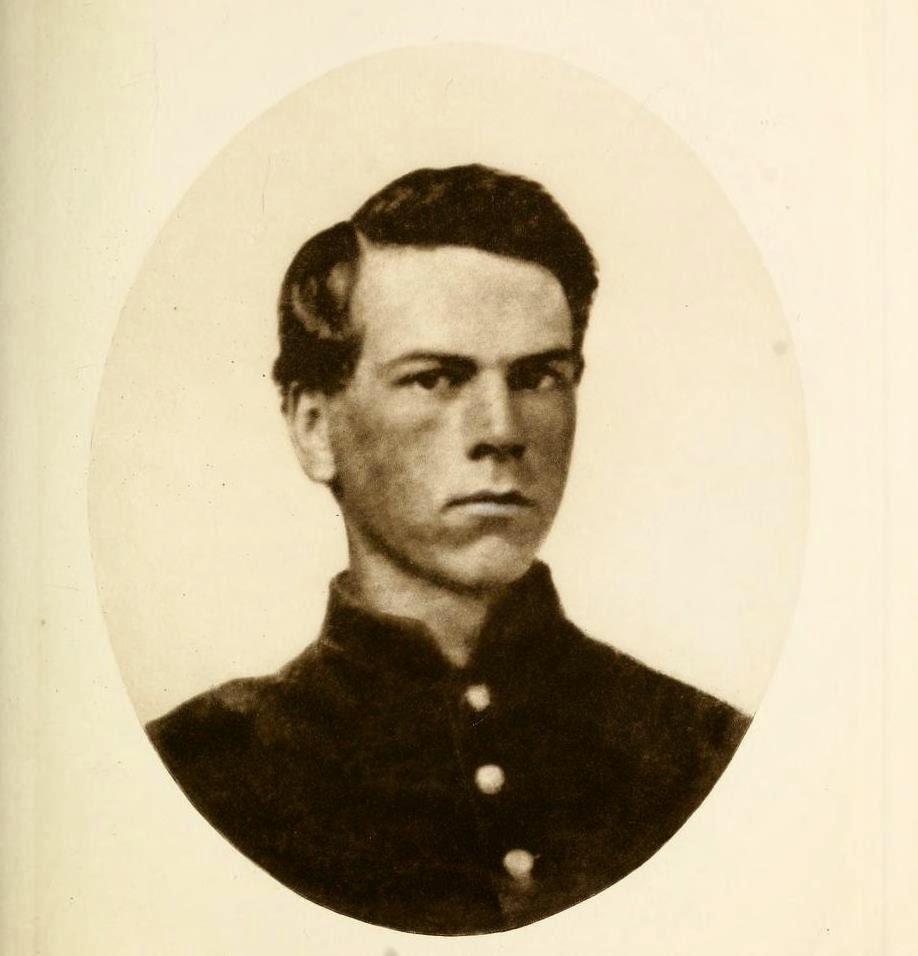
The woman from Plains – hometown of Jimmy Carter -- told the military tribunal that beginning in early 1865 she would take the train 30 miles to the prison to bring food to  -- of all things -- a Union prisoner, Peter Kiene of the 16th Iowa Volunteer Regiment. With Mary’s help, Peter was able to get letters to his family

How did that come to be? Rawson encountered Wirz at the camp depot and asked whether she could care for a sick prisoner, according to her testimony. Another source provides a description of what could have led her there.

A New YorkTimes article cited Rawson’s testimony that “Capt. Wirz had never refused or denied her any privileges that she had asked of him; he was always agreeable and willing that she should bring anything to the prison; she never heard of Capt. Wirz treating any lady in an unkind way.”

Andersonville National Historic Site recently made a Facebook post about Rawson and Kiene timed to Women’s History Month in March and the 160th anniversary of the prison’s existence and Rawson’s visits.

There was a fascinating twist here: Mary’s brother, Pvt. Joseph Rawson of the 51st Georgia Infantry, was a Federal prisoner in Rock Island, Ill., after having been captured in Deep Bottom, Va. “Thoughts of Joseph suffering in an enemy prison led Mary to want to comfort a prisoner at nearby Andersonville,” says the social media post.

Park officials initially told the Picket they do not know why Mary Rawson chose to care for Kiene, who was just a teenager when he enlisted. He was reportedly captured in summer 1864 during fighting around Atlanta. 

After searching a bit more online and coming across a February 1882 edition of the Americus (Sumter County, Ga.) Reporter newspaper, I made an interesting discovery.

A brief entry indicates a Mr. and Mrs. Peter Kiene had traveled from Iowa, “that region of frost and snow,” solely to visit Mary Rawson, who lived in Magnolia Springs outside Americus.

"It seems that Mr. Kiene was a prisoner at Andersonville during the war, and that Mrs. Rawson had a brother who was imprisoned in Rock Island. This brother (Joseph), finding out from friends of Kiene's that Kiene was in Andersonville, wrote to his sister to provide for him particularly, as by so doing Kiene's friends would make his lot easier.

"Mrs. Rawson did so, and made Mr. Kiene as comfortable as possible, his friends reciprocating the favor by take care of her brother until the war was over and both released," it says. Kiene and his family lived in Dubuque, Iowa, about 50 miles from the prison camp.

There's yet another version from a 1964 article entitled "How a 15-Year-Old Dubuquer Survived Andersonville," in the Telegraph Herald newspaper.

It states the boy's father, Peter Kiene Jr., intervened to help Joseph Rawson after Mary Rawson learned Kiene was from Dubuque and then reached out. The father arranged for that assistance, says the article.

From Mary Rawson's testimony it is difficult to tell whether she had learned of Kiene's name beforehand.

Regardless of the circumstances, the episode is remarkable.

“For a prisoner of war, survival depends on emotional resilience as well as physical sustenance,” said the site’s Facebook post. “Mary Rawson’s kindness may have been the difference between hope and despair, helping both soldiers survive the hardships of imprisonment and return home to their families.”

Freed Union soldier returned to Georgia years later

Ranger Sherri Barnhard said Wirz allowed Mary Rawson – who came about every two weeks -- and Kiene to dine outside the prison walls. The commandant did not allow women inside the walls and was known at times to protect the vulnerable. Wirz testified he allowed captive drummer boys to be kept outside the stockade.

Joseph's compiled military service records indicate he was captured in December 1863, near Knoxville, Tenn., said Barnhard.

“The last record I have is the record showing ‘name appears as signature to an Oath of Allegiance to the United States, subscribed and sworn to at Rock Island barracks, ILL., June 20, 1865,” she said.

Photographer unknown, "[Peter Kiene seated at his desk]," Loras College Digital Collections, accessed March 18, 2025, https://digitalcollections.loras.edu/items/show/5235
By that time, both soldiers were beginning a new life after captivity.

“Kiene returned to his family in Dubuque and joined with his father in the iron business,” says an article about Iowa Civil War volunteers published in Military Images magazine. “Kiene went on to become successful in real estate and insurance, and active as a philanthropist and in the Grand Army of the Republic. He suffered a paralytic stroke in 1912 and succumbed to its effects at age 66. His wife, Caroline, and two children survived him.”

(See Iowa Civil War Images on Facebook here)

Sadly, the park has not yet learned anything much about the lives of Joseph and Mary Rawson after the war, but Barnhard said she is continuing research.

An 1870 U.S. Census entry lists a Mary Rawson, the mother, as keeping house. The younger Mary is described as being 40 years old, while Joseph, at age 35 or 36, was a farmer.

Graves of Joseph and Mary Johnson (Courtesy Brenda Darbyshire, Findagrave)
Joseph and Mary are buried near their parents at Lebanon Cemetery just outside Plains. Their headstones do not indicate when they were born and died. Barnhard said Mary is not believed to have married.

Interestingly, the cemetery is the resting place for James and Lillian Carter, Jimmy Carter’s parents.

Teri A. Surber, park guide at Andersonville, told the Picket why she believes the story of the Rawsons and Kienes resonates with people

“It shows the best of human nature shining against the darkness of one of the worst places in history, and that even though both families were on opposing sides, they could set that aside and help one another. Mary looked at Peter Kiene and saw her brother. She saw that they were not very different from one another after all. The story is full of hope. Hope that people will do what is right. Both families had to trust that a stranger, far away, was fulfilling their part of the bargain and taking care of the one they loved. There had to be trust, and in the end, the story has a happy ending. There's so much bad news today. Sometimes people need a happy ending.”

Commandant was a truly polarizing figure

Henry Wirz reclines (left) during his 1865 trial in Washington, D.C.
At some point between Wirz’s arrest and trial, his lawyers called upon Mary Rawson to speak on his behalf.

Rawson recalled seeing the captain occasionally during her visits to Kiene.

“I was there in the month of March 1865. I had on a brown dress. The captain always recognized me and asked me if I was going to see my prisoner. I would say ‘Yes,’ and I would carry another basket up and leave it. He never refused me.”

"I used to tie up a bushel basket and leave it, and my prisoner said that that would last him two weeks,” Rawson testified.

The park has told the story before and I asked Barnhard about this year’s timing with Women’s History Month. She said Mary Rawson’s story goes toward that, but there were larger results of the Civil War, including women largely filling the ranks of teachers and nurses. The park is holding a living history event this Saturday (March 29) and among the topics is the Woman’s Relief Corps, a charitable auxiliary to the Grand Army of the Republic.

But back to Wirz ...

In the end, the testimony of those defending him could not save him. The Swiss-born soldier was convicted of both charges and executed in the prison yard on Nov. 10, 1865. (At left, Old Capitol Prison, Library of Congress)

A National Park Service page calls him a complicated figure. “Wirz was unable to control the bureaucracy that plagued the Confederate military prison system, so he controlled the prisoners in the only way he could – through intimidation and punishment.”

Barnhard said Wirz demonstrated both kindness and cruelty. She wonders whether medication he took for a severe arm injury led to a “shift in moods.”

“The more I read about him, the more confused I become about him.”

Tuesday, October 31, 2023

Andersonville's Civil War weekend will include archaeologist's talks on how POWs coped with the trauma, resisted their captors

Former POW Thomas O'Dea's depiction of sickness at Andersonville (NPS)
A conflict archaeologist will speak this weekend at Andersonville National Historic Site in Georgia about emotional trauma endured by Civil War prisoners of war and how they reacted.

The site 10 miles northeast of Americus is having its annual Civil War weekend on Saturday and Sunday. Activities include cannon and musket demonstrations and activities geared toward young visitors.

Andersonville is the emblem of POW suffering at Union and Confederate camps during the Civil War. Of 45,000 men held there, 13,000 Union service members succumbed to horrible conditions.

Ryan McNutt (right), assistant professor of anthropology at Georgia Southern University, will be lecturing on resistance, masculinity and mental health in POW populations at both Andersonville (Camp Sumter) and Camp Lawton, another Confederate site in Georgia. McNutt directs the GSU archaeological project at the latter site.

For more than a decade, GSU students have conducted excavations and conducted research at a state park and former federal hatchery near Millen, Ga. About 10,000 Union prisoners were held at Lawton for about six weeks in 1864. They had been moved there from Camp Sumter.

Disease, hunger and unusually cold and moist conditions that year exacted a toll at Camp Lawton, with 700 or more prisoners dying before they were shipped off in the middle of the night to other Confederate prisons.

Susie Sernaker of Andersonville NHS told the Picket that McNutt’s lectures, at 1 p.m. both days in the park theater, will help spread public knowledge about the travails of those held at Lawton.

McNutt and his students have focused on the location of Confederate and Union structures at  and the difficulties prisoners and guards faced -- and their interactions.

The professor’s research interests include utilizing technology such as LIDAR and GIS to answer questions about battlefield and conflict sites, power and dominance in the landscape and the impact of violence on non-combatants. 

A study conducted a few years ago found that postwar-born sons of many Union POWS had shorter lives than sons of soldiers who weren’t held captive. Basically, the study found that fathers’ prison hardships, including food shortages, altered the function of his genes in ways that could be passed on to sons.

Excavation at Camp Lawton site in March 2023 (Picket photo)
The free programming this weekend at Andersonville lasts from 10 a.m. to 4 p.m. on Saturday and 10 a.m. to 3 p.m. on Sunday.

“Kids can drill like Civil War soldiers, build miniature shelters, and discover more about the Civil War period at Andersonville by participating in our Junior Ranger program,” the park said in a news release. “Living historians will be portraying Father Whelan, the women of Andersonville, Confederate guards, and Union prisoners, all to help the history of Camp Sumter, better known as Andersonville Prison, come to life.”

Cannon firing demonstrations will take place at 10:30 a.m. and 1:30 p.m. on Saturday and at 10 a.m. and 3 p.m.  on Sunday. Musket firing demonstrations will be at noon and 3 p.m. on Saturday and 11:30 a.m. on Sunday. 

For more information on the event or to find out how you can become a living history volunteer at the park, call 229-924-0343. 

Tuesday, October 24, 2017

#WirzTrial: Andersonville Twitter followers issue verdicts on anniversary of trial finding

Henry Wirz
Capt. Henry Wirz, put on trial for actions he took – or did not take -- as stockade commandant at the infamous prison Camp Sumter (Andersonville), learned his fate on this day in 1865.

Since Aug. 23, Twitter followers (#WirzTrial) of Andersonville National Historic Site in Georgia have been following the case like courtroom observers. The “live” tweeting of the proceedings against the Confederate officer – including vivid testimony by POW survivors -- did not divulge the findings of the military commission. Today, social media followers will learn the verdict.

The park gave people the opportunity to be part of the jury.

Charge 1: Conspiracy to murder U.S. soldiers: Not guilty or guilty.

Charge 2: Murder in the violation of the laws of war: Not guilty or guilty.

Eleven people took part in the unscientific poll, with 64 percent finding Wirz not guilty of conspiracy and 62% percent finding him guilty of murder. "We've had a steady group of followers for the trial, and I think our followers got a good idea of how not so cut and dry the trial was," park guide Jennifer Hopkins told the Picket.

The park posted the 1865 trial findings at 5 p.m. today: “Henry Wirz was found guilty of conspiracy to murder U.S. soldiers and ultimately found guilty of murder in violation of the laws of war. While he was not found guilty for all of the individual murders he was charged with, it wasn’t enough to declare him innocent of the charge.

Wirz was considered a cruel, indifferent commander by some and a scapegoat by others. Nearly 13,000 soldiers and civilian captives died at Camp Sumter over 14 months -- an average of more than 30 a day in that span. 

Thousands of Union prisoners are buried at Andersonville (Picket photo)

The officer’s controversial trial was a national sensation, covered by newspapers just a couple months after the trial of accused conspirators in the assassination of Abraham Lincoln. Officials who decided to try the officer in a military -- rather than a civilian -- court said the country was in some ways still in a state of war. The defense considered itself at a disadvantage on the rules of evidence.

Hopkins told the Picket that she a few other staffers spent few months poring through testimony of about 140 witnesses, which included prisoners, guards, civilians and Confederate and Federal officials.

Wednesday, February 11, 2015

Journal of POW Sgt. John Clark Ely: "Johnnys are getting very much alarmed"

Thomas O'Dea drawing of cooking rations (ANHS)

In February 1865, one year after it began operations, Camp Sumter, Ga., had about 5,100 prisoners, well below its high the summer before. Halfway through February, though, about 700 prisoners are moved to the stockade from Meridian, Ms. 
  
Sgt. John Clark Ely of Company C, 115th Ohio Infantry, captured in Tennessee, by then had been at the camp for about three weeks, following his transfer from Confederate prison camps in Mississippi and Alabama. His journal entries are courtesy of Andersonville National Historic Site.

Feb. 11, 1865 (Saturday)
Fine morning and day, white frost, seems like April at home. J.S. Cook went out on parole work at his trade. Some reb came in and preached. Johnnys commenced putting up sheds.

Feb. 12, 1865 (Sunday)
Again a fine day, news that Sherman has taken Branchville near Charleston, may it be true.  Feel much depressed in feeling today, anxiety of home weighs heavy.

Feb. 13, 1865 (Monday)
Pleasant, cool East wind. Johnnys are getting very much alarmed on our account, fearful that we may break out, took out the wood squad and searched them before letting them go for wood.  Sent in the men from the bakery and took some one armed men. Brought in raw rations and very small cooking utensils.

Feb. 14, 1865 (Tuesday)
Rainy morning, cold rain all day and such rations for prisoners and so abundant.

Feb. 15, 1865 (Wednesday)
Rainy all night, cloudy and misty this morning, cleared up a.m., some rumors.

Feb. 16, 1865 (Thursday)
Fine morning and day. Many rumors in camp.

Feb. 17, 1865 (Friday)
Beautiful day, very high wind, sand blew very bad. Some prisoners brought in from Macon, they being exchange rumors big.

Wednesday, February 4, 2015

Journal of Sgt. John Clark Ely

Sgt. John Clark Ely of Company C, 115th Ohio Volunteer Infantry, was a prisoner at the Confederacy's Camp Sumter in middle Georgia. Journal entries are courtesy of Andersonville National Historic Site.

Sgt. Ely
Feb. 4, 1865 (Saturday)
Rained hard in night, rainy this morning, cleared up a.m. very fine p.m. drew soap, boys had big time washing.

Feb. 5, 1865 (Sunday)
Cloudy morning, hounds were out all day yesterday and in night, usual prison life, many rumors of Lee in camp today, that he recommends laying down arms.

Feb. 6, 1865 (Monday)
Rain in night and misty rain this morning and through day. 26 new men in today.

Feb. 7, 1865 (Tuesday)
Rain through night and this morning, felt quite sick in night and this morning.

Feb. 8, 1865 (Wednesday)
Fine morning, cleared off in night. Many rumors of an exchange again, hope it may prove true.

Feb. 9, 1865 (Thursday)
Cold morning with wind. Rebs got scared yesterday, took all the axes out of camp, put on an extra guard and planted a battery East of camp. Do not know whether they are afraid of out or inside, the commissioners returned from their visit to Washington, old Abe’s reply: lay down arms before negotiations.

Feb. 10, 1865 (Friday)
Beautiful morning, white frost. Many rumors in camp, but very little news.

Tuesday, July 29, 2014

At Andersonville, August 1864 was the apex of suffering for 32,000 desperate prisoners

A.J. Riddle took photo of prisoners in August 1864 (Library of Congress)

Like other diarists at Andersonville prison, Pvt. Samuel Melvin faithfully recorded the day’s meager food rations and the weather. These Union soldiers understood the term “death by inches” – the body’s slow descent from illness, exposure to the elements and malnutrition.

Melvin’s little-known account of his imprisonment at Camp Sumter in central Georgia takes the reader beyond the grit, grime and the gnawing hunger. His is a journey to the soul.

From daily entries during the summer of 1864:

June 4: “… It is sad to see them carry the dead by into the dead house, a continual train of them all the time. How I hope that I shall live through it and be permitted to enjoy the true fruition of my life, which I have put so much confidence in and placed such bright anticipations upon! Still, if I die here I am sure that we shall die in a good cause, although in a brutal way.”

June 25: “… Sam is in poor spirits, but I am getting as well as could be expected. But then, I am almost distracted, for things are dubious here indeed, and all we have to console us is to hope for better things. The seeming joy is great, that I have in thinking of the joy that I will have when I see the Stars & Stripes, for then I soon will see my friends. Orders came to give back the money taken from old prisoners. That is [a] good indication, but money nor anything can ever compensate us for one week's stop here.”

July 7:  “… I dreamed last night of being paroled and seeing Dow, and the disappointment when I awoke & found myself still in Hell! — I have given up all hopes of hearing from home, likewise of their hearing from me. But while there is life there is hope, and that consoles me.”

Samuel Melvin
Because of their detail and emotional nature, the words written 150 years ago by Melvin, one of three brothers to serve in the Civil War, are being featured each day this summer on Andersonville National Historic Site’s Facebook page. Officials hope virtual visitors will see the prison in a new light.

“Diaries tend to be very cursory, the variables that change, weather and food,” said Eric Leonard, acting superintendent. “They don’t often describe emotion or landscape, but once or twice. Samuel’s diary is very expressive.”

Melvin, of the 1st Massachusetts Heavy Artillery, and 32,000 others were at Andersonville in August 1864, the darkest month and the apex of misery at the Confederate prison.

This weekend’s “First Saturday” program at the park will focus on prisoner desperation. Rangers and volunteers will spotlight the trials of those arriving at Camp Sumter and will take visitors on walks through the prison site and Andersonville National Cemetery, resting place for nearly 13,000 who succumbed in just 14 months at the prison.

“Relief came in only two ways that month; a storm that washed over the prison site and revealed a spring that prisoners called "providential" and rumors of liberation under General Sherman approach gave hope to the desperate men,” the park said in a press release. “While the spring water aided the prisoners, freedom was not so easily gained.”

Re-enactors portray prisoners (ANHS)

Camp Sumter’s population had skyrocketed because of Grant’s Overland Campaign in Virginia. Thousands of Union soldiers taken captive were quickly sent to Camp Sumter.

“By August, 10 percent of the Army of the Potomac is at Andersonville,” said Leonard.

Melvin, 20, was captured at Spotsylvania, Va., on May 19 and arrived at Andersonville on June 3.

More than 4,000 men had died at Camp Sumter by late July. The situation worsened in August, when the population reached an all-time high, before dropping substantially when Atlanta fell in early September and more than half of its prisoners were moved.

On Aug. 15, 120 men died. Aug. 22 saw 122 deaths and 127 succumbed the next day. There were many days that witnessed between 90 and 120 deaths.

Captive Thomas O'Dea years later sketched prison, including great storm

“Shelter is such a rare commodity,” said Leonard. “All that is being compounded by the fact you cannot escape the sun and heat.”

Some prisoners dig into the mud to escape the sun. Others dig in a desperate effort to escape.

Guards by late summer have detected 80 such attempts. While 45,000 prisoners were housed at Andersonville over its existence, only 33 successfully escaped.

“Andersonville is essentially escape-proof,” said Leonard. “And yet people are trying every day. A tunnel gives you hope, leadership, coordination and secrecy. Equally important, it is resistance.”

When caught, those few who made it outside might be put in stocks or wear a ball and chain before being thrown back in the general population. “There is nothing worse than that.”

Plaque shows prisoners using pole, sticks to reach spring water

There was no shortage of rumor and speculation among the prison population. Within a few days, Melvin learned that Atlanta had fallen. Many soldiers were kept alive by (dashed) hopes that they might be paroled or exchanged.

“The communication chains are very fast,” Leonard told the Picket. “Getting news …. Prisoners are hungry for that information.”

Prisoners were enduring a hot and wet summer. The only place that grass grew through the mud was between the stockade wall and the dead line, which prisoners could not cross without risk of being shot.

“If you are not washing yourself, you get filthy and that feeds into getting sicker,” said Leonard.

On Aug. 9, a huge storm arrives at Andersonville. Stockade Creek overflows. Walls on two ends are breached and guards fire artillery overhead in their call for general quarters.

The good news for the soldiers was that much of the excrement that has piled up over the months is washed away, at least temporarily.  

Veterans visit Providence Spring in 1897 (Georgia Archives)
Providence Spring area today (ANHS)

According to tradition, the prayers of many were answered after lightning struck the miserable compound.

A spring is exposed on the west side of prison, not far from the dead line. Prisoners attached metal containers to tent poles or sticks so that they could reach the water. That scene is depicted in a bronze tablet on the park’s Pennsylvania memorial.

“At some point a barrel head is played over the spring outlet and they channel it so you do not risk the dead line,” said Leonard, adding that there are accounts indicating 2,000 men at a time might line up to draw water.

“In a place where clean water is dream, this is clean water coming out of a hillside,” said Leonard. “It was literally a gift from God.”

Thursday, January 2, 2014

First word: Andersonville NHS details 150th anniv. commemoration of notorious prison

Burial trench at Camp Sumter in August 1864 (NPS)

“We did this to ourselves.”

That will be the central theme of Andersonville National Historic Site's two-year 150th anniversary commemoration of the story of the infamous Civil War military prison formally called Camp Sumter.

That story is both complicated and emotional, Eric Leonard, chief of interpretation at the federal site in Middle Georgia, told the Picket on Thursday.

“We will not re-create it, cannot re-create it and probably shouldn’t. We are not going to re-enact a shooting at the deadline. It’s murder. It’s really awful.”

But what visitors will get is an overview of Andersonville and the 150 prisons across the North and South, the travails of those housed there, and the complicated history of how Civil War prisons were devised and operated.

The park, which has programs and exhibits about POWs in all wars involving American troops, this week released information on the Andersonville anniversary events. The program is entitled, "When We Held Each Other Prisoner."

Key events include a living history weekend in March 2014, October 2014 and March 2015; a memorial illumination (with nearly 13,000 candle luminaries on the prison site) on Sept. 18-19, 2015, coinciding with National POW/MIA Recognition Day; and a "Funeral for Thirteen Thousand," on Sept. 19, 2015, at Andersonville National Cemetery to remember the nearly 13,000 Union soldiers who died at the Confederate prison. About 56,000 soldiers died as prisoners of war during the Civil War.

"This service will be the funeral they never received," according to the National Park Service. Leonard said he expects descendants of POWs will be among those joining the public at the ceremony.

A scene of Camp Sumter (NPS)

The first Union POWs were in the 16-acre stockade at Camp Sumter on Feb. 24, 1864. The first of  12,920 deaths occurred three days later. The camp was expanded a few months later. By then, dozens were dying a day amid the overcrowding, fetid conditions and hot weather.

At one point, more than 30,000 Union soldiers were squeezed into the Andersonville prison, which was existence for 14 months. The camp effectively became the poster child for the inhumanities and loss at Civil War prisons.

“They did not have to die," said Leonard. "They are not victims in the simplest sense, but political passions, war passions conspire in many respects to end their lives far from home, in conditions far from ideal.”

While Andersonville is the most well-known Civil War prison, others in the North and South had appalling conditions and high casualty rates, too.

“Whatever prison you or your ancestors were held in, you consider the worst place of the war."

Andersonville National Cemetery (NPS)

Leonard says "First Saturdays" will kick off in February. They will be conducted every two months.

The focus of each Saturday program will be on a single word or theme that represents conditions, events and emotions. The themes include desperation, apprehension, sacrifice and accountability.

The living history weekends are March 8-9, 2014, October 25-26, 2014, and March 14-15, 2015. Lantern-light tours also are planned in January and March 2014.

As customary, Memorial Day observances will be conducted at the cemetery, which had 192 burials in 2013.