Showing posts with label limb pit. Show all posts

Thursday, August 13, 2026

Manassas National Battlefield Park announces 'unanticipated' discovery of third body at 1862 field hospital limb pit. The young soldier, who wore New York infantry jacket, will be buried at Arlington National Cemetery

Marker at the battlefield includes sketch showing Dogan house, where wounded were treated (Devry Jones, HMdb.org)
A young man apparently buried in a New York infantry jacket is the third Federal soldier whose body was discovered by archaeologists in a surgeon's limb pit near a field hospital associated with the Second Battle of Manassas.

The National Park Service on Thursday said like the other two, this soldier found in March 2024 at the site in Northern Virginia will be buried at Arlington National Cemetery. The agency has not released details on the man -- who apparently died from a neck wound -- until now.

Documents indicate the remarkable discovery of the third soldier was “unanticipated.” Archaeologists found six brass New York State Excelsior coat buttons and seven brass cuff buttons.

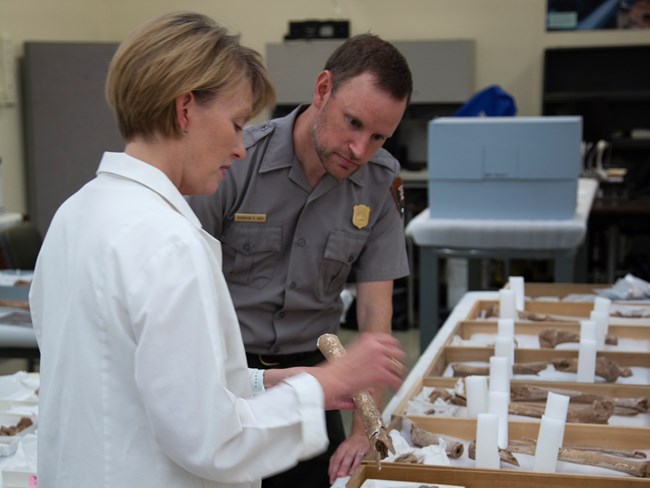
"Every soldier who fought on this battlefield has a story, even if we may never know their name," said Manassas National Battlefield Park Superintendent Kristofer Butcher (left) in a news release. "It has been our privilege and responsibility to care for these remains with dignity, guided by science, respect, and our commitment to preserving America's history. We are honored that this soldier will now receive a final resting place at Arlington National Cemetery." 

No date for that burial has been announced. USA Today reported it is expected to occur in the fall.

Asked by the Civil War Picket whether there has been an attempt to identify the soldier via DNA, the NPS on Friday said extensive archaeological and osteological analysis was done. "Professional archaeological evaluations concluded that additional analysis was unlikely to yield significant new information. Throughout this process, our focus has remained on treating the soldier with dignity and respect while following professional standards and applicable preservation laws."

NPS documents studied by the Picket indicate the 2024 excavation yielded four new surgically amputated limbs and the body of the soldier. “Found in direct association with this soldier's interment was a rubber pocket comb,” the agency said. The Army has requested personal effects, including the comb, for burial.

The limb pit was discovered in 2014 during excavations associated with water pipe maintenance at the park. Two burials and seven (possibly eight) amputated limbs were removed in 2015. Excavations continued in 2024.

In total, three sets of human remains and 16 amputated limbs were excavated and removed from the property. (At right, femur with lodged bullet, Kate D. Sherwood, Smithsonian Institution)

The field hospital was established at the John Dogan farm, not far from the Deep Cut section of the battlefield. The property was known as Rosefield at the time.

Union soldiers occupied this property on August 29, 1862, first using it as an artillery placement site, and later as a field hospital after surgeons “took control of the house” for the remainder of the three-day battle, the NPS said.

Second Manassas was a decisive victory for the Confederacy..

Park officials say they have not been able to identify the soldier, his New York unit or exactly where he was wounded. 

Excelsior Brigade was in fierce fighting

The NPS provided details of the initial find in 2018, saying it was the first time a surgeon’s “limb pit” from the conflict has been excavated and studied.

Brandon Bies, then park superintendent, told NPR that the men were likely wounded during a charge up Deep Cut, held by thousands of Confederates. “As (Union soldiers) start to get closer, within 300, 400 yards, they start to receive rifle fire and musket fire," he says. "Men are dropping left and right." 

The Excelsior Brigade, made up of several New York regiments and a veteran of multiple campaigns, fought near the Dogan farm and Deep Cut. Daniel Sickles organized the brigade, but it was led by Col. Nelson Taylor (right) in this battle.

Analysis of the third soldier indicates he was approximately 16 to 19 years old and standing between 5 foot 1 and 5 foot 3 inches.

Soil conditions, historic plowing and backhoe excavation during the water line project led to the remains being in poor condition, according to the NPS.

Roughly 40% of the human remains were intact, and “no complete long bones were present. Historic plowing of the area crushed and relocated the skull (minus an occipital bone) and right arm” documents show. “The knees may also have been affected by the backhoe during waterline excavation. Fragments of assorted bones and teeth were found in soil within the excavated area. Little of the pelvis remained.”

Other items found with the individual include a jacket clothing hook and the hard rubber comb. A report concludes that “A lead artillery case shot ball recovered from the neck area of the remains could indicate cause of death, although this remains inconclusive.”

The soldier may or may not have been in the Excelsior Brigade or wounded near Deep Cut. It's possible he was wounded the evening of Aug. 29 in the fight at Groveton.

Examination of bones showed severity of wounds

A glance of photographs of the amputated limbs of the soldiers found in 2015 shows the bleak realities of war. Surgeons sawed them off with precision because the bullets caused so much damage and soldiers needed an opportunity to ward off deadly infection.

As casualties piled into tents not far from the fighting, Civil War surgeons had to make quick decisions on who might have a chance of going home – without an arm or leg – and who was too seriously hurt to be operated on.

That appeared to be the case with the two soldiers.

The first was in his 20s and died of injuries from an Enfield bullet striking his upper leg.

“Surprisingly, the bullet was still lodged in the femur bone, likely because it slowed as it passed through the man’s cartridge box, the National Park Service said at the time

The second skeleton was that of a man estimated to be between 30 and 34 years old. (At left, Brandon Bies assists in 2015 dig / Kate D. Sherwood, Smithsonian Institution)

He died as a result of a buck and ball shot to the upper arm, pelvis and leg.

The bones were found in a shallow pit, indicating they likely were buried in haste. According to Smithsonian Institution experts, the surgeons were allowed by Confederates to conduct the hasty operations after the battle, when the wounded had been in the sun and rain for days. They may not have had chloroform at their disposal.

The entire pit was not excavated in 2015, apparently because of time and funding limitations. While archaeologists believed there were more partial remains, they did not expect a whole set to be found when they returned in 2024. Officials have been tightlipped about the project for more than two years.


The remains of the first two unknown soldiers were buried in a new section of Arlington National Cemetery in September 2018 (At far right in Picket photo, above).

At the time, Bies said analysis of isotopes in the bones, which looked at what had been in drinking water the men consumed, indicated they are likely from New York or New England, according to CNN.

The NPS news article did not include photos, but the agency said it was reviewing them for possible release. "Any materials that are shared publicly will be carefully reviewed to ensure they protect sensitive archaeological information and maintain respect for the soldier's remains."

The public can see the related documents on this page.

Thursday, June 21, 2018

Amputated limbs recovered from shallow pit at Manassas provide insight into surgeons' work

Erin Godwin excavates limb / Kate D. Sherwood, Smithsonian Institution
The extraordinary discovery of the remains of two Civil War soldiers buried next to 11 amputated limbs at Manassas National Battlefield Park in Virginia has brought new insight into how surgeons treated the critically wounded.

The National Park Service on Wednesday announced it’s the first time a surgeon’s “limb pit” from the conflict has been excavated and studied. It dates from the Second Battle of Bull Run in August 1862, a decisive victory for Confederates.

Bone fragments were found in an undisclosed area of the park during a utility project in 2014. The next year, NPS and Smithsonian Institution archaeologists excavated the site.

Beneath the surface, they found two nearly complete human skeletons, and several artifacts including buttons from a Union sack coat, a .577 Enfield bullet, three pieces of .31 caliber lead buckshot, and an assemblage of eleven arms and legs,” the park said.

Femur with lodged bullet / Kate
D. Sherwood, Smithsonian Institution
The team was able to determine that the bones belonged to Union soldiers. On Tuesday, the two skeletal remains were transferred to the U.S. Army, which will bury them at Arlington National Cemetery in caskets made from a fallen tree on the battlefield.

A glance of photographs of the amputated limbs shows the bleak realities of war. Surgeons sawed them off with precision because the bullets caused so much damage and soldiers needed an opportunity to ward off deadly infection.

As casualties piled into tents not far from the fighting, Civil War surgeons had to make quick decisions on who might have a chance of going home – without an arm or leg – and who was too seriously hurt to be operated on.

That appeared to be the case with the two soldiers.

The first was in his 20s and died of injuries from an Enfield bullet striking his upper leg.

“Surprisingly, the bullet was still lodged in the femur bone, likely because it slowed as it passed through the man’s cartridge box, the National Park Service said.

Cut marks show surgeon's skill / Kate D. Sherwood, Smithsonian Institution
Doug Owsley, lead physical anthropologist at the National Museum of Natural History, told the Smithsonian's online magazine that the soldier was shot in the buttocks while retreating.

The slug went in at an angle, causing a longitudinal fracture that caused the femur to snap, with bits splintering off inside his leg. “This is just so difficult to treat,” says Owsley, adding the wound was too high for amputation. The man was set aside and died.

The second skeleton is that of a man estimated to be between 30 and 34 years old. He died as a result of a buck and ball shot to the upper arm, pelvis and leg.

Regarding the amputated limbs, Owsley said the surgeon was skilled, given the precision of the cuts.

Brandon Bies assists in 2015 dig /
Kate D. Sherwood, Smithsonian Institution
“There’s a lot of choices that those surgeons had to make when they realized they were left and supplies were not coming in, and they basically had to fend for themselves along with thousands of wounded,” Kari Bruwelheide, a Smithsonian anthropologist, said in a video.

Manassas Superintendent Brandon Bries said, “We can start to have a personal connection to these soldiers and these remains. So instead of some bones, you are looking at somebody who was between 30 and 34 years old and was from the state of New York. That person may have had a wife, may have had children.”

The NPS said research on the recovered limbs continues and its possible they could be matched with a name.

“By examining the cuts, it is possible to determine the skill of the surgeon and even his physical position relative to the patient. With help from historical records, researchers believe it may be possible to match the bones with a specific surgeon and maybe even the soldier they belonged to, a truly unique discovery.

Bruwelheide, Bies examine bones / Nathan King, NPS
Bies, an archaeologist, told NPR that the men were likely wounded during a charge up Deep Cut, held by thousands of Confederates. “As (Union soldiers) start to get closer, within 300, 400 yards, they start to receive rifle fire and musket fire," he says. "Men are dropping left and right." 

Bullet entrance wound /
Kate D. Sherwood, Smithsonian Institution
Surgeons had a standard kit, with a variety of saws.

"If you could imagine sitting with a horrific wound of your own and hearing the moans and screams and seeing a growing pile of limbs from the surgeon, and knowing that your turn was coming, I can't possibly imagine what that would have been like,” Bies told NPR.

The bones were found in a shallow pit, indicating they likely were buried in haste. According to Smithsonian experts, the surgeons were allowed by Confederates to conduct the hasty operations after the battle, when the wounded had been in the sun and rain for days. They may not have had chloroform at their disposal.

Remains are in Army custody / Bradley Waldron, NPS
Foot of amputated leg / Kate D. Sherwood, Smithsonian Institution