Showing posts with label Confederacy. Show all posts

Wednesday, December 3, 2025

What in darn-ation??? An Alabama cavalry trooper proudly wore socks depicting the 'Stars and Bars.' You can see them now at a state museum in Montgomery

The conserved socks in Montgomery (Alabama Archives) and an example of the First National Flag (Wikipedia)
It wasn’t enough for Alabama cavalry trooper Henry Clay Hames to have a simple pair of white socks to keep his feet warm and dry. Loved ones wanted to be sure he delivered a message, even if it was normally covered by his boots.

High up on each sock, below the ribbing, were stitched versions of the first national flag of the Confederacy, commonly known as the “Stars and Bars.”

The Alabama Department of Archives and History in Montgomery has had the distinctive hosiery for generations. Hames’ daughter, Mary, donated them after his death in 1917. (At right, before conservation)

But it doesn’t appear they were ever displayed -- until now.

“I don’t think past curators saw the significance,” said Ryan Blocker, a curator in the museum collection of the Alabama Archives.

Blocker recalls when a comrade sent her a photo asking her to identify the small flags. The two red bars are vibrant, but the blue canton and white stars are largely indiscernible.

She recalls thinking, “’Oh God, that is a first national flag. These are patriotic socks made by family and sent to him.’”

It’s unclear who darned the socks or when Hames – who may have been a courier -- received the items. (Photo above and at left from Alabama Archives)

While they reflect defiance, the socks don’t hold a candle to known examples of socks made for Union soldiers that feature the U.S. flag up high and Confederate flags on the heel. You know, being trampled. You can see examples here and here.

Hames served in the 8th Regiment, Alabama Cavalry (Livingston’s) and Moses’ Cavalry, Alabama Cavalry.

The socks -- made of either wool or cotton -- went on display last month after the Museum of Alabama reopened after months of renovation and upgrades.

The pair is in a home-front exhibit case in the “Alabama Voices” gallery, which features numerous Civil War artifacts.

(I will write a post soon about technology upgrades to the gallery. For now, let me just say visitors can touch what is called a digital label to pore over closeup photos and information about artifacts.)

The agency in early November also opened a new gallery entitled “Alabama Military Stories," which covers multiple wars.

Blocker said Hames’ socks were recently conserved. “They are such a fascinating piece.”

Although the blue canton has faded, faint traces survive, she said. “As for the stars, it looks like they were embroidered onto the canton area. Some of them only have a little of the thread left.”

The curator sent me a photo (right) showing where she tried to pinpoint the remaining stars, which are in a circle. “Could there have been more stars? Possibly. When these rotate off display, I hope to have (textiles expcert) Terre Hood Biederman examine them in person and give us a breakdown of the construction.”

Hames grew up in Troup County, Ga., on the Alabama border.

While he is believed to have enlisted as a private in 1863, I have not learned where that occurred (perhaps Virginia) or why he joined up with Alabama units.

Hames lived in West Point, Ga., before and after the war. His first wife, Fannie (or Fanny), and his daughter, Mary, died in 1882, He remarried in 1893 to Sarah “Sallie” Samples and they moved to Montgomery.

He died there in 1917, age 72, and is buried in Greenwood Cemetery. (Photo left, courtesy Bham85, Findagrave)

Some records on Hames are puzzling, according to Blocker. His pension application lists the 9th Mississippi Cavalry but Fold3 and other records do not show him serving in the regiment.

Records indicate Moses’ Squadron was supposed to join the 9th Mississippi Cavalry, but the order didn’t come to fruition because of the end of the Civil War. The soldier was 20 years old.

“It had been carried out to some extent, I believe, for Hames to have listed the 9th as his company of service in his pension application,” Blocker said in an email.

Friday, May 10, 2024

After South Carolina's capital went up flames, state leaders burned papers in new capital 70 miles away. Now there is an effort to preserve that house in Union

The Thomas Dawkins House in Union dates to about 1845 (Photos: Preservation South Carolina)
It’s not every day you get an enticement this juicy while looking up a residential property on Zillow:

In one of the home's eight fireplaces, papers were burned that would have hung many a Southerner if they had fallen into Union or Federal hands.”

The real estate overview of the Dawkins House at 117 N. Church St. in Union, S.C., included this and other nuggets about its history – notably service as the state’s capital for a few weeks toward the end of the Civil War.

Gov. Andrew Magrath, before fleeing Columbia as Federal troops closed in, got in touch with college chum Judge Thomas Dawkins about using the home and others nearby to conduct business amid the chaos.

From about Feb. 15, 1865, until sometime in early March, Magrath tried to run the state from the Dawkins House as Union Maj. Gen. William T. Sherman sacked Columbia and moved on other cities, bent on destruction and submission of Confederate troops.

Judge Thomas Dawkins, Mary P. Dawkins and Gov. Magrath (Preservation SC)
Nearly 160 years later, the two-story clapboard is in pretty rough shape and in need of a rescue.

That’s happening now through the nonprofit Preservation South Carolina, working with supporters and $300,000 from the Legislature

Bennett Preservation Engineering of Charleston is studying the structure and the feasibility of its restoration, says Joanna Rothell, director of outreach and preservation for Preservation South Carolina. The group acquired the long-vacant property last year.

The hope is for the home – nicknamed “The Shrubs” by Dawkins and his wife Mary -- to once again be occupied, this time as an alumni and event center for nearby University of South Carolina-Union.

A need to hide evidence from the Yankees?

Extensive repairs, upgrades are needed in structure (Preservation South Carolina)
Andrew Kettler, an assistant professor of history at the small campus, has amassed a lot of research about the town’s history and Dawkins, a prominent political figure who came from a wealthy family. While a unionist before South Carolina seceded, he came to support the Confederacy.

His old pal Magrath was elected governor by the Legislature in December 1864. Before the Civil War, Magrath had served as a federal judge, and made a ruling that certainly made him unpopular with the North, as an article about him states.

“Although opposed to the trade personally, Magrath nevertheless handed slave-trade proponents a signal victory in 1860. In a decision associated with the cases surrounding the Echo and the Wandererships seized for illegally transporting African slaves, Magrath stated that the 1820 federal statute on piracy did not apply to the slave trade.

In his brief tenure as governor, Magrath knocked heads with the main Confederate government. At the Dawkins House and other places where he fled until his arrest in May 1865, he sent and received correspondence about military and economic challenges.

The University of South Carolina Libraries has a fascinating Feb. 27, 1865, published message from Magrath to South Carolinians. It was likely composed during his time in Union. (Public domain photo, left. Click to enlarge)

The governor describes Federal troops who took Columbia as exhibiting hate and causing wanton destruction as women and children suffered. He encouraged citizens to come to the aid of those left in the ravaged city.

“They are destitute, they are in want, they need food, give what you can, sell what you cannot give. Let your succor be promptly offered, for such suffering will not brook delay.”

According to histories and local legend, Magrath and his subordinates burned possibly incriminating documents and correspondence in the Dawkins House fireplaces. (The home served as South Carolina's capitol while the city was briefly is capital.)

Kettler told the Picket in an email nothing in accounts he has seen show anything about the contents of those papers.

Confederates burned documents for a lot of reasons, he said. Many went up in flames in Richmond, Va., as President Jefferson Davis fled.

“Generally, burning would be to avoid military secrets getting into the enemies hands,” Kettler said.But, at the late stages of the war, such secrets may have become secondary as Confederates may have also wanted to hide evidence of the original treason of the Confederacy in the first place, and any other actions that could have led to prosecutions and trials after the war.”

When asked about the significance of preservation of the Dawkins House, Kettler said such buildings are retained for their importance to historical memory. (Photo, right, taken decades ago. Courtesy: Preservation South Carolina)

The historical memory here is about those who committed treason against the Union finding their way to an escape house as fugitives and attempting to hide their treason through burning incriminating materials,” he wrote.

“Historical memory works to honor the past and critique its most problematic histories. This site is retained for those purposes and as a clear reference point from the community of Union that existed well before the Civil War and was important well after outside of those contexts," said Kettler.

What happened to the targeted town?

William Waud's illustration of Columbia's capture (Library of Congress)
Before Magrath traveled 70 miles to Union, South Carolina was the symbol of rebellion. 

Sherman and his troops entered the state from Georgia with an eye on a full prosecution of the war. While they are behind some fires that ravaged Columbia, others were caused by other parties.

Union was a community with a business district and nearby plantations. “Many Quakers left the county in the first few decades of the nineteenth century due to their general stance against the institution of slavery,” said Kettler. Enslaved people became a majority in Union County during the 1840s. (The area became a hotbed of Ku Klux Klan activity during Reconstruction.)

It’s evident that many papers associated with Magrath were not burned in Union or elsewhere.

The Wilson Special Collections Library at the University of North Carolina contains many letters sent to Magrath at Union and elsewhere. One, dated March 16, 1865, informed him of the total loss of state ordnance in Columbia. (Image: A.G.Magrath Papers, #467-z, Wilson Library, The University of North Carolina at Chapel Hill, click to enlarge)

Magrath and his staff raced away from Union as Federal troops moved in. He was eventually captured on May 25 and imprisoned at Fort Pulaski near Savannah, Ga., until release that December. (Interestingly, President Davis stopped by Union in April 1865 after he fled Richmond.)

As for the town of Union’s fate?

It was spared burning, as the story goes, because the Broad River was flooded and Sherman turned away.

Group thinks house can be 'brought back to life'

Rothell, with Preservation South Carolina, said the short-term goal is to stabilize and prevent further deterioration of the Dawkins House while assessing how much can be saved.

This is what the $300,000 from the state legislature is geared towards, though, that funding will likely not cover stabilization plans and work,” she told the Picket.

The group is looking at other legislative funding and grants, specifically from the South Department of Archives and History. And it is likely that local sources in Union will need to help pay for refurbishment.

The home's exterior in 2011 (Preservation South Carolina)
While it seems that the task of renovating may be daunting, we have seen buildings in far worse condition brought back to life," said Rothell.

Kettler said the foundation and standard structural integrity appear to be solid. “Some of the bones of the house date to the late eighteenth century, which is partly why it was granted National Historic Register site status in 1973.”

Mary Dawkins lived in the home until 1906, and there has been a succession of owners since, including the Faucett family for many years.

Rothell said the goal is for the Dawkins House to be preserved and used by the community

“We are currently working closely with USC-Union, the city of Union, and the County of Union in developing a plan for its future. We hope that USC-Union will purchase it from us and use it as an alumni center, but we do not have an agreement with them yet,” she said.

Monday, January 11, 2016

A walk in Bermuda: Bumping into the 'rogues' of Confederate blockade running

Blockade runner at St. George's (Wikipedia, public domain)

My wife, eldest son and I winged our way Saturday to Bermuda for a quick (25-hour) getaway. We lucked out on the weather and saw much of the gorgeous British territory by ferry, bus, taxi and on foot.

After marveling at the rocky north shore of St. George’s Island, we left the azure waters and gentle breeze and sauntered down to the village of the same name. While walking the charming streets (Duke of York Street, to be precise) at midday Sunday, I stumbled into the American Civil War.

A sign on the stucco wall of the site, now the Bermuda National Trust Museum at the Globe Hotel, calls the building the “Confederate Headquarters during the American Civil War." Apparently, commercial agent Maj. Norman Walker used the second floor of the 300-year-old building to coordinate “the flow of guns; ammunition and other war supplies through the Union blockade.”

The museum was closed, but I pledged to do a little reading when I got home last night.

Picket photo
Rogues & Runners: Bermuda and the American Civil War” is the star attraction among several exhibits. An accompanying book talks about how the Confederacy turned to Bermuda, Cuba and the Bahamas as vital stops for blockade running. Those harbors “teemed with ships full of arms and supplies for the South and others loaded with cotton on their way back to Europe as payment.”

Blockade runners were employed to fight the North’s “Anaconda Plan” of choking off Southern ports. There was a lot of profiteering and many items early in the war were meant for civilians willing to pay high prices.

But, according to a U.S. National Marine Sanctuaries article, “To prevent blockade-running companies and captains from loading their ships with high-value commodities for better profit, the Confederacy operated government-owned runners, and, in 1864, the Confederate Congress passed a law banning luxury goods on the steamers to focus the incoming cargoes on what was needed to win the war.

Great Britain controlled Bermuda and the Bahamas and encouraged blockade running. According to a teacher resource guide produced by the museum, although Bermuda was neutral, most of its residents favored the South.

The upper floor of the Globe Hotel was used by Confederate Commercial Agent John Tory Bourne and Confederate Shipping Agent Major Norman Walker as the office from which they coordinated the flow of desperately needed guns, ammunition, uniforms and other war materiel through the Union blockade, established to starve the southern Confederacy,” reads the guide. “It was a turbulent yet profitable period in St. George’s history and the Globe was at the heart of it.”

Former Globe Hotel now houses museum (Picket photo)

Goods that were brought from Europe and meant for the South were transferred from larger vessels to the faster blockade runners in Bermuda.

The guide continues: “The opportunities for Bermudians to profit from blockade running were boundless. Ships needed coal and provisions. Crews required lodging, food and entertainment between runs. Cargoes had to be unloaded, stored and reloaded, while crews and cargoes had to be ferried to ships lying at anchor. Bermudian pilots guided the ships through the reefs; those with skills as mates, carpenters, firemen and ordinary seamen signed on as crew. The Civil War proved to be the road to riches.”

The U.S. government during the Civil War tried to pressure Bermuda to quash such trade. Occasionally, navy ships tried to capture the fast and daring blockade runners, which used the territory as a stopping point in journeys from England to Wilmington, N.C, and Charleston, S.C.

Bow of Mary Celestia (NOAA photo)

Among the blockade runners that sank off the southern Bermuda shore was the 1864 steamer Mary Celestia, which has been explored by archaeologists and is the subject of a film documentary. A case of fine wine was discovered a few years ago among the well-preserved contraband. The vessel -- and wine -- never made it to Wilmington.

The venue in St. George’s apparently used to be called the Confederate Museum -- and the name change and exhibit title brought out some online critics, including those who blamed the conflict on the North and used terms such as “invasion.” One wrote that the Yankees were the real rogues.

Mary Celestia perfume bottle
One commenter said he didn’t think the trust was being disrespectful to the memory of those who fought in the war: “I think to be fair that the title ‘Rogues and Runners’ is more a jibe at us islanders and those who were not directly involved in the war in gun running etc. Many of the Captains of the runners were English naval officers for example on extended leave who made huge sums of money from this enterprise – together with those of ‘us’ islanders who were in it just for the money were the real ‘rogues’ in all of this.”

On a side note, there’s an exhibit in St. George’s Tucker House about Joseph Rainey, a free black man from South Carolina. Rainey, who later became a U.S. congressman, escaped Confederate service and went with his wife to Bermuda, which had abolished slavery in 1834. The couple lived there for four years before returning to the United States.

Wednesday, November 18, 2015

Museum for black soldiers at Stone Mountain?

An official says a plan to build a museum focused on black Civil War soldiers at Georgia’s Stone Mountain, which honors Confederate history, has taken priority over a proposed monument to the Rev. Martin Luther King Jr. The Stone Mountain Memorial Association voted to explore the museum proposal, The Atlanta Journal-Constitution reports. • Article

Monday, February 23, 2015

And the 1865 Person of the Year is ....

Humanitarian and relief organizer Clara Barton was overwhelmingly voted Person of the Year at this past weekend’s symposium at the Library of Virginia in Richmond.

The audience made its selection at the final such program during the Civil War sesquicentennial.

Biographer Elizabeth Brown Pryor made the case for Barton, saying she set about creating a system for identifying killed and missing soldiers, the results must evident at Andersonville. Barton campaigned for black suffrage, better treatment of prisoners and devised the first aid kit, Pryor said.

Barton earned the title “Angel of the Battlefield” because of her efforts to assist wounded Union soldiers during the Civil War. She later became the founder and first president of the American Red Cross.

Other nominees were Jefferson Davis, the Freedmen, Robert E. Lee and Abraham Lincoln.

The Museum of the Confederacy and the American Civil War Museum are co-sponsors of the event.

Past Person of the Year selections are Abraham Lincoln (1861), Robert E. Lee (1862), and Ulysses S. Grant (1863) and William T. Sherman (1864).

Sunday, March 18, 2012

Spotlight on Museum of the Confederacy

The commemoration of the Civil War's 150th anniversary is a welcome gift for the Museum of the Confederacy, bringing rare attention to a Richmond institution whose attendance has softened in the past two decades. Later this month, the museum wil opens its branch in Appomattox, site of Gen. Robert E. Lee's surrender. Spokesman Sam Craghead said the museum is trying to tell the story of a phase of American history. "If you're going to learn from history, you have to know everything." • Article

Tuesday, September 13, 2011

Plans for Rebel flying machine up for sale

The papers of R. Finley Hunt, a dentist with a passion for flight, describe scenarios where flying machines bomb Federal troops. Hunt's papers will be sold at the Space and Aviation Artifacts auction. • Article

Wednesday, June 15, 2011

Debate continues over black Confederates

As America embarks on four years of Civil War commemorations, it revives an unsettling debate: how to view the role of African Americans in the Confederacy. • Article

Wednesday, January 19, 2011

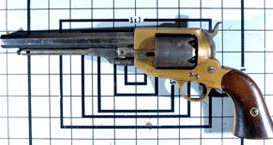
Museum to get stolen revolver back

A gun used in the Civil War, then stolen from the Museum of the Confederacy in Richmond, Va., has been recovered more than three decades after the theft. • Article

Wednesday, August 11, 2010

48 hours in historic Richmond

Reuters correspondents help you get the most out of a 48-hour visit to the former Confederate capital that will commemorate the 150th anniversary of the Civil War in 2011. • Article

Monday, April 5, 2010

A man of contradictions: Visiting the home of 'Little Alec' Stephens, Confederate VP

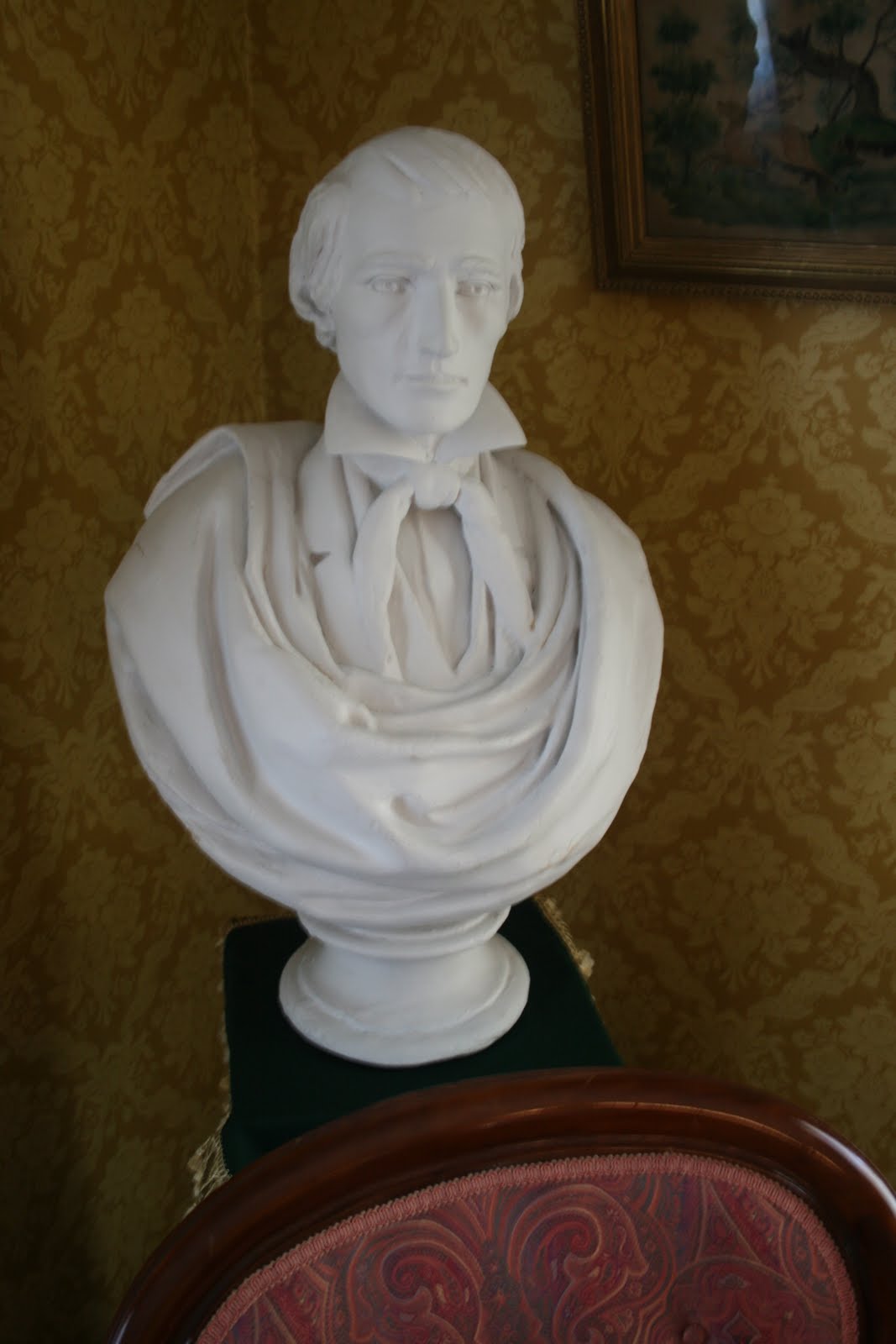
Diminutive and sickly in life, Alexander Stephens stands taller in marble.

From the pedestal on the fresh-cut lawn of his home, Liberty Hall, the Georgia statesman looks south toward the downtown of Crawfordville, a small town that sits on the sidelines of Interstate 20 and prosperity.

Most known for serving as vice president of the Confederacy, Stephens lived nearly 50 years at this residence that served relatives and wayfarers traveling between Atlanta and Augusta, which is about an hour east of Crawfordville.

I visited A.H. Stephens State Historic Park on Easter Sunday, while my family was away. Walking first through the small downtown was a journey back in time. Kudzu vines climbed red brick walls of abandoned businesses. And while the main street (U.S. 278) has a few antique businesses, many of the buildings are shuttered.

A courthouse expansion and a branch of Athens Technical College seem like the only new touches in Crawfordville. 2010 Census signs hang near the Taliaferro (pronounced Tolliver) County courthouse. The tiny county has only 2,000 residents, and is trying desperately to hang on to every one.

“When they put I-20 out there [in the 1960s] the town just dried up,” said parks employee Margie Edwards, who gave me a fine tour of Liberty Hall and a museum housing a collection of Confederate and civilian artifacts from the period.

The mid-19th century surely was a busier time for Crawfordville. The trains dropped off passengers while others rode carriages to and from Atlanta and Augusta.

Born in 1812 a few miles outside town, “Little Aleck" Stephens, an accomplished orator, topped out at 96 pounds and was frail most of his life. An accident ruined his hip. He often used a wheelchair and crutches.

While his voice was described as shrill and unpleasant, at the beginning of the Civil War a northern newspaper described the statesman, who also suffered from depression, as "the Strongest Man in the South" because of his intelligence, judgment and eloquence.

The brilliant attorney was elected governor, U.S. senator and U.S. representative. In 1848, he was stabbed by a political foe in Atlanta.

Stephens appears to me a man of contradictions.

Stephens at first opposed secession, but became vice president of the Confederacy. Believing that President Jefferson Davis was dictatorial, the vice presidency was a string of frustrations for Stephens, who favored states rights, opposed conscription and eventually sought peace negotiations.

“Little Alec” served nearly five months in prison after the South surrendered In 1865. He wrote, “A Constitutional View of the Late War between the States” (1868-70), his two-volume apology for the Confederacy.

Stephens had about 35 slaves on his farm. By all accounts, he treated them better than many and ensured many were educated, even after the war. Some sources said he personally opposed slavery. Publicly, however, he declared slavery as the natural condition of blacks. (Above, two of his slaves, Harry and Eliza Stephens)

Fond of wine and games of whist at Liberty Hall, Stephens was a longtime friend of Robert Toombs, a robust and blustery politician who appeared in many ways his opposite. An upstairs room at Liberty Hall was reserved for Toombs when he made a visit. Relatives of Stephens lived upstairs.

Liberty Hall, while by no means sumptuous, was a comfortable stopping point. Because of his infirmities, Stephens, a lifelong bachelor who was orphaned when 14, lived on the first floor of the home, next to the men’s sitting room.

“The beds Stephens would sleep in were in the north-south direction,” Edwards told me. “Someone told him the magnetic currents were good for him.”

Many of the pieces in Liberty Hall, including an earthen commode and sofa, are original. A building in the back of the home served as a library for Stephens, who died in 1883 while serving as Georgia governor. He is buried with his stepbrother, Linton, in front of the home.

The museum isn’t long on interpretation but has a few nice belongings and many quotations from the Civil War.

One of my favorites, penned by a Georgia private on the march to Gettysburg, reads, “I saw a little girl probably about eight years of age, standing on the stoop in front of her house and heard her say, ‘Mama, are these men rebels?’ ‘Yes my daughter.’ ‘Why Mama, they haven’t got horns. They are just like our people.”

Parking at the state park is $5. The tour of the home and museum costs an additional $4.

Click here for more information of the historic site.