Showing posts with label sailors. Show all posts

Saturday, August 15, 2026

Tattooed sailors off Fort Fisher: Talk will focus on the history of the art, designs popular during the Civil War and where ink was placed on the body (even there!)

19th century tattoo designs (Winterthur Museum, Garden and Library, Tattoo Pattern Books)
Ah, sailors and tattoos. They go so well together, and have for hundreds of years.

Whether through images of sweethearts, whales or ships, countless generations of sailors have worn tattoos to show social identity, ethnic heritage or simply for identification should they be killed in battle.

Becky Sawyer, historian at Fort Fisher State Historic Site in North Carolina, has conducted about five years of research on those who in participated in the battles for the Confederate sentinel near Wilmington and had some ink on their bodies.

Sawyer (left) will share the fruits of her work on Wednesday afternoon, Aug. 19, at Pleasure Island Library in Carolina Beach. The talk is entitled “Red, Blue & Black: Tattoos Among Sailors at Fort Fisher.”

“Through images and stories, explore this fascinating and sometimes gritty aspect of maritime history. Not for the faint of heart,” the program advertises.

The Picket asked Sawyer to describe the topic and the resources she used. Her responses have been edited for brevity.

Wait for it: The last question below gets to the “faint of heart.”

Q. What will be the main thrust of your message? Why do you find this a particularly relevant topic?

A. Tattoos have always been a tradition of naval history. Tattoos tell a story of the sailors who fought at Fort Fisher, whether they they were in the maritime service for years prior to the Civil War or joined the U.S. Navy to serve their country. They also tell the story of traditions such as the Kanacha tattoos among the Polynesian sailors with the fleet. Tattoos identified men in a time when there were no dog tags. Several of the men on my list were killed in the Battles of Fort Fisher. Some were sent home north to be buried, like Abel Cole of the USS Brooklyn, who had a blue star between right thumb and index finger. He would be buried in his home state of Maine. William Baker of the USS Sassacus is buried at the Wilmington National Cemetery – he had his initials tattooed on his left forearm

Naval rendezvous record describes fancy artwork for one Civil War seafarer
Q. Is this all or almost all about Federal sailors? Which campaign(s) against the fort did they participate in?

A. My focus is on the U.S. sailors who served onboard vessels both as part of the blockade off Wilmington/Fort Fisher in 1863-64 and then also the battles of Fort Fisher. There are also former Confederates who joined the U.S. Navy during the exchange in late 1863 and into 1864 who have tattoos which they may have received while in a prisoner of war camps such as Camp Douglas and Fort Delaware.

Q.  How did you learn about these tattoos? Can you describe the themes? Were tattoos well-known among sailors before the Civil War?

A. Researching the muster rolls for the various ships that participated in the battles of Fort Fisher and then cross-referencing them with the Naval Rendezvous Enlistment records along with pension records of those who served in the battles. As for themes – I have broken it down into 11 categories such as names & initials; things of the sea (mermaids, anchors, ships), religious symbols, patriotic symbols, memorials, bracelets, etc. Tattoos are well-known among sailors prior to the Civil War. 

Artist at work (Library of Congress) and two tattoo designs (Winterthur Museum, Garden and Library, Tattoo Pattern Books)
Q. I know you have researched this for a while and have made previous presentations. When did you begin this research and what piqued your interest? 

A. I began researching this about five years ago or so. At first, it was on foreign-born sailors and then realized the former Confederates who served with the Navy and finding tattoos among the prisoners when they enlisted, and it just snowballed into the research that I have today.

Q. Are there specific sailors you will mention? If so, can you please provide a couple examples?

A. Simon Duggan of the USS Fort Donelson (former Confederate POW) had a cross between his shoulder blades (naval record, below). He was from Ireland. John Love of the USS Wabash had the phrase “Where Liberty Dwells There is My Home” tattooed on his breast. Leander Spaulding (tattoo artist on the USS Tristam Shandy) had a snake and “don’t tread on me” tattooed on his right forearm. Charles Haldgate of the USS Tuscarora had “Dieu Et Mon Droit” (God and my right) tattooed on his right forearm – he was a mariner by trade from Liverpool.


Q. One promotion for your speech says it "is not for the faint of heart." Can you explain why?

A. I found at least two sailors with tattoos on their manhood and then there are tattoos found on the buttocks as well.

Becky Sawyer’s presentation is scheduled for Wednesday, Aug. 19, at 2 p.m. at Pleasure Island Library, 1401 N. Lake Blvd #72, Carolina Beach, N.C. Call 910-798-6300 or 910-251-7351 for more information.

Sign about tattooed sailors research at Fort Fisher in 2023

Wednesday, May 25, 2016

All is hushed at Shiloh: For Memorial Day weekend, park to display images of the fallen

Sgt. John P. Wright was killed, buried at Shiloh (NPS)

For Memorial Day, Shiloh National Military Park asked residents of counties surrounding the battlefield to send photos of soldiers and sailors who have died in America’s conflicts.

About 30 images will be displayed on a “Wall of Honor” beginning Friday at the visitor center, said park ranger Heather Henson. Ten served in the Civil War, while others fought in World War II, Korea, Vietnam and elsewhere. A few were laid to rest after their military service.

“It is a way people can put a piece of their history into our exhibit,” Henson said.

Press releases went out to media in Hardin and McNairy counties in Tennessee and Alcorn County, Ms. A man living in Georgia found out from a newspaper in Tishomingo County, Ms. Some submissions came from elsewhere via social media.

The April 6-7, 1862, battle brought a staggering 23,746 casualties. A Memorial Day service at 11 a.m. Monday in the park’s national cemetery will remember those who died.

Among the Civil War soldiers whose images will be displayed are Capt. Humphrey Bate, 2nd Tennessee, who died at Shiloh, and Ole H. Gorehamer (or Gohamer), 12th Iowa Volunteer Infantry, who fought at Shiloh but died the next year of dysentery at Jefferson Barracks in St. Louis.

Henson said relatives of two World War II soldiers provided significant details of their service.

Also this weekend, at 5:30 p.m. on Saturday, park patrons will enjoy the first of the park’s summer concert series. The free program features Bobby Horton and Olde Town Brass.

Wednesday, March 6, 2013

Bringing them home: Details of services, burial of two USS Monitor crew members


USS Navy photo of Monitor crew
Thursday, on an airport tarmac in suburban Washington, D.C., in a choreographed military display of respect, flag-draped caskets bearing the remains of two men who died on active duty will be taken from a plane to waiting hearses.

Unlike service members who died in Afghanistan, Iraq or other places, no one knows these men, or for that matter, their identities.

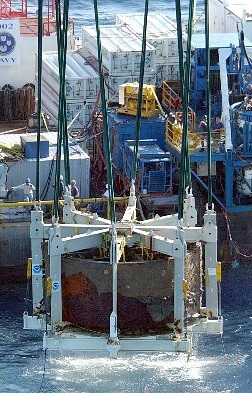
They were lost along with 14 of their shipmates, more than 150 years ago, when the ironclad USS Monitor sank off Cape Hatteras, N.C. The bodies of the two were found in the Union vessel’s gun turret in 2002.

Years of intense research and forensic analysis thus far have not ascertained their identity, but efforts continue at Joint POW/MIA Accounting Command (JPAC) in Hawaii.

Facial reconstructions of two sailors
The U.S. Navy is providing full honors to the two sailors, expected to be the last seamen from the Civil War whose remains will be located. Burial is scheduled for Friday afternoon at Arlington National Cemetery. Members of the public can attend the interment.

"The fact it has been 150 years or two days (since a death) doesn't make any difference,” said Stuart B. McLean, director of ceremonies and special events in Naval District Washington.

Ten families that possibly may be descendants of the sailors will attend. Each family has been assigned a casualty assistance officer.

The Picket this week learned details of events related to the USS Monitor crew interment.

THURSDAY, MARCH 7, ABOUT 11:30 AM

The event at Dulles International Airport in Virginia is called a “dignified transfer of remains.”

The caskets are being carried aboard a commercial flight from Honolulu, home to the Joint POW/MIA Accounting Command (JPAC), where the bones and teeth were analyzed. Based off those, experts have narrowed down from 16 individuals that were missing from the Monitor to about six who could be the two sailors.

2002 expedition (U.S. Navy)
Media will be on hand to witness the flag-covered caskets being taken from a conveyor attached to the plane. “Hand salute” and other commands will be uttered as the remains are solemnly carried by teams to the two hearses on the tarmac.

"It will be quick, but stirring,” McLean said of the remains transfer.

The remains will be held overnight at an area funeral home.

FRIDAY, MARCH 8

Midday
Descendants of the Monitor crew will attend a luncheon hosted by the National Marine Sanctuary Foundation in Alexandria, Va.

4 p.m., invitation-only funeral service at Fort Myer Memorial Chapel.

Family members, dignitaries and others will attend the non-denominational Christian service. It was determined that the sailors were Christian, McLean told the Picket.

Speakers are Navy Secretary Ray Mabus; Kathryn Sullivan, former astronaut and acting under secretary of commerce for oceans and atmosphere; and Civil War historian and author James B. McPherson.

Scripture readings and a homily are planned, as well as the singing of the Navy hymn, “Eternal Father.”

About 4:30 p.m.

The caskets will be carried on caissons from the chapel to Arlington National Cemetery. 

Family members and mourners will follow the Army’s Old Guard military escort.

Burial will take place in section 46 of the cemetery, which is between the amphitheater and the USS Maine Mast memorial.

“There’s lot of interest” by members of the public in attending the interment, said McLean, although he could not estimate how many might attend. At least 50 people in period costume will be on hand, but weapons of any kind are not allowed.

Driving to the grave site also is prohibited and the public cannot take part in the funeral procession. Attendees may park in the ANC Welcome Center parking garage and either walk or take, for a fee, the Martz tour tram to the Amphitheater.

Turret recovery (U.S. Navy)
The specific date of the interment was chosen to recognize the Monitor's role in the Battle of Hampton Roads 151 years ago on March 8-9. The Monitor sank off the North Carolina coast on Dec. 31, 1862.

A monument bearing the names of the 16 lost sailors will be erected at a later date, according to McLean.

IN THE FUTURE

Forensic experts will continue their efforts to identify the two sailors. Military records from the Civil War aren’t good and there are no dental X-rays, making the task very challenging.

"What I would like people to know is that we're here, and committed to the ideal of bringing home our fallen," says U.S. Army Sgt. Maj. Danang McKay, JPAC command senior enlisted leader. "It doesn't matter if that happened during World War II or it happens in future conflicts, we will always be here. We'll bring you home."

The biological profiles concluded that the sailors were both white males, one was 17 to 24 years old; the other was in his 30's. Both stood about 5 foot 7 inches tall.

Forensic anthropologist Robert Mann, director of the Forensic Science Academy for JPAC, in a statement said teams are trying to locate other descendants of other missing Monitor crew members to take DNA samples.

"We will never give up trying to identify these sailors," said Mann.