Showing posts with label deepening. Show all posts

Monday, March 7, 2022

Cannons and cribs: Archaeologists provide details on Revolutionary War weapons and Confederate water obstructions found in Savannah River

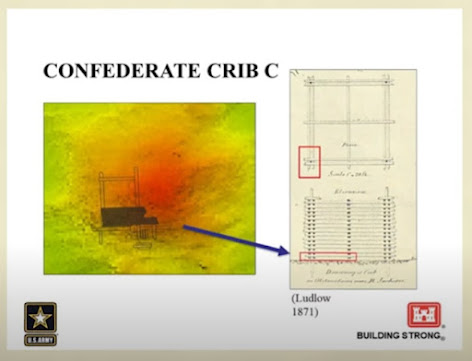
Planks at the bottom of this obstruction are shown in dark area (USACE)
Over the years, underwater archaeologists have found that amid all the junk littering the bottom of the Savannah River is a trove of treasure.

Such was the case in 2021, when they spotted 15 Revolutionary War-era cannons and explored obstructions placed in the river 85 years later during the Civil War.

Contractors working for the US Army Corps of Engineers surveyed and dived two Confederate “cribs” -- or tall wooden boxes filled mostly with brick – that discouraged the approach of Union ships to the port city. Forces towed the wooden obstructions, believed to be 40 feet by 40 feet, and put them in place near Fort Jackson and the ironclad CSS Georgia, a floating battery that was part of the Savannah River defenses.

Archaeologists last month provided details of the Revolutionary War and Civil War artifacts during a public event at the Savannah History Museum. Three cannons were recovered last year, while the other 12 were pulled up in January.

The Army Corps’ Savannah district funded the hard-hat dives as part of the busy Georgia port’s channel deepening.


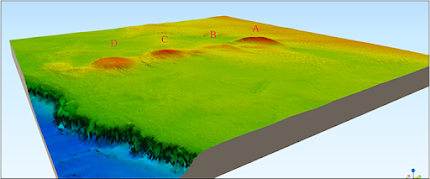
About a half dozen severely degraded cribs are on the South Carolina side of the river. Crews focused on what are called cribs C and D.

Commonwealth Heritage Group divers found some planks used to build Crib C.

“On top of the planks it was tons of bricks that we dug through, and then underneath the planks it was sterile sand and Miocene clay, which is the base of the river,” said archaeologist Stephen James. “That basically told us we were at the bottom of the crib.”

They found an intact corner at Crib D. While C won’t be impacted by the deepening, the remnants of D were documented and then largely destroyed by dredging, James said. “There is very little of the cribs left.”

The Confederacy used a wide array of weapons and obstructions to deter advances on Savannah from the sea. Besides forts and warships, wooden cribs, pile dams, torpedoes (mines), snags, logs and shipwrecks were employed.

Divers located an intact corner on this obstruction (USACE)
Time and dredging have taken their toll on the cribs over the past 160 years. But that’s not all.

After the Civil War ended in 1865, the city wanted to reopen the port and it hired salvage companies to remove river obstructions, including the cribs and pieces of the scuttled CSS Georgia. 

“They had their own demolition. Surprisingly, they had divers back then, had pretty heavy-duty machinery to pull that stuff down,” said Will Wilson of Commonwealth Heritage Group. Of course, not all of the objects were removed or recovered in the 19th century.

Topographic view of four cribs from survey. Dredged channel is in blue (USACE)
The Corps is in charge of the ongoing deepening of the Savannah harbor and the dives are part of an investigation of historical resources that have been or could be affected.

Officials referred to period maps and descriptions from Union Corps of Engineers Capt. William Ludlow and a Capt. Boutelle for information on the cribs.

The CSS Georgia is on the National Register of Historic Places and the cribs are eligible for inclusion, officials say.

Thursday, March 26, 2020

CSS Georgia: As artifact conservation continues, public will soon be able to read detailed report on this unique Savannah ironclad

Valve assembly has dozens of parts (U.S. Army Corps of Engineers)
Historians and archaeologists don’t know whether the builders of the CSS Georgia, an ironclad that guarded the Savannah River in the city of same name, worked from blueprints. None have been found in the years since the Civil War.

But that doesn’t mean there’s no way to describe the Confederate vessel’s propulsion, the angle and construction of protective casemate or to estimate the vessel’s width and length.

Dahlgren recovered in Sept. 2015 (USACE)
Between 2013 and 2017, machinery and divers working at the CSS Georgia’s resting place a few miles from downtown Savannah recovered thousands of artifacts. The project was necessary before a major harbor deepening project began: The boat’s remains lie in the main shipping channel.

An upcoming report from the Savannah office of the U.S. Army Corps of Engineers will provide a general analysis about the artifacts and an overview of the project. The finds included nearly a half dozen cannon, a propeller and large pieces of the casemate, fashioned from – of all things – interlocking sections of railroad iron.

Officials believe the artifacts will answer a lot of questions about the vessel.

Divers, working in visibility that one likened to chocolate pudding, slipped beneath the surface of the Savannah River and down to the disarticulated remains of the vessel that was scuttled by its crew in December 1864 when the Yankees arrived at the seaport’s front door.

The Corps recovered a significant portion of the CSS Georgia, which served as what’s called a floating battery. In the years since, items large and small have been cleaned at Texas A&M University's Conservation Research Laboratory. (The lab's operations have been affected by the recent coronavirus pandemic.)

“Conservation continues,” says Julie Morgan, district archaeologist for the Corps. “The conservation process is slowing down considerably as the artifacts that are now in conservation are more complex -- they have more individual components and are comprised of multiple metals -- so the number of artifacts finishing completion is slowing.”

Morgan and experts brought in for the project have been especially fascinated by the ironclad’s propulsion system and engines. It’s known the one-off CSS Georgia – built not far from where it sank -- was underpowered.

Locals derisively called it the “Mud Tub” because it was unable to leave the city and attack Federal ships that had bottled up Savannah’s river entrance. But they may have gotten something better. The CSS Georgia became a strong element of extensive water defenses. It never fired upon the enemy, because the enemy decided to probe vulnerabilities elsewhere.

Julie Morgan has researched the CSS Georgia for years (USACE)
Morgan provided two examples to the Picket of the complexity of some items.

The Conservation Research Laboratory had to separate seven sections of a valve assembly. They removed rubber gaskets and about 52 nuts and bolts.

And two engine cylinders, each about 48 inches long, must be carefully moved with a forklift. And conservators must precisely cut to reach the cylinders’ interior.

It’s important to note the wreck site of the CSS Georgia was not undisturbed. 

Dredging hits and scars, along with salvage attempts not long after the Civil War, made the site a jumble of rotting wood, chunks of casemate and loose rail and machinery.

Still, the trove of artifacts, have an important story to tell of innovation when builders had access to less-than-ideal armor and technology.

The CSS Georgia belongs to the U.S. Navy, under the auspices of the Naval History and Heritage Command.

Carefully packed shipment or ordnance (USACE)
“To date, the conservation lab has made two shipments of artifacts to the Naval History and Heritage Command,” said Morgan. “Packing the artifacts is very time consuming as everything must be wrapped and packed in archival quality materials.”

The items are being stored at the Washington Navy Yard, where officials are cataloging and storing them in hopes that a museum will eventually come forward with a plan to exhibit the artifacts and tell the CSS Georgia’s story.

The public will have an opportunity to read all about it in Morgan’s report.

The Corps is currently reviewing the revised draft and the final version will be printed in late April,” she said. “Once that document has been accepted by the government it will be made available to the public through the district’s website.”

Monday, January 26, 2015

Beginning of Savannah harbor project to be marked near soon-to-be-removed ironclad

Panamerican diver James Duff prepares to go down to the CSS Georgia off Old Fort Jackson in Savannah (U.S. Army Corps of Engineers)

A staggering 24 million cubic yards of material will be dredged during the much-anticipated $706 million deepening of the harbor in Savannah, Ga.

But the first things to be taken from the Savannah River’s sandy bottom will be surviving pieces of the Civil War ironclad CSS Georgia.

The U.S. Army Corps of Engineers’ office in Savannah on Monday announced that the harbor project construction will officially begin Thursday morning with a media event not far from where the vessel is submerged.

Corps spokesman Russell Wicke said the removal of the CSS Georgia, necessary for the deepening, will occur in several phases and cost about $15 million.

“This is very exciting for us, for not only the historical significance on the CSS Georgia, but we are now moving forward with getting this harbor deepened -- which will have huge national benefits.”

Lacking much power, the locally built CSS Georgia was destined to become a stationary floating battery and part of the city’s defensive system during the Civil War.

It was scuttled on Dec. 21, 1864, by its Confederate crew in order to keep it out of the hands of Federal forces that took Savannah. 

Section of ironclad was removed in 2013 (USACE)

The ironclad, resting on a slope about 40 feet deep below the surface, must be removed so that an additional 5 feet of river bottom can be dredged. With the expansion of the Panama Canal, even larger ships will be able to travel to U.S. cities. That requires consistently deeper channels.

Debris includes four of the CSS Georgia’s original 10 cannons, parts of the propeller and propulsion system, a boiler and two casemates, which housed the artillery pieces. The wooden hull is believed to have largely disintegrated over the years.

The Savannah Army Corps of Engineers office, which has “soft launched” a website about the CSS Georgia recovery, said contract divers have been out at the site and are first mapping, tagging and putting a recovery grid in place. A network of ropes connects wreck site artifacts and assists divers to navigate through the mucky river floor.

They will be recovering small artifacts, such as fasteners or small personal items. “Anything you might be able to pull up by hand,” said Wicke.

The second phase, sometime this summer, will be the recovery of the large pieces. Divers, under direction of the U.S. Navy, will take special care because of the possibility of live ammunition and powder.

The third phase is mechanized recovery, “basically clearing up what is left over once the large pieces are pulled out.” The final phase is an archaeological clearance, to ensure everything has been properly removed.

Conservation will be done at Texas A&M University and will take about two years to complete. But that’s only for pieces that likely will be displayed some point at a museum. That will include the casemates, artillery pieces and other “signature” items.

Photo is believed to be of CSS Georgia (USACE)

Much of the CSS Georgia was constructed of railroad item. The majority of that will be resubmerged in another location for safekeeping, Wicke told the Picket.

Georgia Ports Authority Executive Director Curtis Foltz told Savannah TV station WTOC: “We were shared some pictures yesterday of the first segment that was brought up as kind of a test, and they've identified the various particles that are still in existence on the floor of the river, and so they are well prepared to start recovering immediately.”

The initial contract for recovery of the CSS Georgia went to Dial Cordy and Associates of Jacksonville, Fla., the Corps said. Panamerican Consultants of Memphis, Tenn., will conduct field work.

Officials soon will award other contracts in the project, which is being funded by the federal government and Georgia.

Besides deepening the channel of the Savannah River from 42 feet to 47 feet, the Corps will extend the shipping lane an additional seven miles into the Atlantic Ocean off Tybee Island.

On the river-based portion, the Corps will be installing a dissolved oxygen injection system to protect marine life. That’s important because the deepening will allow more salt water to go upstream, throwing off the current equilibrium. Two plants will be installed: One on Hutchinson Island, the farther upstream near a Georgia Power facility.

Billy Birdwell, senior public affairs specialist with the Corps, said the large ships now entering the port will be less restricted once the deepening is completed: They won’t be so dependent on high tides to clear the channel bottom.

“We’re expanding the window for them,” he said. “They are getting more bang for their buck.”

One of the previously recovered guns (Courtesy of Old Fort Jackson)

Friday, October 31, 2014

Divers may hit the waters in November to begin CSS Georgia recovery in Savannah

Only known photo of CSS Georgia floating battery (U.S. Army Corps of Engineers)

With the deepening of Savannah's harbor officially green-lighted, the U.S. Army Corps of Engineers is preparing to award a contract for the long-awaited recovery of the Confederate ironclad CSS Georgia, with dives possibly to begin in late November.

"We are working with our contractors and the Navy to finalize the CSS Georgia recovery plan and obtain final permitting so on-site work on CSS Georgia can begin," said Russell Wicke a spokesman for the Savannah district. "The first phase will consist of mapping, tagging and recovery of small artifacts by archaeological divers. The recovery of the large artifacts and casemate sections is scheduled for initiation in spring 2015."

While dates have not been finalized, field work is expected to last about ninth months and cost about $15 million.

"This figure also includes conservation of the artifacts and casemate sections.  Deepening in the area of the wreck cannot begin until all artifacts and casemate sections have been recovered," Wicke told the Picket.

Lacking much power, the locally built CSS Georgia was destined to become a stationary floating battery and part of the city defensive system. It was scuttled on Dec. 21, 1864, to keep it out of the hands of Federal forces that took the city. It has rested in the Savannah River ever since, damaged by dredging many years ago.

Recovery last fall of CSS Georgia casemate section (USACE)

The CSS Georgia, resting on a slope about 40 feet deep below the surface of the Savannah River, must be removed so that an additional 5 feet of river bottom can be dredged. With the expansion of the Panama Canal, even larger ships will be able to travel to U.S. cities. That requires deeper channels.

Federal and Georgia officials earlier this month signed the Savannah Harbor Expansion Project (SHEP) agreement. Recovery of the CSS Georgia will be the first major project in the deepening of the Savannah River. Its wreckage is close to downtown Savannah, just off Old Fort Jackson.

Debris includes four of the CSS Georgia’s original 10 cannons, parts of the propeller and propulsion system, a boiler and the two casemates. The wooden hull is believed to have largely disintegrated over the years.

The signature pieces are the casemates -- the compartments where artillery pieces were housed.

Wicke said all conservation will be done at Texas A&M University and will take about two years to complete. Officials are working with the U.S. Navy, which owns the vessel's remains.

Details on when and where pieces of the CSS Georgia will be exhibited have not been determined.

The Georgia Historical Society will dedicate a CSS Georgia marker entitled "The 'Ladies' Gunboat" at Old Fort Jackson at 10:30 a.m. Dec. 12.

Friday, June 20, 2014

CSS Georgia: Recovery dives may begin in October; precautions made for live ammo

Recovery last fall of CSS Georgia casemate section (USACE)

Possibly as early as this October, divers will begin retrieving objects left behind by the crew of the Confederate ironclad CSS Georgia, which was set afire and scuttled to keep it out of the hands of Union troops closing in on Savannah.

The dive teams will be looking for buttons, accoutrements and other personal belongings that have managed to stay intact for 150 years since the sinking of the CSS Georgia on Dec. 21, 1864.

U.S. Navy divers could start removing larger pieces of the locally-built ironclad – including two casemates, a boiler, cannons and propeller -- as early as February 2015, said Russell Wicke, a spokesman for the Savannah district of the U.S. Army Corps of Engineers.

The Corps has recently firmed up its timetable for the removal of the CSS Georgia, the first major project in the long-anticipated deepening of the Savannah River to allow larger vessels to use the port. Its wreckage is close to downtown Savannah, just off Old Fort Jackson.

Only known photo of CSS Georgia (U.S. Army Corps of Engineers)

President Barack Obama early last week signed the legislation for the $706 million multiyear deepening of the shipping channel from 42 feet to 47 feet at mean low tide.

The CSS Georgia, resting on a slope about 40 feet deep below the surface of the Savannah River, must be removed so that an additional 5 feet of river bottom can be dredged. With the expansion of the Panama Canal, even larger ships will be able to travel to U.S. cities. That requires deeper channels.

“The Georgia has been down there since 1864 and it can tell us a lot of what occurred in the local area and how it was built, because no blueprints survived,” said Wicke.

Corps officials say they are awaiting final approval from the Office of Management and Budget in order to negotiate contracts for the massive dredging project. "We have no indication that this approval will be long delayed," said Wicke.

One of the previously recovered guns (Courtesy of Old Fort Jackson)

The CSS Georgia was a “one-off local design” rather than one provided by the Confederate navy department, said Bob Holcombe, retired curator and historian at the National Civil War Naval Museum in Columbus, Ga. “The dimension of the vessels are not known with any degree of certainty.”

“We know so little about the vessel itself so there will be a lot of answers to how it was built,” Holcombe told the Picket last year. “Even in chunks, and no lower hull, there should be answers.”

Lacking much power, the CSS Georgia was destined to become a stationary floating battery on the river, part of the city’s defense system.

U.S. Navy divers, working with archaeologists for the Corps, which is overseeing the deepening project, retrieved a 64-square-foot section of the ironclad last November. It was sent off for analysis of the railroad iron’s strength and integrity.

“The best sense I have is that the integrity of the casemate isn’t as strong as what they expected it to be,” said Wicke, meaning it may be difficult to bring them up in one piece. Further analysis will continue ahead of the recovery, he said.

A rendering of the CSS Georgia (USACE)

Debris includes four of the CSS Georgia’s original 10 cannons, parts of the propeller and propulsion system, a boiler and the two casemates. The wooden hull is believed to have largely disintegrated over the years.

The signature pieces are the casemates -- the compartments where artillery pieces were housed. 

Experts say they are the only ones surviving from a Confederate ironclad. One is huge: 68 feet by 24 feet.

Wicke said contract and U.S. Navy divers will be involved in the $10 million removal process, which is expected to last three to six months. Conservation of the recovered items could take three years before they are ready for a museum setting.

Divers, using lights on their helmets in the low visibility, will be able to spend up to one hour on the river bottom on either side of the tide, depending on the velocity of the current.

With the chance that surviving cannonballs may be live, even after all these years, explosive ordnance disposal (EOD) specialists will be on hand.

A red buoy marks the wreckage site of the CSS Georgia

“There are several types of ordnance that have been recovered and can be expected to be recovered from the site,” said Wicke. “Based on the most recent investigations, it appears that most of the ordnance, nearly 90 pieces, was recovered in the 1980s. Some ordnance was discovered in October 2013, but it appears that most of it has already been recovered.”

To date, 6.4-inch cone-shaped Brooke shells and 9-inch round Dahlgren shells have been brought up.

The CSS Georgia was part of the so-called Savannah Squadron, which included the ironclads Atlanta, Savannah and Milledgeville.

Hours before the massive army of Major Gen. William T. Sherman took Savannah by land, the CSS Georgia’s crew lit a charge, creating an explosion and fire that sent the ironclad down nearly 40 feet deep, just a couple hundred yards from Fort Jackson, which itself is only a few miles east of River Street.

Confederates, before they fled, also burned the eastern wharves district, putting an end to the shipbuilder's machine business and foundry.

Divers use helmets fitted with lights to see through murky waters (USACE)

Beyond the salvage of a few items, the CSS Georgia was largely forgotten until 1968, when a dredge struck the vessel. A similar incident occurred in 1983, and the U.S. Army Corps of Engineers placed a buoy above the wreckage and set about protecting the site and warning huge commercial vessels using the main shipping channel to steer clear.

Today, much larger vessels cruise the river surface. The new “super ships” resulting from the Panama Canal expansion will be 1,000 feet long or larger. 

They would dwarf the CSS Georgia, which is estimated to have been between 150 and 250 feet long and 45-60 feet wide.

The current shipping channel from Savannah’s port to the Atlantic Ocean past Tybee Island is 32 miles. The deepening project will increase the length to 40 miles, with nearly half of that in the Atlantic, said Wicke.

With the deepening, post-Panamax larger ships won’t have to wait on the tidal windows to approach and leave the port.

Barge used during a recovery dive in 2013 (USACE)

The Corps is working to mitigate side effects from the project, including anticipated lower dissolved oxygen levels that could affect fish and other wildlife in the river, said Wicke. An oxygen injection system is planned along the river. “Ocean water will go further upstream. We have mitigation efforts.”

While there has been concerns raised about the possible environmental impact of the deepening project, Wicke said the plans won approval from four federal agencies and the concerns are unfounded.

He said the project will result in a large economic benefit for Georgia and South Carolina, with $5.5 realized for every dollar spent. Lower costs and increased fuel efficiencies will result for shippers who make fewer trips because they have larger vessels, he said.

The Savannah Corps office is working on CSS Georgia public outreach plans, with possible Boy Scout workshops, a mobile booth about the project, lectures with subject matter experts and public viewing from Old Fort Jackson when larger pieces are brought to the surface.

Officials plan to launch a special website and go heavy on social media, said Wicke.