Showing posts with label mountain. Show all posts

Friday, February 2, 2024

Vandals target six signs, earthworks and wood fencing along trail leading to summit at Kennesaw Mountain National Battlefield Park

Vandals destroyed or damaged six signs, several sections of split-rail fencing and caused minor damage to Civil War earthworks, said officials at Kennesaw Mountain National Battlefield Park northwest of Atlanta.

Hikers on the Kennesaw Mountain Trail discovered the damage last Saturday morning, said Ray Hamel, chief of interpretation at the park.

There were no reports of vandalism from visitors or NPS personnel when the park closed Friday evening,” he said in an email.

The destruction extended from approximately halfway up the mountain trail to the summit. (NPS photo at left)

Regarding the small section of earthworks:

“The damage was limited to a single small section of earthworks and appears to have been caused by foot traffic. This section was occupied by Confederate troops, Walthall’s Division, Loring’s Corps,” Hamel said.  

“The incident is under investigation,” the ranger said. “The park will make the repairs.” There are no cameras on that portion of the trail.

The park is asking with any information about the trail damage to call 770-427-4686, ext. 0.

One of a half dozen signs targeted by vandals (NPS photo)
There have been instances of minor vandalism in the past at Kennesaw Mountain.

In 2021, someone tried to set the Illinois Monument ablaze. A lewd image was carved into the stone, according to The Atlanta Journal-ConstitutionThe grave marking of an unknown soldier and a tombstone for a Union soldier were also vandalized.

Park superintendent Patrick Gammon at the time said: "It’s really sad to see something like this happen because we have to remember our past, remember those who fought for our country.”

A jumble of split-rail fencing at the Kennesaw summit (NPS photo)
Another Civil War site reported this week announced criminal activity.

Manassas National Battlefield Park in Northern Virginia said Thursday it was investigating the theft of a bronze plaque in a parking lot near Groveton Confederate Cemetery.

The marker was placed in 1928 by the Virginia Battlefield Markers Association.

Tuesday, December 19, 2023

Kennesaw Mountain staff confirmed names of mountains on a map. Now, the Library of Congress is crediting drawing to Theodore Davis, rather than Alfred Waud

A map of the Kennesaw Mountain battlefield shows Rebel guns (Library of Congress)
An effort by the Library of Congress to identify mountains in a sketch depicting Confederate artillery positions at the Kennesaw Mountain battlefield has concluded with the institution changing the attribution for the drawing from Alfred R. Waud to Theodore R. Davis.

The unsigned and undated map of the Georgia battlefield was among many Civil War drawings donated to the library more than a century ago by the estate of famed financier J.P. Morgan. It was long attributed to Waud, the legendary artist-journalist who followed the Army of the Potomac in Virginia.

But the LOC’s Kara Chittenden, senior cataloging specialist with the Prints & Photographs Division, and Sara Duke, curator of Popular and Applied Graphics, told the Picket that the library is changing the catalog reference to the map as likely belonging to Davis (right), another famous Civil War illustrator.

Waud was in Virginia in June and July 1864, creating dramatic scenes from Cold Harbor and Petersburg while Davis was with Sherman’s armies during much of the Atlanta Campaign, including the Battle of Kennesaw Mountain on June 27, 1864. His employer, Harper’s Weekly, did not publish the sketch, according to the LOC.

Waud did travel to Georgia after the Civil War to make illustrations for a book and other publications. He died in nearby Marietta in 1891.

Chittenden in mid-November reached out to Kennesaw Mountain National Battlefield Park with a question. An outside researcher wanted an addition to the sketch’s catalog, but the federal library needed to verify that information.

Box of index cards showing locations of units at Kennesaw (Jake Boling/NPS)
“The researcher believes that the map depicts Kennesaw Mountain battlefield, with Pigeon Hill on the left, Little Kennesaw Mtn in the center and Big Kennesaw Mtn on the right. Unfortunately, there is very little information on the map to confirm this. Would you be able to verify this information?” Chittenden wrote to the park.

The inquiry was picked up by Jake Boling, a park ranger and education coordinator at the park.

Boling used valuable old-school technology to confirm the location of the mountains: Emmet Nichols, a ranger at Kennesaw Mountain in the 1970s and 1980s, worked from official records to pinpoint the locations of Union and Confederate positions, including those brimming with artillery. Nichols put the information on large index cards. The folders, which included the names of units on each mountain, have been kept in a large box.

These names in the park's archives are shown on the LOC map (Jake Boling/NPS)
While the Library of Congress drawing itself does not label the mountains, the artillery positions are labeled with the names of their commanders.

“Working here as long as I have, I recognized these names,” Boling said in a recent phone call.

The batteries were under the command of Confederate Maj. George S. Storrs.

At left, on Pigeon Hill, are Parrott guns of J.A. Hoskins’ Mississippi battery. Deployed at Little Kennesaw are more Hoskins Parrotts and Napoleon guns belonging to Capt. John Wards Alabama battery and Capt. Henry Guibor’s Missouri battery. At far right of the sketch are siege guns.

Detail from the Library of Congress map of Pigeon Hill (left) and Little Kennesaw
“The guns did move. I don’t think all of these were in these positions all at once,” Boling said.

The drawing shows the profile of mountains as they would be seen from Marietta, just to the southeast.

Boling says Confederate Maj. Gen. William Loring, who commanded a corps during the Atlanta Campaign, may have been consulted for the battery locations. When that occurred is uncertain.

Chittenden added the names of the mountains to the catalog and said the library will now be attributing the map and a few other Kennesaw Mountain sketches to Davis.

The former attribution to Alfred Waud (left) is unlikely because Waud was not at this battle,” the updated catalog will say of the mountains drawing, which it says was created in 1864.

It’s impossible, without a signature, to know for sure who made the map. But there can be clues.

I’m afraid there isn’t enough evidence on the map to know that Davis drew it and not a soldier or other eyewitness who drew it and gave it to him,” said Duke of the Library of Congress. “As you can see, modern databases have made it easier for us to change attribution of art and learn the whereabouts of the artists who recorded the Civil War for illustrated weeklies."

Duke told the Picket when she looked at copies of Harper’s Weekly for Kennesaw, the only artist represented was Davis.

“When I cataloged the collection in 1991, I worked with a pencil, sheets of paper and bound editions of Harper’s Weekly, Frank Leslie’s, and the New York Illustrated News. Almost all of the drawings were attributed to Waud when I arrived. I was able to verify attributions to other artists using the bound volumes. What I could not do in the time allotted, was track dates and movements with a pencil and paper. Now, it is easier to see how artists moved with the armies. As databases improve, it takes much less time to verify information, but a lot more time to change the cataloging.

The Picket reached out to Boling about the new Davis attribution, but he was away from the office.

When asked for comment, Kennesaw Mountain park ranger Ray Hamel said: "If you feel the new information is reflective of accurate scholarship, I think it's safe to say the credit can go to Davis."

Folders in the park's collection show Storrs' batteries (Jake Boling/NPS)
The Picket learned about the drawing from a Facebook post by the park about the collaboration with the Library of Congress. The post said the sketch “matches up almost perfectly with the park's own records.” (At the time of our call, Boling and I understood the drawing to have been done by Waud.)

Chittenden said the public -- should they want to propose changes or additions to an image description -- can reach out to the Library of Congress’ Prints and Photographs page via its “Ask a Librarian” form. “Once we receive a request to update a catalog record, we try to verify the information before making any changes.”

Boling said he and fellow park staffers try to be transparent to the public about where they get their information. He points out that most of the visitors to the popular site come for recreation and do not realize the park also tells the history of the area.

“We try to set the standard for accurate, unbiased information, and research opportunities and resources.”

Sunday, October 20, 2019

Cornfield relics can help in battlefield mapping at Maryland site

By using metal detectors and ground-penetrating radar to locate artifacts, archaeologists in Maryland hope to create a more comprehensive map of how each skirmish during the Battle of South Mountain played out. As a result of their findings, a historic military geographer will then be able to map out which roads and areas the troops traveled through still exist and document them more fully. • Article

Thursday, January 10, 2019

Lawmakers hope fourth time a charm in bid to expand Kennesaw battlefield, add house

The Wallis House about 13 years ago (Georgia Battlefields Association)

Federal lawmakers from Georgia are trying again to get Congress to add eight acres containing one of the oldest remaining buildings on the Kennesaw Mountain battlefield to the Civil War park.

U.S. Sen. Johnny Isakson and others announced Thursday they have launched the fourth legislative effort  to enlarge Kennesaw Mountain National Battlefield Park near Atlanta.

“Expanding the Kennesaw Mountain National Battlefield Park to include the Wallis House and Harriston Hill will add to the historical significance of the park by giving visitors an opportunity to experience key strategies and positions of troops during the Civil War,” Isakson said in a statement. “I hope both the House and Senate will act quickly to allow this expansion.”

(Courtesy of Georgia Battlefields Association)

Park and local officials are hoping the Wallis home, a dilapidated 1853 farmhouse that at one point was in imminent danger of being demolished, will eventually be used to more fully tell the story of Union strategy in the battle and perhaps the role of African-Americans in the war. The clash was a costly, but brief setback during the Federal advance on Atlanta.

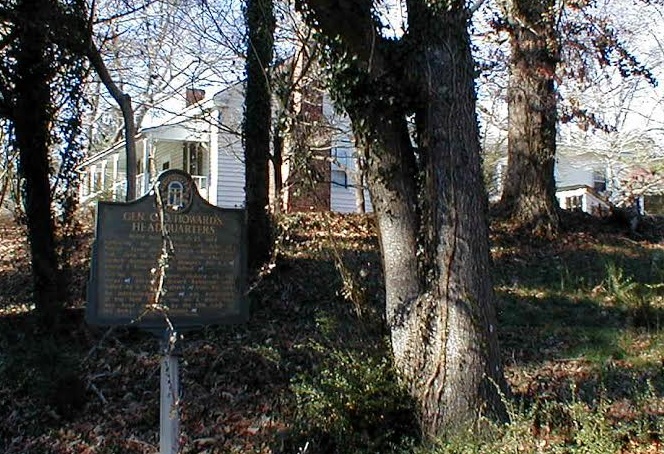
The two-bedroom home, built by Josiah Wallis, had several uses during the Kennesaw campaign in June 1864. It was first used as a Confederate hospital, then was the headquarters for Union Maj. Gen. O.O. Howard. His boss, Maj. Gen. William T. Sherman, was at the house during the Battle of Kolb’s Farm to the south.

“Adjacent to the Wallis house is Harriston Hill, which offers a sweeping vista of the valley leading to the Confederate line atop Kennesaw Mountain,” a National Park Service official said in 2010. “From this position, it is clear why General Howard picked this site for his headquarters and signaling position.” 

Amanda Maddox, communications director for Isakson, told the Marietta Daily Journal this week that the National Park Service would need to spend about $1 million to restore the house and $1 million over the next five years for upkeep. Maddox said lawmakers hope that $2 million will be raised by the community. She told the newspaper that the spending bill has come close to passing in previous congressional sessions.

The campaign to save the house, give it permanent protection and have it help tell the story of the battle during the Atlanta Campaign is a long one.

O.O. Howard
Cobb County, just northwest of Atlanta, for years saw an incredible housing boom and development. While that was a boon for newcomers, preservationists and historians decried the loss of Civil War sites or land to development.


The county, working with the Georgia Civil War Commission and the Cobb Land Trust, spent $320,000 to buy the property in early 2004 so that 43 homes could not be built on it and adjoining parcels, park Superintendent Nancy Walther told the Picket in 2016.

The park needs congressional approval in order to expand its boundaries and accept the donation of the house and hill from the county.

Several years ago, then-Superintendent Stanley Bond helped lead a community effort to recommend ways to increase African-American visitation to the park – and tell the story of slaves, freed individuals, U.S. Colored Troops and more.

Bond told the Picket in February 2011 that he hoped the Wallis House could house an expanded exhibit on African-American soldiers and civilians. There’s a direct connection, because of the home’s association with Gen. Howard.

Howard University, a historically black school in Washington, D.C., was named for the white officer, founder of the university and commissioner of the Freedman’s Bureau.

In 2016, Walther said while there were no formal plans for interpretation of the Wallis House,  the park wanted to widen interpretation of what happened on and near the battlefield.

Friday, October 24, 2014

French's Rock at Kennesaw battlefield


Troops under Confederate Maj. Gen. Samuel French, a native of New Jersey, occupied Pigeon Hill at Kennesaw and received Union artillery fire on June 27, 1864, before a major assault. I walked a bit of this area yesterday. I believe this is French's Rock on the Little Kennesaw Mountain trail.

The general wrote he and his staff took shelter behind the rock while they observed the beginning of enemy activity and an artillery exchange. "Presently and as if by magic there sprang from the earth a host of men and in one long waving line of blue, the infantry advanced and the battle of Kennesaw Mountain began." French's division checked the attack.

Tuesday, July 1, 2014

Scenes from Kennesaw sesquicentennial

Members of the Georgia Division and Hardee's Guard enjoy a light moment
Thousands flocked to Kennesaw Mountain National Battlefield Park in Georgia last weekend to learn more about the battle that occurred on June 27, 1864. I walked the new 24-Gun Battery trail and made several other stops. Here are a few of the highlights of my visit on Saturday. Click the photos to enlarge:

Federal artillery crew at 24-Gun Battery.
David Furukawa explains battlefield surgery
Luminaries at Cheatham Hill (Larry Knight, Kennesaw Mtn Trail Club)
Sherry Key explains hairstyle of Heather Sheen
Caleb Benefield of the 48th Alabama describes his uniforms
Beets and black walnuts were used to make dyes for clothing
Jim Ogden describes how elaborate fortifications changed warfare
A gun crew takes a breather on top of Cheatham Hill.
Company H, 40th Indiana drills along Stilesboro Road.
Capt. Lamuel Ellington re-enactor sports muttonchops
Kim Cole mapped out locations of residences at time of the battle
Visitors learn about Confederate drill.

Saturday, June 28, 2014

Just back from Kennesaw Mountain 150th!

Luminaries are ready for lighting below the "Dead Angle" at Cheatham Hill.

Back home after a long day at Kennesaw Mountain National Battlefield Park for 150th anniversary events. I walked a new trail where 24 Union guns fired on Confederate positions, watched a Civil War fashion show, witnessed drill, musket and artillery demonstrations, took in a couple ranger-led programs and finished the night at Cheatham Hill, where young Federals littered the bloody meadow after their assault was crushed on June 27, 1864. The rededication of the Illinois Monument at Cheatham, and the lighting of more than 3,100 luminaries below, representing the dead, made for a contemplative end to the day.

Look for Civil War Picket articles here in the coming days, including an interview with a mother and daughter whose ancestor was killed at Kennesaw Mountain. For now, check our Facebook link on this page for several photos.

Wednesday, March 19, 2014

'Magnificent' restored Kennesaw monument will be focal point of 150th anniversary events


The Illinois Monument shines like new atop Cheatham Hill. Click to enlarge. (NPS)

Fittingly, what’s now known as Kennesaw Mountain National Battlefield Park grew from the scene of the battle's most desperate fighting -- a bloodied spot on Cheatham Hill dubbed the Dead Angle.

Elderly Union veterans from the Midwest purchased a parcel where the Battle of Kennesaw Mountain occurred in June 1864 and decided to erect a monument in memory of more than 1,500 comrades killed and wounded while trying to push Confederate troops from the top of the hill, named for one of Rebel generals.

The Illinois Monument, dedicated in June 1914, is one of only a few monuments on the bloodied battleground in Cobb County, northwest of Atlanta. That’s because by the time the battlefield was designated a national battlefield park in 1935, the vast majority of the veterans of the war were dead and the move to place memorials at Civil War sites had ebbed.

Before and after shows dramatic changes (NPS photos)

“The Illinois Monument comes in the last stages of the prominence of Civil War soldiers in state and local politics,” says Willie Johnson, park historian. “You think of it in the same way we ran out of World War II veterans in Congress.”

The handsome eagle-topped marble monument, featuring a soldier flanked by two female figures, recently received a much-needed overhaul by the National Park Service’s historic preservation training center in Maryland.

The team, which cleaned and waxed the figures, pressure washed and did repairs to the monument and plaza, fixed drainage and made other improvements, drew praise from the Kennesaw Mountain park staff.

“I think it came out really good,” says facility manager Tom Sparks. “It is 100 years old … but people ask if it’s a new monument.”

The Illinois Monument will be rededicated as the high point of the four-day 150th anniversary commemoration of the battle from June 26-29. The ceremony is set for 8:30 p.m. on Saturday, June 28. The program includes a wreath-laying and the lighting of about 3,100 luminaries in a field below to remember those lost in the battle, which was part of the larger Atlanta Campaign.

“Our emphasis is that this is where the park started. That tract of land was purchased by some actual soldiers that fought there,” Superintendent Nancy Walther tells the Picket. “So that’s where the whole commemoration of this battlefield started.  … The luminaries will emphasize why we need to remember what happened here.”

Brig. Gen. McCook (LOC)
It wasn’t just Illinois men that charged up Cheatham Hill, says Johnson. McCook’s, Harker’s and Mitchell’s brigades included many regiments from Ohio and a few from Kentucky and Indiana.

But the state of Illinois was the largest contributor for the monument. James Dibelka was architect, J. Mario Korbel was sculptor and the marble was produced by the McNeel Marble Co., based in nearby Marietta.

Walther said the park received National Park Service funding for the work on the monument.

“It is pretty magnificent,” she says. “The work is much-needed. It is evident they knew what they were doing. It is beautiful.”

The NPS team arrived in early January to find weathered Georgia marble, erosion problems and graffiti. The project was wrapped up by the end of the first week of March.

Scott Jones, an exhibit specialist at the historic preservation center, was project leader at Kennesaw. 

The team assists park staffs that are not large enough to do sustained maintenance of such fixtures.

“We do everything from top to bottom,” Jones says. “We got conflicting reports that it was hit by lightning. We did not see any lightning damage. But a falling tree knocked off the eagle in 1986.”

Weathered tunnel entrance in 2009
The team did “repointing,” which includes making repairs on marble joints and replacing or installing mortar. They also did a deep cleaning of the marble and also power washed and repaired the plaza holding the Illinois Monument.

Surprisingly, the century-old monument had little water damage. But there was some shifting and mortar in some places had faded away.

Walnut-shelling blasting was done on the bronze statue to remove corrosion. After further cleaning, a unique waxing takes place.

After flame torching, wax is applied to hot metal, says Jones. After a buffing, cold paste wax is applied, than buffed out.

The new wax darkened the green patina of the statue. “It goes from being a bright green to a dark olive, drab green,” says Jones.

The team removed “scratch” graffiti made by knives or keys and put a channel drain at the base of the concrete staircase to help with water flow. New sod and wood chips spruced up the site and will help combat erosion.

Jones says the tablets that appear to emerge from the monument center have a “unique feel” that give the 25-foot-tall memorial distinction. “They appear to be headstones.” A few of the tablets have inscriptions about the attack and participating Illinois units.

(Tom Sparks, NPS)

Interestingly, the figures are facing the direction from where the attack came, rather than its objective.

Over the years, the nonprofit Kennesaw Mountain Trail Club has made repairs on the vast network of trails at the park, including those leading to the Illinois Monument.

Regarding the monument, “we’ve spent literally hundreds of hours beautifying the area, erosion control and better trail grade, among other things,” says communications director Fred Feltmann.

Three trails converge at the site: the Unknown Soldier trail, the Illinois Monument trail and the Cease Fire trail.

Maj. Gen. Cheatham (LOC)
The park has invited Georgia Gov. Nathan Deal and Illinois Gov. Pat Quinn to attend the rededication ceremony. It has not heard from Illinois, but Deal will be unable to attend. An invitation has since been extended to Lt. Gov. Casey Cagle, says Walther.

A descendant of Union Brig. Gen. Daniel “Dan” McCook Jr. is among the invitees.

McCook, a member of the “Fighting McCooks” family, gained fame in the assault on Cheatham Hill. He was mortally wounded and died three weeks later.

Federal army commander William Tecumseh Sherman was determined to dislodge Confederate troops from Pigeon Hill and Cheatham Hill.

On June 27, 1864, two divisions were assigned to take Cheatham Hill, taking on boys in gray who fought for Benjamin "Frank" Cheatham and Patrick Cleburne.

McCook, 29, uttered this line from the poem “Horatius” before his brigade's assault: "Then how may man die better than facing fearful odds?"

While moving uphill and crossing a field that is larger than the one that lies today below the Illinois Monument, Federal troops lost hundreds of men within a half hour.

“As elsewhere on the battlefield, terrain, undergrowth, and Confederate fire caused command and control to collapse,” reads an article on the Civil War Trust website. “Musketry decimated the compacted Yankee formation as it approached the Confederate entrenchments, and concentrated fire from previously concealed Rebel batteries sent torrents of canister ripping through their ranks. Despite this maelstrom, Union troops reached the Confederate trenches along Cheatham’s Hill at a spot that will forever be known as the “Dead Angle” and engaged the defenders in savage hand-to-hand fighting.”

(Tom Sparks, NPS)

McCook was wounded while leading one of the brigades and the Union troops became pinned down at the Dead Angle.

A tablet about McCook’s brigade on the monument reads: “Brigade reached Confederate works and at less than one hundred feet from them maintained a line for six days and nights without relief, at the end of which time the Confederates evacuated.”

Johnson, the park historian, said the Rebels left on July 2. The campaign for Atlanta continued and Sherman maintained the initiative, despite staggering losses at Cheatham Hill, Pigeon Hill and elsewhere at the battle.

“Some historians are the most critical of him,” Johnson says of Sherman. “My take is had it worked, it might have shortened the campaign by a couple months. It didn’t. …. I think it was a reasonable assumption, but I tell you this, he did not make any more frontal assaults.”

Confederates suffered about 500 casualties at Cheatham Hill.

Johnson says Federal attackers had a stretch of about 25 yards during the uphill charge to avoid enemy fire. Once at the top, they dug a tunnel in an attempt to place gunpowder under the Confederate lines and blow a hole. “Initially, they are digging in with bayonets and cups. After darkness, they bring in shovels and picks.”

Confederate troops withdrew before the tunnel was completed.

New monument for regular Army units (Tom Sparks, NPS)

The staff historian gives visitors a grim account of what happened.

“I just talk about the intense nature of it. They said you could walk across that field stepping on one blue-clad body to another. That might be some hyperbole, but that was said.”

Georgia and Texas are the only other states that have monuments at Kennesaw Mountain.

A new monument, which has a temporary home in a field off Burnt Hickory Road, honors the Kennesaw service of Union regular Army infantry units – the 15th, 16th, 18th and 19th.

The 15th Infantry Regiment Association raised money for the new monument. Its dedication is scheduled for noon on June 27.

It will be moved later a bit south to an uphill location off Hardage Mill Trail, also maintained by the trail club.

Thursday, April 4, 2013

Conjuring future of Cravens House

Turning the landmark Cravens House into a visitors center is one of the ideas proposed by the National Park Service as it updates its management plan for Lookout Mountain Battlefield -- the land, trails, buildings and historic monuments the agency owns from the foot of the mountain to its peak. Historic preservation is the thrust. The idea is to have the battlefields look as they did during the Civil War. That could include removal of side buildings and features that came after the conflict. • Article.

Sunday, September 12, 2010

Today in history: Battle of Cheat Mountain

Here's one I didn't know about. On Sept. 12, 1861, Robert E. Lee began his first offensive operations of the war, in western Virginia.

According to the American Battlefield Protection Program:

Lee went against Brig. Gen. Joseph Reynolds’s entrenchments on the summit of Cheat Mountain and in the Tygart Valley. The Confederate attacks were uncoordinated, however, and the Federal defense was so stubborn that Col. Albert Rust (leading the attacks) was convinced that he confronted an overwhelming force. He actually faced only about 300 determined Federals. Lee called off the attack and withdrew to Valley Head on September 17. In October, Lee renewed operations against Laurel Mountain with the troops of Floyd and Loring, but the operation was called off because of poor communication and lack of supplies.