Showing posts with label andrews. Show all posts

Tuesday, April 29, 2025

Descendants of Andrews Raiders who were belatedly awarded the Medal of Honor will be on hand Friday for their induction into Ohio Military Hall of Fame

Pvts. Perry Shadrach and George Wilson of the 2nd Ohio Infantry (U.S. Army)
Two members of the Civil War’s Andrews Raid who posthumously received the Medal of Honor last summer will be inducted into the Ohio Military Hall of Fame on Friday.

Eight raiders were hanged in Atlanta as spies after the daring Great Locomotive Chase, among them Pvt. George D. Wilson and Pvt. Perry (Philip) Shadrach of the 2nd Ohio Infantry. Then-President Joe Biden presented the Medals of Honor to their descendants. The soldiers were recognized for gallantry and intrepidity.

Ron Shadrach, the great cousin of Shadrach, nominated the pair in January for the state honor.

“This event brings these two men full circle and finally back home to Ohio to be honored,” he said.

Shadrach and Brad Quinlin, a Georgia-based researcher and historian, and others long campaigned for the two soldiers to receive the Medal of Honor, like most of the military personnel who took part in the failed raid in North Georgia.

The sabotage mission along the Western & Atlantic Railroad from Atlanta to Chattanooga in 1862 was a tactical failure, but was a boost to the war-weary North and brought the first Medal of Honors.

Wilson and Perry Shadrach are buried at the national cemetery in Chattanooga, Tenn., where new Medal of Honor headstones were unveiled in October following events for descendants, including a bus tour of the chase route. (Picket photos, right)

Ron Shadrach said several descendants are planning to travel to the Ohio Statehouse atrium in Columbus for the 11:30 a.m. Friday induction, which will include 17 other service members who served in later conflicts and are being recognized for valor.

Quinlin will be on hand, too, “enjoying the last part of our journey.”

Ron Shadrach told the Picket he saw a bronze plaque at the Statehouse about the raid when he was a boy. His great aunt told him they weren't related to the Civil War hero.

“The name and plaque was etched in my young mind. In about 2003, I discovered the history behind the plaque and began a campaign or quest to have both men duly recognized with the MOH.”

Organizers say the induction will be streamed here.

Sunday, July 29, 2018

The spy and the saboteurs: Men who instigated the 'Great Locomotive Chase' stayed here the night before daring raid

The Andrews room is on the second floor of the former hotel.

It might be a bit of a stretch to liken the Civil War’s Andrews Raid – popularly known as “The Great Locomotive Chase” – to the daring Doolittle Raid in World War II, but perhaps there are a few similarities.

In 1862, Union spy James J. Andrews and a handful of Ohio soldiers struck deep in Southern territory. Their aim was to disrupt Confederate rail service between Atlanta and Chattanooga, Tenn., making the latter vulnerable to capture. The mission failed. Eight men – including Andrews – were hanged as spies, Chattanooga was not attacked in force and the Western & Atlantic Railroad quickly rebounded from a smattering of damage.

The saboteurs, however, became heroes in the North and the very first Medal of Honor went to one, Jacob Parrott. Eventually, 19 of the raiders received the honor (Andrews, a civilian, did not qualify).

The Doolittle Raid also occurred in April, albeit 80 years later. The air raid over Tokyo and other cities on Honshu caused minimal damage, but demonstrated the Japanese mainland was vulnerable to attack and boosted morale in the United States.

Propaganda is a powerful thing, and the Confederacy likewise treated those who ran down the Andrews raiders as heroes.

Models of the General (left) and Texas

The nervous night before raid

On Saturday, I made my way to Marietta, Ga., where Andrews and 19 others boarded the locomotive General to begin their caper. The town, just northwest of Atlanta, is rich in Civil War history: It has a national and Confederate cemetery, a “Gone with the Wind” museum and is near Kennesaw Mountain, scene of a significant battle in June 1864 during Sherman’s Atlanta Campaign.

I walked through the charming downtown square in a city older than Atlanta and Chattanooga. I passed restaurants, boutiques and antique shops on a hot summer day made bearable by a breeze. My destination was the Kennesaw House, one of the oldest buildings in the city, and home to the Marietta Museum of History.

Route of the chase, which ended near Ringgold.
The second-floor of the building features contemporary exhibits and a room that I specifically wanted to see. In April 1862, the former cotton warehouse was known as Fletcher House. The hotel, perched along the railroad tracks, was owned by Dix Fletcher, a Union sympathizer. The swankier Marietta Hotel on the square was operated by Yankee spy Henry G. Cole.

Fletcher House is where most of the raiders spent the night before they boarded the train.

Andrews (who hoped to be paid for his efforts) was familiar with Marietta but it took a lot of moxie for his men, dressed as civilians and posing as Confederate army recruits, to travel south from Shelbyville, Tenn., to Marietta in order to board the locomotive General. They passed Confederates who surely wondered whether they were conscripts avoiding service. Two would-be raiders were stopped in North Georgia and impressed into the Confederate army.

James Andrews
The raiders arrived in the city late on April 11 and all but two crammed into a room or two in the Fletcher House. Two more stayed at the Marietta Hotel, but they overslept and did not take part in the raid.

The building housing the museum has undergone several renovations since the Civil War and the re-created hotel room where Andrews is believed to have stayed is much larger than it was then and includes exhibits on the train chase. There’s a replica of a bed that likely held two or three tired men, furnishings and a mannequin of a determined Andrews looking down at the W&A tracks (the line is now used by CSX).

The raiders didn’t get much sleep on a night filled with anxiety and expectation. According to William Pittenger, one of the soldiers, some participants called for Andrews to call off the operation.

“I will succeed or leave my bones in Dixie,” the spy replied.

Startled conductor springs into action

Early the morning of the 12th, a gray, rainy day, the men bought tickets to different destinations in order to avoid suspicion. They boarded the General and road eight miles north to Big Shanty, now known as Kennesaw.

Andrews mannequin in Marietta
The raiders stayed on the train while others went to the Lacy Hotel to enjoy a quick breakfast. They uncoupled most of the cars and sped off. Their objective was to disrupt the vital rail line that transported Rebel soldiers and supplies from Atlanta to Chattanooga, where they were then sent to other critical locations in the Western Theater. The men intended to destroy track, trestles, bridges and telegraph lines.

Western & Atlantic conductor William A. Fuller was shocked at the sight of his train chugging away. He and a couple others ran after the train, unaware of the subterfuge. 

The conductor ran across a handcar and three trains and 86 miles later he -- along with Confederate horsemen who had been reached by telegraph -- had chased Andrews to a few miles south of Chattanooga, Tenn. Out of fuel and water for the locomotive, Andrews and his party fled, only to be captured.

A lot of things worked against the saboteurs – the wet weather made it tough to set fire to wood and the tenacious Fuller just wouldn’t give up. The dogged pursuit left them little opportunity to cause mayhem. And there was a crucial delay that slowed the General.

The raiders had to wait for almost an hour at Kingston while several southbound freight trains cleared the tracks. Confederates switched to the locomotive Texas in Adairsville and ran it in reverse. 

Board describes the fate of each Union raider
Aware they were being chased, the Yankees cut telegraph lines when they went through Calhoun. In Resaca, they detached a rail car and set it on fire on the rail bridge in hopes of burning it down. The bridge was not burned completely because of a rainstorm.

The gig was up near Ringgold as the General ran out of steam. Eight of the 20 captured raiders were tried as spies and executed in Atlanta. The rest either escaped or were exchanged, according to the New Georgia Encyclopedia.

Hotel largely escaped the flames

That wasn’t the end of the Civil War story for Fletcher House. It and other buildings in Marietta served as hospitals for both Federal and Confederate soldiers. A morgue was upstairs.

Surviving fireplaces
“During the summer of 1864, forces under the command of William Tecumseh Sherman moved in and occupied the town,” the Marietta city website says.

“For the next five months, federal troops would pillage by day and ravage by night. In November 1864, men under the command of Union General Hugh Kilpatrick, Sherman's ‘merchant of terror,’ set the town on fire. ‘Uncle Billy's’ boys were leaving for the heart of Georgia on ‘The March to the Sea.”

The story goes that Fletcher House was spared because Fletcher, like Sherman, was a Mason, and Cole, his son-in-law, was a Yankee spy. Ashes from the fire did destroy the building’s fourth floor.


The hotel after the war was renamed Kennesaw House and stayed in operations for several more decades, giving way to retail space on the first floor. The building was gutted in 1979, and the remodeled space hosted restaurants, offices and retail. It’s been home to the Marietta Museum of History since 1996.

Next door is the town’s welcome center, housed in a depot (1898) built on the site of the original station.

And what became of the General and Texas, the locomotives made famous by the seven-hour chase?

The General is on display at the Southern Museum of Civil War and Locomotive History in Kennesaw. The Texas was recently restored and will be a highlight of the Atlanta Cyclorama when it reopens later this year at the Atlanta History Center.

Tuesday, June 7, 2016

This day in Civil War history: Raid leader James Andrews is hanged as spy

(Picket photo)

James J. Andrews was going to hang. It was just a matter of when and where.

The leader of the failed Andrews Raid decided to break out on May 31, 1862, after receiving his death warrant at a jail in Chattanooga. Andrews was captured two days later, put in ankle irons and given time to write farewell letters as execution scaffolding was erected outside the unpleasant Swaim’s Jail.

But Andrews would not die in Chattanooga. The condemned man was put on a train to Atlanta when Federal troops got too close. Townspeople in Georgia taunted him at station stops during the sad journey.

James Andrews
On this day (June 7), 154 years ago, Andrews was hanged in what is now the Midtown neighborhood in Atlanta only hours after the train came to a stop.

Seven other men also convicted as spies in the April 1862 raid, known as the “Great Locomotive Chase,” had traveled with Andrews to Atlanta. They were executed on June 18 a few miles to the southeast, next to Oakland Cemetery.

A spring 2015 article in Civil War Quarterly gave this account of Andrews’ death:

“Andrews’ sentence was carried out first, at 5 p.m. on Saturday, June 7, near the intersection of Juniper and Third Streets in Atlanta. The hanging was horribly botched: the cotton rope stretched and Andrews’ feet touched the earth. A guard had to swing the doomed man’s struggling body off to the side and hold it there as another scraped away the ground while Andrews slowly strangled.” The account is corroborated in a book by a raid survivor.

A historical marker stands today along a busy street.

Andrews, still wearing his shackles, was buried near the execution site. His remains were exhumed in 1887, when he joined his seven comrades at the federal cemetery in Chattanooga.

Seven raiders are hanged near Oakland Cemetery

Some 20 Union soldiers were part of the raid, and six of those who were exchanged as prisoners received the first Medals of Honor in March 1863. Andrews, who was about 33, was not eligible because he was a civilian.

Andrews and his band of “engine thieves” tried to destroy much of the Western & Atlantic Railroad and communications as they rushed northward from Big Shanty, Ga., toward Chattanooga. The damaged they created was negligible. They were captured near Ringgold, Ga. Those not executed either escaped or were exchanged.

Andrews marker is behind shrubs next to apartment building (Picket)

Much has been written about the failed raid, and film accounts include a Disney production. One of the most riveting written accounts was by William Pittenger, a member of the operation.

Pittenger wrote of a group of the imprisoned soldiers saying farewell to Andrews in Chattanooga before they were moved to Knoxville, Tenn. It was about a week before their leader learned of his fate.

“I will never forget his last words, as he silently pressed our hands, and with a tear in his blue eye, and a low, sweet voice, that thrilled through my inmost being, said, ‘Boys, if I never see you here again, try to meet me on the other side of Jordan.’ It was our last earthly meeting.”

Locomotive tops monument in Chattanooga (Library of Congress)

Monday, June 18, 2012

150 years ago: 7 Andrews raiders hanged

Ten days after their ringleader was hanged, seven participants in the Andrews Raid (also known as the Great Locomotive Chase) were executed in Atlanta on June 18, 1862.

The hangings of soldiers Marion A. Ross, George D. Wilson, Charles P. Shadrach, John M. Scott, Samuel Slavens, Samuel Robertson and civilian William Campbell, occurred near Oakland Cemetery.

After the Civil War, their remains were removed from a trench and reinterred at the national cemetery in Chattanooga.

James Andrews and his band of commandos tried to destroy much of the Western & Atlantic Railroad as they rushed northward from Kennesaw, Ga., on April 12, 1862. They achieved little success and eight of the nearly two dozen participants, disguised as civilians, were tried and hanged as spies.

Recap of the Great Locomotive Chase

Friday, April 13, 2012

Georgia town recalls Andrews Raid

"The Great Locomotive Chase," which occurred 150 years ago Thursday, made heroes of Union soldiers and civilians -- who tried to put a critical railroad line out of commission -- and the Southern train crews and troops who pursued them. • Article

Sunday, February 5, 2012

Johnson as Tenn. military governor

Just weeks after federal troops took over Tennessee's Fort Henry and Fort Donelson, Andrew Johnson arrived in Nashville. "As a military governor, I think he was successful," says University of Tennessee Professor of History Emeritus Paul H. Bergeron. The author has written a new book, "Andrew Johnson's Civil War and Reconstruction," about the still controversial, often reviled Johnson. It focuses on that important period in the life of the man who became America's 17th president. • Article

Thursday, December 8, 2011

'Great Locomotive Chase': Plans for 150th are gathering steam

(Updated March 21) Ceremonies, model trains, movie screenings, music and tours will be part of April 2012 observances of the 150th anniversary of the daring Union effort to disrupt rail traffic between Atlanta and Chattanooga, Tenn., during the Civil War.

James Andrews and his band of raiders tried to destroy much of the Western & Atlantic Railroad and communications as they rushed northward on April 12, 1862. They achieved little success and eight of the nearly two dozen captured participants, disguised as civilians, were later hanged in Atlanta as spies. Andrews was among them.

The Picket got in touch with cities along the route of the Great Locomotive Chase, which began in Big Shanty (present-day Kennesaw) and ended just above Ringgold, below Chattanooga.

ATLANTA CYCLORAMA

The Andrews Raid began above Atlanta, but the museum at Grant Park houses the Texas (right), the locomotive that eventually caught up with the General.

The Atlanta Cyclorama is planning activities, said marketing manager Yakingma Robinson, but on March 21 they had not been finalized.

MARIETTA

Andrews and his men rendezvoused in Marietta, just northwest of Atlanta, to begin their journey north. They intended to destroy track, trestles, bridges and telegraph lines. A dogged pursuit left them little opportunity to do much damage.

The city has a bevy of events planned over a week, said Theresa Jenkins of the Marietta Welcome Center. There will be some free events. Contact the welcome center for more details.

Thursday, April 12
The city’s celebration begins at the Earl Smith Strand Theatre with the “re-premiere” of the 1956 Disney film “The Great Locomotive Chase,” starring Fess Parker. It will include a red carpet, dinner, organ recital, the movie and a champagne and dessert reception. Current schedule is 6 p.m. until about 11 p.m. Ticket prices: $75 for VIP (includes red carpet, dinner, movie and champagne reception); $35 general Admission (includes movie & champagne reception)

Friday, April 13
10am-5pm: Civil War Home Front Days. How the home folks fared during the war. – Marietta Gone with the Wind Museum, Marietta Museum of History, Root House Museum
10am-5pm - Tours of Old Zion Heritage Church
10 a.m. and 2pm – “Technology during the Civil War,” Marietta Museum of History
11am-5pm – “Homes & Heroes of the Civil War Exhibit”, Marietta-Cobb Museum of Art
11am & 1pm – Historic Marietta Trolley Tours
8pm - Showing of “The General” and organ concert, Earl Smith Strand Theatre

Saturday, April 14
11am-3pm Living history on the Marietta Square – characters from the chase as well as Marietta’s Civil War history will tell their stories.
10am-5pm - Tours of Old Zion Heritage Church
10am-5pm – Civil War Home Front Days – Marietta Gone with the Wind Museum, Marietta Museum of History, Root House Museum
10 am & 2pm – “Technology during the Civil War,” Marietta Museum of History
11am-4pm -“Homes & Heroes of the Civil War Exhibit”, Marietta-Cobb Museum of Art
11am-4pm – “Texas III and Me Tour: From the Rails to the Road”
Enjoy a tour of the Great Locomotive Chase segment from Marietta (Marietta Museum of History in the Kennesaw House) to Kennesaw (Southern Museum of Civil War & Locomotive History, home of the General). The tour takes place aboard the Texas III a replica of the original Texas, the chase locomotive (converted from an army truck). Tours begin at Glover Park, Historic Marietta Square
11am & 2pm – Civil War music concerts. 8th Regiment Band of the Georgia Volunteer Infantry. Glover Park, Historic Marietta Square
4pm-6pm – Disney Party for Kids sponsored by Radio Disney, Glover Park
8pm Showing of “The General” and organ concert, Earl Smith Strand Theatre

Sunday, April 15
10am-4pm – Civil War Home Front Days – Marietta Museum of History & Marietta Gone with the Wind Museum
11am-4pm -“Homes & Heroes of the Civil War Exhibit”, Marietta-Cobb Museum of Art
1pm-5pm - Statue Dedication at Marietta Confederate Cemetery & cemetery tours
1pm-5pm - Tours of Old Zion Heritage Church

More details, related websites

KENNESAW

The Southern Museum of Civil War & Locomotive History is a big player in the anniversary events. After all, it houses the General and related exhibits. The city also is organizing events, and is helping to host a breakfast on the actual anniversary.
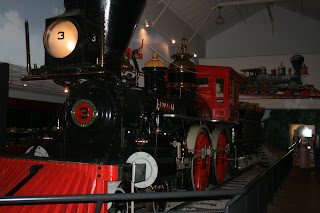
The Great Locomotive Chase, the Southern Museum points out, actually began on foot.

Western & Atlantic Railroad conductor William A. Fuller was shocked to see a group of men steal the General while passengers and crew were enjoying breakfast at the Lacy Hotel in Big Shanty.

Fuller and a couple others ran north after his train. He didn’t yet know it had been taken by the Union commandos. The conductor ran across a handcar and three trains and traveled 86 miles -- along with Confederate horsemen who had been reached by telegraph -- after the raiders.

The Southern Museum has released a list of activities:

-- Civil War Symposium: March 23, 5 p.m.-7 p.m. A film, lecture and tour will be held at the museum in partnership with Kennesaw State University.

-- April 12 (Thursday): Breakfast and at 6 a.m. at the Trackside Grill with actors to re-create the beginning of the Great Locomotive Chase near the original location of the Lacy Hotel. Tickets are $20.

Free commemoration ceremony at 8:30 a.m. in the depot area, with speeches by dignitaries and a citywide parade. Starting at 9:30 a.m., all-day free admission and guided tours of the museum.

Programming includes the donation of Sgt. John Morehead Scott’s Medal of Honor to the museum by the Waggoner family of Ohio. Scott was one of the raiders.

Following a sold-out fund-raising dinner at the Trackside Grill; the museum hosts “Dessert at the Southern Museum” featuring musician Bobby Horton, who will be performing Civil War-era songs; tickets are $25. The event is set for 8:30 p.m.

-- April 14-15: Several re-enactment units will interpret Camp McDonald, the Confederate encampment once located across the tracks from the Lacy Hotel. This event, 10 a.m. to 4 p.m. each day, is to take place on the lawn across the street from the museum. Admission is $5 for adults and $2 for children ages 4-12, while children 3 years old and younger are free. Tickets also allow entry into the museum, which will operate normal hours: 9:30 a.m. to 5 p.m. on April 14 and 11 a.m. to 6 p.m. on April 15.

-- May 26: Descendants of participants in the chase will unite for a day of storytelling and camaraderie. This is an invitation-only event that includes the Great Locomotive Chase bus tour, followed by a catered dinner.

ALLATOONA PASS

On April 21, tour Allatoona Pass, where the chase continued, with interpreters and re-enactors providing accounts. Sponsored by Red Top Mountain State Park. Allatoona Pass Battlefield, Old Allatoona Road, Emerson, Ga. $5 parking. 770-975-0055.

KINGSTON/ADAIRSVILLE

The raiders had to wait for almost an hour at Kingston while several southbound freight trains cleared the tracks, according to the Cartersville-Bartow County Convention and Visitors Bureau.

Four minutes after the General left Kingston's yard, the Confederate crew arrived on the Yonah. Instead of trying to negotiate the complicated Kingston rail yard, the Confederates took a locomotive owned by the Rome Railroad and continued the chase.

Confederates chasing the General switched to the Texas in Adairsville, and ran it in reverse as they followed Andrews (left).

The 1847 W&A Railroad Depot, 101 Public Square, features displays of Adairsville's role in the raid, its local history and tributes to early life in Adairsville.

-- Events in Adairsville April 12-14 include depot tours, re-enactors in period dress, dinner theater at the 1902 Stock Exchange, special exhibits, an afternoon tea, old-time games, treats and live Civil War-era music. There also will be a showing of "The General" by Buster Keaton, and Walt Disney's "The Great Locomotive Chase." • See full schedule of events. Directions: I-75 Exit #306, GA Hwy. 140 west. Straight through traffic light across US Hwy. 41, then left onto Main Street. Continue one mile to Adairsville's historic Public Square on the right.

-- The chase will be remembered in Kingston at 1:30 p.m. on April 12. The city will recognize Uriah Stephens, who attempted to stop Andrews on a siding at the town depot. Stephens specifically resisted Andrews' demands to "throw the switch" to return the General to the main line. • More details

CALHOUN/GORDON COUNTY

Events are planned April 14 around the Calhoun depot and GEM Theatre, according to Ken Padgett of the Friends of Resaca Battlefield.

Padgett told the Calhoun Times that raiders cut telegraph lines when they went through the city. In Resaca, men on the General detached a rail car and set it on fire on the rail bridge in hopes of burning it down. The bridge was not burned completely because of a rainstorm, Padgett told the Times.

Fuller first spied the Union raiders just south of Resaca, near the Oostanaula River.

Festivities in Calhoun kick off at 3 p.m. April 14 (Saturday). Re-enactors will display weapons and an artillery piece.

The Gordon County Historical Society will host a signing of the book "Crossroads to Conflict," a complete history of Georgia and the Civil War, by author Barry Brown. 3 p.m. to 6 p.m. at the GEM Theatre. The volume will be sold at a reduced price.

At 3:30 p.m., Padgett will present a light-humored telling of the Andrews Raid as it relates to the Calhoun and Resaca area. At 4 p.m., the GEM will show the 90-minute Walt Disney movie, "The Great Locomotive Chase." The screening is free.

At 7:30 p.m. at the GEM, Bobby Horton is in concert, featuring stories, songs and period instruments. Admission is $10 for adults, $5 for students.

More information on the event.

DALTON/WHITFIELD COUNTY

One of Andrews’ targets was supposed to be the 1,477-foot tunnel blasted through Chetoogeta Mountain at appropriately named Tunnel Hill, a town 110 miles north of Atlanta.

A tour on Saturday, April 14, is sold out, said Ty Snyder, manager of visitors centers for the Dalton Area Convention and Visitors Bureau.

The day will include a stop at the abandoned Western & Atlantic rail roadbed in Tilton, and the stone trestle and site of Green’s Wood station. Lunch will be held at the Western & Atlantic Depot (Dalton Depot Restaurant) in downtown. Participants also will see the Western & Atlantic Railroad Tunnel & Museum in Tunnel Hill.

Because pursuers were closing fast on the General, it could take on only a little water and wood in Tilton.

RINGGOLD

At about 1 p.m. April 12, 1862, the General ran out of wood and water two miles north of this city, with the Southerners, aboard the Texas, fast upon them. The Confederates rounded up all the raiders.

Eight of the 20 were tried as spies and executed in Atlanta. The rest either escaped or were exchanged, according to the New Georgia Encyclopedia. Andrews and a couple other raiders were civilians. The rest were soldiers. The very first Medals of Honor were given to some of these Federal men.

City Manager Dan Wright told the Picket an interpretive marker about the chase recently arrived. A new rail-viewing platform (above) also has been dedicated at the depot.

Credits: Chase map, Carl Vinson Institute of Government, University of Georgia; W&A tunnel photo courtesy of Dalton Area Convention and Visitors Bureau; rail platform photo courtesy of city of Ringgold