Showing posts with label food. Show all posts

Wednesday, December 4, 2024

A coastal Georgia warehouse survived the 1863 burning of Darien, a scene in the movie 'Glory.' The tabby building fell on hard times, but after a long restoration it's again a center of commerce -- as a brewery

In July 2023 (Picket photo) nearing completion (Marion Savic) and side view (Ethos Preservation)
This is a classic story of standing the test of time. The Adam Strain Building was at a crossroads at the time of a 2011 talk about historic structures along the Darien, Ga., waterfront.

One of just a few tabby structures remaining on the Georgia coast, the weathered warehouse had survived a controversial fire during the Civil War, hurricanes, economic downturns, Father Time and decades of emptiness. 

A Brunswick News article previewing the event had this prophetic line: “Today the building sits in its solemnity, waiting for an adventurous soul or business to once more give life to the building that would not die.”

Now, nearly five years after they invested a lot of money and heart into the project, entrepreneurs Milan and Marion Savic. working with a team of specialists, have completed the painstaking restoration of the Adam Strain Building and turned it into an aptly named business: Tabby House Brewing Company. The two-story building perched above a waterfront bluff has literally been saved from falling in on itself. And part of its charm is that the venue still shows its age in places, including curved walls.

The main floor of Tabby House Brewing (Courtesy Ethos Preservation)
The nanobrewery – through word of mouth and social media – had a soft opening November 15. Visitors have posted favorable comments on the beer, food and the building’s features and atmosphere.

A Darien-McIntosh County Chamber of Commerce ribbon cutting is set for 11 a.m. Dec. 13.

Patrons can sample cocktails and a red ale, “The Altie,” an IPA, “The Double Darien,” and a stout, “The Celtic Cross,” inside the stylish interior or a rooftop patio that overlooks the Darien River. The food menu includes sandwiches, flatbreads and grazing boards. The brewery, working from two tanks, will eventually produce six beers in a rotation. Chef Jack Persinger is handling the brewing and food service.

“We’ve had a great reception,” wrote Marion Savic in an email to the Civil War Picket. ”It’s been a great journey. We have an excellent team, all experts in their respective fields. The building has been restored so people can see what it would have looked like back in the 1800s. We are thrilled with how it turned out and with the support we have received from the community.” (Photo of patio overlooking Darien River by Joe Kasper)

I have written about the daunting project since April 2020 and I paid a visit to the circa 1815 building to check the work on a sultry day in early July 2023.

The commerce building’s connection to the Federal burning of Darien in 1863 first drew me to its story. My current interest is a museum the Savics hope to open by February. They are currently devising exhibits for the second floor, which includes an event space.

“The museum will house a rotating display of our artifact finds and some things that have been given to us from locals,” Savic said. “We also have a few things that were found in the building. There are old newspapers from the Darien News and we’ll have a couple of those scanned and framed.”

Scenes of the Adam Strain interior and roof in 2020 (Courtesy Landmark Preservation)
The aim is to spotlight the Georgia town’s rich maritime history – from rice, cotton and lumber to fishing and shrimping, architecture and stories from local people.

Savic told the Picket last year they want to present it in an inclusive way. Some have suggested mention of Gullah-Geechee culture and history passed down by descendants of enslaved people who for years were the backbone of the Darien economy.

“It certainly would be asset to the Darien waterfront section to have a museum focused on the 19th century maritime history of the town,” said Buddy Sullivan, a coastal Georgia historian and author. “Something like that has long been needed.”

The venue now is a financial and cultural anchor in the small downtown.

"Considered a public safety hazard at project outset, the resolve to stabilize the building and preserve as much historic material as possible was not an easy endeavor but rather one that took extra thought and creative solutions from experts and dedicated craftsmen," said Rebecca Fenwick of Ethos Preservation, one of several firms that worked with the Savics.

"Historic buildings are community assets that contribute significantly to sense of place and serve as storytellers of the past. Without them, a place's history becomes less tangible and authenticity is lost. The Strain Building project embodies these values and, collectively, we all benefit," Fenwick wrote in an email.

Infamous burning of town earned scene in 'Glory'

The Strain has stood amid palm trees on a bluff of the small, interior port city above St. Simons Island for more than two centuries. Tabby ruins of other businesses lie just below the site and Darien’s famous shrimp fleet is just to the east.

Scene from "Glory" shows troops arriving in Darien in June 1863.
Tabby is a type of cement made from crushed oyster shells, lime and other materials and was popular in Georgia and Florida for several centuries leading up to the Civil War. Stucco was placed on the exterior to protect it from water damage.

The warehouse was used to store cotton prior to shipment in 1861 and 1862 before the Union naval blockade clamped down on Georgia’s coast during the Civil War. The downtown area was a much busier place than it is today, though the Strain and other projects signal a small, but growing resurgence.
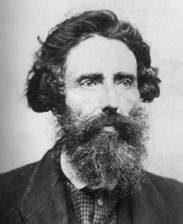
In June 1863, Darien held little strategic value to the Union, but Col. James Montgomery, (left) commanding the African-American 2nd South Carolina Volunteers, supposedly believed it was a safe haven for blockade runners.

He had another reason for shelling, looting and burning Darien, leaving only a few buildings standing among the charred ruins. The destruction was depicted in the award-winning 1989 film "Glory."

Steven Smith, site manager for nearby Fort King George Historic Site in 2013 when the Picket first wrote about the town’s burning, said Montgomery “wanted to make a political statement. Here was a town built on the backs of slaves.”

After most townspeople had fled, Montgomery ordered Col. Robert Gould Shaw and the famed 54th  Massachusetts Infantry to participate. While Shaw didn’t mind the looting to help resupply his troops, he opposed setting the town to torch. He apparently relented under threat of court-martial.

The Strain survived the fire but much of its interior was destroyed. The episode caused a howl of protest across the South and even in newspapers in the North.

Bullet made for Enfield rifle was found along bluff

Civil War bullet found during archaeological dig (Courtesy Marion Savic)
Among the items found by an archaeological team in 2020 was a Civil War-era bullet -- likely an Enfield round. The team found it on the bluff, Savic told the Picket. The so-called Pritchett bullet was used in the Pattern 1853 Enfield rifle. The rifle was used by both sides during the conflict, and the Confederacy imported thousands from England.

It’s not known how the bullet came to be there, when it was deposited and to whom it belonged. The building did not come to be named for businessman Adam Strain – a Civil War veteran of the 5th Georgia Cavalry -- until after the conflict.

Another find during the project were Savannah grey bricks behind the walls of a small building that adjoins the Strain. It had been used as a bank and law offices following the Civil War and now houses the business' kitchen, bathrooms and brewery.

The rear of the former bank building, which adjoins the Strain (Courtesy Ethos Preservation)
The Savics turned to the Savannah-based Coastal Heritage Society to catalog the numerous artifacts found during the work. A 2021 report listed hundreds of items.

“Much of the research that was successfully carried out at the Strain Site was unantici­pated, to say the least,” said a report. “Evidence of prehistoric occupations, some dating 5000 years to the Late Archaic Period is found throughout the site.”

Over the years, the Strain was used for a variety of purposes, including a ship's chandlery, a pharmacy, and a mercantile (hardware) business, the last of which was as a clothing manufacturer or storage site, according to the report. At some point over the years, it was used to store antiques and house or produce shoes. 

Fenwick, with Ethos Preservation, said the restoration offers a visual representation to visitors of Darien's life in the 19th century.'

"Evidence of the building's craftsmanship, to include brick lintels embedded in the tabby above door and window openings and even the buttresses added to the west elevation to prevent earlier decay, are significant and worthy of celebration," she said. 

(Example of tabby in the building, Picket photo, and supports used to stabilize the west wall, courtesy Marion Savic)

Missy Brandt Wilson, who grew up in Darien and still owns a home there, has long supported the revitalization of the Strain building. She loves how an old pulley has been retained.

“I went into the building before restoration and now I can actually see how the warehouse worked on the Darien riverfront,” the Athens, Ga., resident said.

New life after sitting empty for about 55 years

The Strain Building survived the 1863 flames, was repaired after the Civil War and saw a rebirth for several decades before it was used for storage following World War II. It then sat empty for about 50 or so years, said Savic.

Downtown has grown since this view of the Strain (Courtesy of Kit Sutherland)
The structure, perhaps the oldest surviving in Darien, was beloved by its 2,000 residents, who worried for its future as its appearance worsened. The years rolled on. The building’s condition had become so precarious by 2008 that the Georgia Trust for Historic Preservation placed it on its "Places in Peril" list.

It came within whiskers of being demolished before the Savics stepped in and bought the property in January 2020. Local residents were integral in the effort to save the Strain, and there was a Facebook page dedicated toward saving the landmark.

Two hundred-plus years had done its damage. A wall had a pronounced lean, the back wall facing the river was hanging by a prayer and other areas were in need of structural stability. The building was at risk of being toppled by strong winds.

In the 1920s, five years ago and a few weeks ago (Courtesy Ethos Preservation)
The Atlanta-area couple turned to an array of contracted historic preservation experts to shore up the building and create something new, and also pursuing innovative tax credits. The work often had to break for permits, updated engineering plans and supplies. (The Savics have kept the leaning wall to emphasize its story and durability.)

Research and close attention to what the old building had to say has paid off. Fenwick said missing elements were discovered during construction, including a central warehouse style opening on the front façade. That was restored during the project.

The Strain Building has become a good example of how the historic tax incentives in Georgia make such projects possible, said Fenwick.

“A combined 45% back on rehabilitation expenses from state and federal credits plus a 8-year tax freeze alleviated some of the cost associated with a project that had a significant financial burden. Structural costs for stabilization alone were substantial. Labor of love is fitting.”

Upstairs area will feature event space and museum, note figures on back left wall (Courtesy Ethos Preservation)
The Savic family operates a nearby modern-day general store and restaurant in Darien, about 60 miles below Savannah. They also have operated businesses in Marietta, near Atlanta.

The preservation of the Strain building, which sits on the southeast corner of Broad and Screven streets, is just one piece – albeit a significant one – in plans to boost the small downtown district.

Darien, hit hard by the economic slowdown about 15 years ago, wants to attract more retirees who live along coastal Georgia and motorists who get off Interstate 95 to take in history, the small shrimping fleet and the natural beauty of the area.

Ben Sutton, director of preservation for the Georgia Trust, told the Picket the Strain Building is significant due to its age, size and method of construction.

“The Savics have been strong supporters of the Georgia Trust, so we are even more excited that the project has been done by such good friends. It is a fantastic example of reimagining a use for a historic building -- and just goes to show that a building is rarely too far gone to be brought back into useful service,” he said.

After many years, she feels good about Strain's future

I spoke this week by phone with Joe Kasper, a home builder and carpenter who showed me around during my 2023 visit to Darien. He did wood work at the Strain for Savannah contractor Landmark Preservation, and found the restoration to be challenging and rewarding.

About 75 percent of the wood – mostly Southern yellow pine – is original. Two sets of stairs he built had to be customized because of the age of the building. “Because the building is not level, I made it work with the building.” He said that was among the most enjoyable of his tasks. (Photo courtesy Joe Kasper)

And there were other challenges. “All the walls are bowed out, out of plumb and they just changed from foot to foot,” he said.

The crews made the Strain stable by building an interior steel frame, reinforcing the walls and using rods and stars to strengthen the structure. Crews paid as much attention to detail as possibly, including taking apart the main floor and reassembling it for a modern finish.

They were able to retain much of the original tabby but some eroded areas were reworked with new oyster shell and material, Kasper said.

Fenwick said historic material was salvaged whenever possible, including framing, flooring, ceiling boards, tabby, trusses and other details such as a mural painted on plaster and a hoist system on the second floor.

"Additionally, in order for the building's structural system to be successful, additional tie rods were installed, in keeping with those visible on the exterior at the start of the project. This is a great example of the addition of new elements designed to be harmonious with the historic building."

The rear of the Strain in 2020 (Landmark Preservation and post-restoration (Ethos Preservation)
Tabby House Brewing features a ground-floor brick patio in the back and a patio deck upstairs. Both command a view of the Darien River, which connects the city to the Atlantic Ocean and the world.

Wilson, former chairman of the McIntosh County Historic Preservation Commission, told me several years ago she used to pray over the building before the Savics stepped in.

“I hope it’s the economic engine the vast economic reports have predicted if it was restored,” she said recently. “I can honestly say for the first time since I’ve been a child in Darien, I can drive by the building and not hold my breath waiting for something bad to happen. It’s lovely seeing the people who said there was no hope to see hope happen.”  

Tabby House Brewing Company is at 111 Broad St. in Darien. Click here for hours and more.

Saturday, November 7, 2015

Civil War 'Refreshment Saloon' at Philadelphia museum serves up good eats and education

Philadelphia saloon and hospital (Library of Congress)

How to make 1862 lemonade: Slice three lemons and place in bowl. Pour a half pound of white or brown granulated sugar over the fruit, and mash together. Pour in 1 gallon of water. Stir well. Serve.

A scene described by 19th-century Philadelphia physician S. Weir Mitchell in his book “In War Time” summarizes the power of hospitality and this particular beverage.

A loaded wagon brings apprehensive men to a Union hospital in Philadelphia. Hospital stewards and orderlies come out to the wagons, greet the soldiers and offer them ice-cold lemonade.

“Just the idea of someone saying, ‘I am going to help you, you are in a place of safety, and take this drink’ would increase your morale immeasurably,” said Robert Hicks, director of Philadelphia’s Mütter Museum. "That has health consequences.”

On Sunday (Nov. 8), visitors to the museum at 19 S. 22nd St. will get to enjoy lemonade and other recipes at “Refreshment Saloon,” an event that will highlight the venue’s Civil War exhibit and provide an overview of food’s impact on the health and spirits of soldiers, whether they were well or being treated at hospitals.

Sunday's event will include use of this room (Mutter Museum)

Refreshment saloons, which were located in several Northern cities, provided a haven for tired troops on the way to or from the front. “This (was) a good example of community volunteerism, local fundraising and local help,” said Hicks.

Union Volunteer Refreshment Saloon and Hospital, near the Delaware River in Philadelphia, was a hive of activity.

“At their busiest, they were serving 17,000 meals a day,” he said. “Some of the cooks became local celebrities. There was a small cannon that was fired ... when word came that troops would arrive by train or boat.”

From 10 a.m. to 4 p.m. Sunday, Mütter patrons will be able to take in a variety of activities that highlight the types of food consumed by soldiers and civilians alike. The museum will be giving out a recipe booklet that lists the ingredients and the use of each item by the military.

Some food and drink items – such as beef jerky, dried apples and lemonade (used to induce sweating and a natural diuretic) -- will be served all day. Others will be scheduled: Soda biscuits with pumpkin preserves at 11 a.m., pickles at noon, and so on. (Pickled cucumbers, onions, tomatoes and other vegetables, by the way, are preserved in an acid solution strong enough to kill harmful bacteria)

(Library of Congress)
You might want to try hotchpotch – a root vegetable stew -- and hardtack at 1 p.m. Hardtack is a long-lasting, hardened cracker or biscuit. It was a staple of Civil War soldiers.

“We have used a period recipe,” said Hicks. “People will have heard of it but not know exactly what it is. Ours will be fresh, with no weevils or maggots in it.”

Local confectioners and ice cream shops will serve up some sweets later in the afternoon. Philadelphia’s famous Franklin Fountain will provide “gangrene” ice cream.

Hicks came up with that colorful idea. “I imagine it will have blue, green, red and who knows what.”

While visitors will enjoy the tasting, officials hope they pick up some education on Civil War medicine and health care, too. 

Regarding the ice cream: “After you sample this contemporary treat, check out the interactive booth in the “Broken Bodies, Suffering Spirits” (exhibit) to see how your own arm might look with a case of gangrene."

The Mütter Museum is associated with The College of Physicians of Philadelphia. The "Broken Bodies, Suffering Spirits” permanent exhibit features artifacts, anatomical specimens and illustrations to tell the story of the city’s role in tending to the sick and wounded.

“The two large hospitals in Philadelphia … really took extreme pains to meet soldiers’ needs,” Hicks told the Picket. Surgeons going through the ward would order a specific dietary combination for an ailing soldier. (Not in Sunday’s family-friendly lineup: Milk punch, consisting of milk and brandy).

Robert Hicks with pet leeches, Harvey and Hunter (Mutter Museum)

The museum stresses that modern medicine owes a lot to the Civil War: Triage, ambulances, specialized physicians (such as neurologists) and more.

“People’s expectations of hospitals changed as a result of the war,” said Hicks. “Before then, people would not go. It was a place where poor people go to die. The Civil War changes that. The hospital became the focal point of medical care.”

One of the items to be displayed is an invalid feeder. It resembles a porcelain gravy boat.

During the Civil War, they might contain a mild watery porridge with nutrients, such as arrowroot. The feeder would feature an elongated spout for pouring food into the mouth of a wounded soldier who might not be able to chew.

Display includes invalid feeder at lower right (Mutter Museum)

Physicians would try to make the right guess on different medicines, tonics and remedies but it was not an exact science – and there were no antibiotics.

“They did not recognize bacteria as a source of infection,” said Hicks. “Recent scholarship is pointing out how close they came to making those connections.”

In her book “Learning from the Wounded,” Shauna Devine argues Union doctors overcame limitations to come up with study and experimentation that would have a lasting impact on medicine.

Nearly two-thirds of the Civil War’s estimated 700,000-750,000 deaths were caused by disease.

Philadelphia's largest such wartime venue (Library of Congress)

The Confederacy, largely because of an effective blockade of its ports, constantly struggled to import medicines. Officials looked for natural substitutes, with Francis Peyre Porcher of South Carolina enlisted to write a handbook of Southeastern flora and fauna that could be used by physicians and others.

While it’s been said that major medical discoveries were not made during the Civil War, the Federal military medical system set the table for the large-scale manufacturing of medicines, including quinine, used to combat the effects of malaria. Philadelphia later became a major manufacturing center for quinine, with the purity coming under government oversight.

It was a constant struggle for both sides to feed the troops. When available, fresh and preserved food were prepared at Federal campsites.

Mutter Museum's Civil War exhibit

For the North, “in some cases the U.S. Sanitary Commission brought fresh food and medicines the army did not have at the moment,” said Hicks. Hospitals well behind the lines featured the best food for sick soldiers.

While at the front or in camp, soldiers hunted, bartered and occasionally stole food.

“If you are accustomed to farms and hunting for food, you apply those skills to get what you need,” said Hicks.

The museum director, who also oversees the college’s medical library, said he hopes the refreshment saloon event provides a “way to engage the past and make it present.”

After all, everybody has to eat.

“I hope (visitors) take away a sensation that by the experience of eating some of the same food it reminds people that the Civil War is not ancient history. Those soldiers had to eat and go through the same day-to-day concerns and much more on top of it -- deprived, scared and away from home in battle.”

The Refreshment Saloon takes place from 10 a.m.-4 p.m. on Nov. 8. All activities are included with regular museum admission.

Tuesday, February 22, 2011

Adventurous? Try this hardtack recipe

This article on the typical diet for Union and Confederate soldiers concludes with a modified recipe for hardtack. • Article